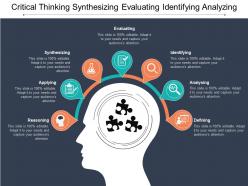
Critical thinking synthesizing evaluating identifying analyzing

Rating:
80%
Critical thinking synthesizing evaluating identifying analyzing
Slide 1 of 5
Favourites Favourites

Try Before you Buy Download Free Sample Product

Audience Impress Your
Audience
Editable 100%
Editable
Time Save Hours
of Time
The Biggest Sale is ending soon in
0
0
:
0
0
:
0
0
Rating:
80%
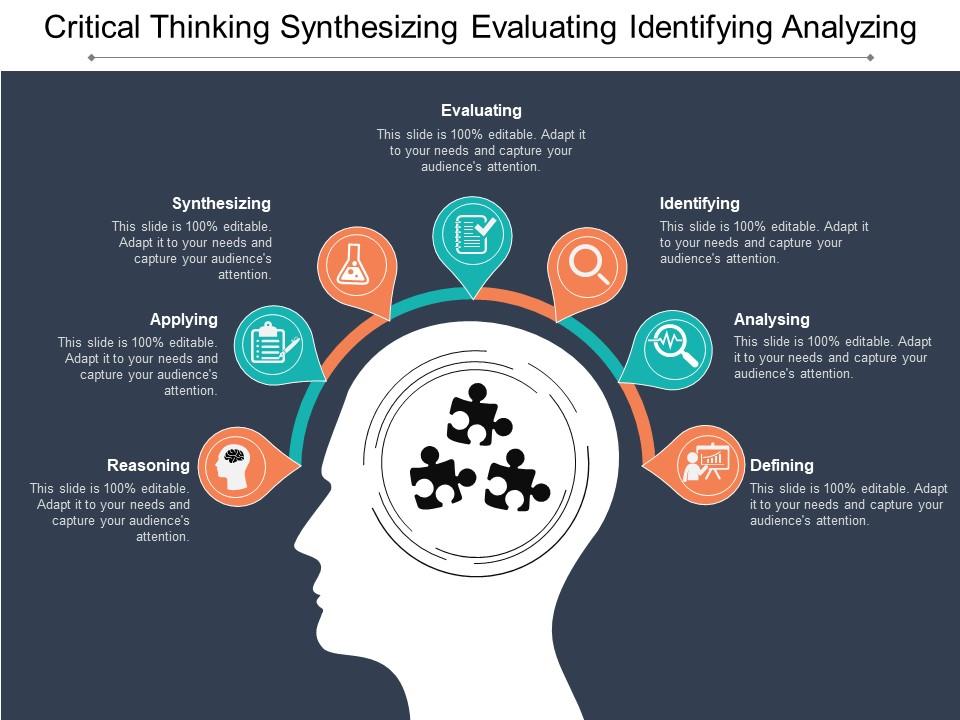
Presenting this set of slides with name - Critical Thinking Synthesizing Evaluating Identifying Analyzing. This is a seven stage process. The stages in this process are Critical Thinking, Critical Thoughts, Critical Theory.

People who downloaded this PowerPoint presentation also viewed the following :

FAQs for Critical thinking synthesizing

Break the problem down first - gather info, then check if it's actually credible (people skip this step way too much honestly). Look at it from different angles and question your gut reaction. What assumptions are you making? Are there any obvious biases? I always try to poke holes in my own reasoning before settling on anything. Then pull it all together into something that makes sense. Oh, and don't just accept the first solution that sounds good - that's usually when you miss something important. Practice by asking yourself "what backs this up?" whenever you're deciding stuff.

Honestly, critical thinking just forces you to slow down instead of making snap decisions. You start asking better questions and actually look at things from different angles. I used to just go with whatever felt right, but that burned me a few times lol. Now I try to spot the holes in my own logic before committing to anything big. The data thing is huge too - it's so easy to just focus on numbers that support what you already want to do. Taking time to hunt for contradictory evidence feels weird at first, but it's saved my ass more than once.

So critical thinking is when you're being super methodical - questioning stuff, looking at evidence, working through things step by step. Intuition's totally different though. It's those gut feelings that just hit you instantly without really thinking about it. Critical thinking = detective mode, breaking everything down logically. Intuition = those random "aha!" moments when something suddenly makes sense. Honestly both are pretty useful - intuition's great for creative stuff or when you need to decide something quick, while critical thinking works better for complex problems or when you're evaluating something important. My advice? Start with your gut instinct, then use logic to test if it actually holds up.

Okay so basically you want them questioning everything instead of just cramming facts. Open-ended questions work great - stuff without obvious answers. Real scenarios are gold because kids actually care about solving them (way better than hypothetical nonsense). Case studies are my go-to for this reason. Get them picking apart sources, calling out assumptions, debating opposite sides of issues. They need to feel safe being "wrong" though - that's huge. Oh and try think-pair-share! Everyone chats in pairs first, builds confidence, then jumps into the bigger discussion. Works every time.

Think of critical thinking as your built-in BS detector. Who's writing this stuff? What do they want from you? Look for actual evidence instead of just hot takes. I know it sounds paranoid, but always ask "who wins if I buy into this?" Cross-check claims with different sources. Watch out for cherry-picked stats and emotional manipulation - that's usually where they get you. Some short sentences work better. It's honestly draining to question everything, but you'll thank yourself later. Try fact-checking just one thing you saw today using a completely different source.

Start with leadership asking tough questions in meetings - "where's the evidence?" and "what aren't we seeing?" Build teams where people can actually challenge ideas without getting their heads bitten off. Most places totally bomb at this because nobody wants their feelings hurt. Mix up your teams so you're not just hearing from the same voices all the time. Train folks on biases and better decision-making - gives them actual tools to work with. Oh, and here's the big one: praise someone when they change their stance based on new info. Don't treat it like they're wishy-washy.

Honestly, it's mostly your own brain working against you. Confirmation bias is the worst - you'll hunt down info that backs up what you already think while ignoring everything else. Teams make it worse with groupthink, and when you're stressed for time? Forget rational thinking. Your ego gets in the way too. Nobody wants to admit they're wrong, right? Plus information overload these days is just brutal. I literally freeze up sometimes when there's too much data coming at me. My advice? Question your gut reaction first. Then go find people who disagree with you - it sucks but works.

Honestly, critical thinking is a game-changer for teams because it gets people actually evaluating ideas instead of just going with whoever talks loudest. You start asking way better questions and catch problems before they blow up. Plus you're genuinely listening to different viewpoints rather than planning what you'll say next (guilty as charged). It cuts down on groupthink too since people feel more comfortable challenging stuff. Next meeting, throw out "what evidence backs this up?" or "what could tank this idea?" Trust me, the whole conversation shifts. Way more productive than the usual surface-level chat.

Honestly, just start questioning stuff more. Like when someone says something definitive, ask yourself what actual evidence backs that up. I try to read things that'll probably annoy me - opposing viewpoints and all that. It's weird how much easier it gets once you make it a habit. Break big problems down into chunks instead of trying to tackle everything at once. Even with small daily decisions, practice that "wait, why do I think this?" mindset. Also read random stuff outside your usual interests - I swear it helps you connect dots better. The goal isn't being right all the time, it's getting comfortable with changing your mind when you should.

Critical thinking and creativity aren't enemies - they're actually great teammates. When you're stuck on something, creativity helps you dream up weird possibilities you wouldn't normally consider. Then critical thinking steps in to figure out which ideas are brilliant and which ones are... well, kinda terrible. I've found the best approach is switching between "what if I tried something completely random" mode and "okay but would this actually work" mode. It's like having a brainstorming session with yourself, then playing devil's advocate. Try bouncing between both mindsets next time you hit a wall.

Look, being a leader means your decisions actually impact people's paychecks and futures - that's heavy stuff. You can't just think critically to back up what you already decided. Really listen to people who disagree with you instead of building an echo chamber (seriously, those never end well). Question your own biases hard. Consider how your choices affect everyone involved, not just the bottom line. Oh, and actively hunt down perspectives that make you uncomfortable - that's where the real growth happens. It's about genuinely weighing consequences for all stakeholders.

Okay so basically, critical thinking helps you tackle huge messy topics like climate change without your brain exploding. You can actually evaluate specific claims instead of getting lost in the chaos. Look for solid sources, catch logical fallacies - honestly, most people skip this step entirely which is why debates get so toxic. Question stuff you heard recently, even from sources you usually trust. Recognize when you're being biased (we all are sometimes). Focus on what the evidence actually shows rather than getting trapped in those endless Twitter arguments that go nowhere. It's way less overwhelming this way.

Honestly, tech can be your friend here if you're smart about it. You get to see different viewpoints on everything and practice spotting which sources are legit vs total garbage. There's so much BS online that it's like a training ground for your critical thinking skills lol. Debate platforms are pretty cool for this - you can practice picking apart arguments without getting into it with your uncle at dinner. Data viz tools help you see patterns too. Just don't let tech do the thinking FOR you, ya know? Maybe start with some fact-checking sites and work from there.

Honestly, you can't do good science without critical thinking. Question everything - your assumptions, the quality of your data, whether there's another explanation you're missing. I've watched so many researchers get attached to their pet theories and completely ignore red flags in their methods. Super frustrating to witness! Always ask yourself "what am I not seeing here?" Don't just accept peer-reviewed stuff at face value either. Stay open to weird results that don't match what you expected. Try this: pick one assumption from your current project and think about what evidence would actually prove you wrong.

So basically, critical thinking makes you way better at reading people and situations. Instead of just reacting when something pisses you off, you actually stop and think first. Makes sense, right? You start catching your own BS and seeing where other people are coming from. Honestly, it's like having a built-in bullshit detector for your own emotions. When someone's being weird, you'll think "okay what's really going on here" instead of assuming they hate you or whatever. Next time you're about to snap at someone, just ask yourself what you might be missing. Works every time.

Ratings and Reviews

80% of 100
Write a review
Most Relevant Reviews
  1. 80%

    by Edmund Ortega

    Excellent design and quick turnaround.
  2. 80%

    by Edwardo Wheeler

    Use of icon with content is very relateable, informative and appealing.

2 Item(s)

per page: