Telesales Strategies To Boost Process Efficiency
Try Before you Buy Download Free Sample Product
Audience
Editable
of Time
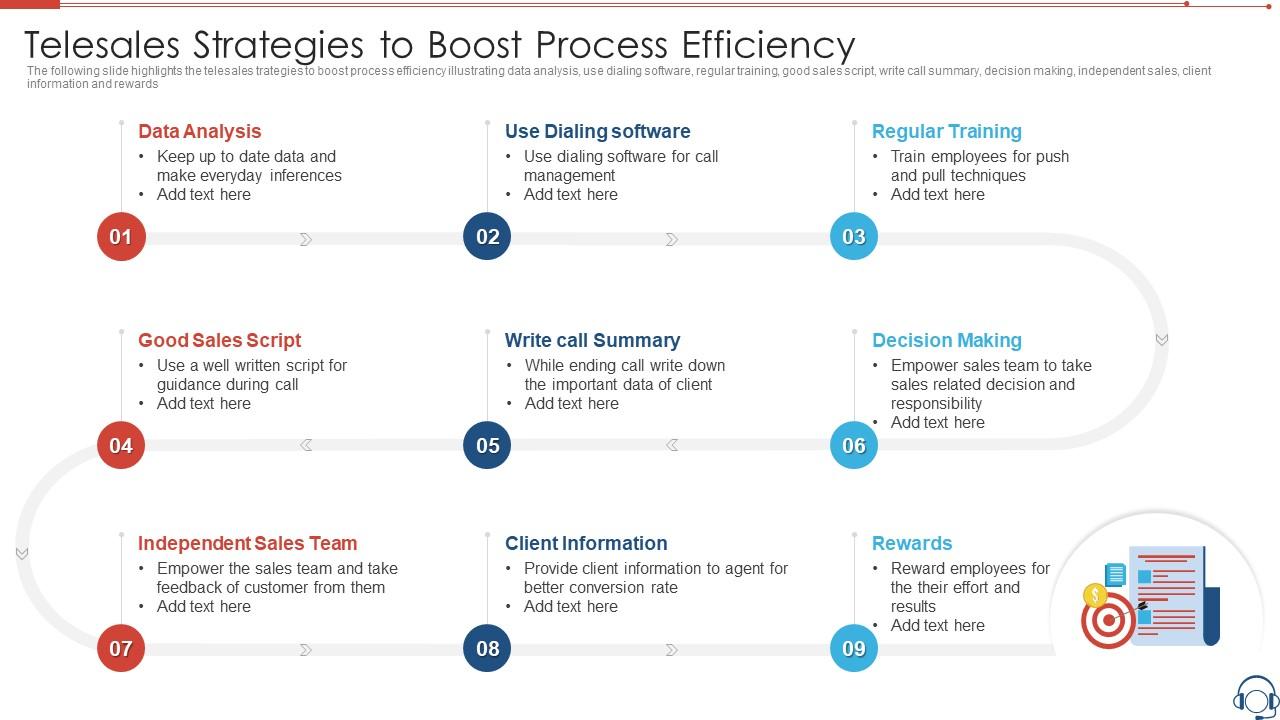
The following slide highlights the telesales trategies to boost process efficiency illustrating data analysis, use dialing software, regular training, good sales script, write call summary, decision making, independent sales, client information and rewards.
People who downloaded this PowerPoint presentation also viewed the following :
Telesales Strategies To Boost Process Efficiency with all 6 slides:
Use our Telesales Strategies To Boost Process Efficiency to effectively help you save your valuable time. They are readymade to fit into any presentation structure.
FAQs for Telesales Strategies To
Look, you need three things that actually work: hook them in those first 10 seconds, hit their real pain points (not generic BS), and ask questions that get them talking about what they need. Here's where everyone screws up - they ramble right off the bat. Don't be that person. Build some quick rapport instead. Listen way more than you talk, which is harder than it sounds tbh. Practice your opener until it doesn't sound rehearsed. The whole thing should feel like you're just having a normal conversation, not pitching them some product. And for the love of god, end with something concrete. "Does this sound interesting?" is weak sauce.
Look, nobody wants to feel like just another name on your call list. Do your homework first - check out their company news, figure out what's actually bugging them in their industry. Generic scripts? People hang up instantly. I've learned that the hard way! Use their name, sure, but more importantly, understand what keeps them up at night business-wise. Your pitch needs to connect to their real problems. Honestly, spending five minutes researching one specific thing about their company before you dial makes all the difference. It's the easiest way to stand out.
Dude, active listening is what makes or breaks you in telesales. Most reps just wait for their turn to talk, but the good ones? They're catching every little buying signal and pain point the prospect mentions. Like, actually hearing what they need instead of going into robot mode. I always repeat back what someone just said in my own words - builds crazy trust and shows I'm not just running through some script. Plus you can ask way better follow-up questions when you're tuned in. Honestly changed everything for me once I figured this out.
Definitely match how they talk - chatty people want conversation, direct people want you to cut to the chase. Drop their name in a few times and actually pay attention so you can bring up what they said later. I try finding something we both relate to right away, even if it's just bitching about the weather or whatever's happening in their field. Get them talking about their problems with open-ended questions instead of jumping straight into your pitch. Honestly, half the battle is just making it feel like a real conversation instead of an obvious sales call.
Honestly, just listen first - like actually listen, don't just wait for your turn to jump in. Acknowledge what they're saying before you respond. Ask questions to figure out what's really bugging them. Half the time when someone says "it's too expensive," they really mean they don't get why it's worth it yet. Stay curious instead of getting defensive (nobody wants to feel bulldozed, you know?). Then hit their actual concern with something that makes sense for them specifically. Oh and definitely practice your responses to the usual stuff - price complaints, timing issues, whatever. You'll thank yourself later when you're not fumbling around trying to think of what to say.
Honestly, assumptive and urgency closes work best for phone sales. Instead of asking "Are you interested?" try "When should we schedule delivery?" - you're assuming they're already buying. Urgency helps too, just don't go overboard or you'll sound like a used car salesman. Something like "I've got two openings left this month" feels way more natural than fake countdown timers. Oh, and the summary close is solid - recap what they liked, then ask for the sale. You gotta practice these though. Nothing kills a close faster than sounding robotic on the phone.
Dude, CRM is honestly a lifesaver for telesales. All your prospect info stays organized in one spot instead of scattered across random sticky notes (guilty as charged). Set reminders so you don't forget to follow up - that's where most deals die anyway. It'll automatically log your calls and update contact stuff, which saves tons of time. The real magic happens when you start seeing patterns in your pipeline. Like which pitches actually work and when people are most likely to pick up. Just start simple - track your daily calls first, then add more features as you go. Takes a minute to get the hang of it but totally worth it.
Honestly, start with call-to-conversion rate and average deal size - those tell you if your pitch actually works. Track calls per day too, obviously. But here's what most people miss: pipeline velocity is huge. How fast are deals moving from first call to close? That matters way more than you'd think. I'd also watch lead response time and maybe average talk time (shows if your reps are building real rapport or just blasting through scripts). Customer acquisition cost is clutch for ROI. Don't try tracking everything though - pick like 3-4 that match your goals first.
Dude, you gotta switch up your approach for different people. C-suite execs? Hit them with ROI numbers and keep it short - they don't have time for fluff. Middle managers want the nitty-gritty about how to actually roll this out to their teams. But honestly? End users are where it's at - just show them how you'll make their job less annoying and they're sold. Do your homework first though. Check what language they use, what's keeping them up at night. I'd make 2-3 different versions and test which one lands better.
Dude, follow-up calls are seriously where the money is. Most people give up after like one attempt, but the real magic happens between calls 5-12 - I know that sounds insane but it's true. You're not being pushy, you're actually showing you care about their problem. Each call lets you handle new objections and share more value. Plus they'll think of you first when they're ready to buy. Oh and you can totally switch up your approach based on what didn't work before. Just create some kind of system for it and you'll see your close rates go way up.
Role-playing works best, plus call shadowing - that's where new people listen to your top performers. Most companies totally skip that part which is crazy because it's so valuable. Practice sessions should focus on real objections, not those weird generic ones from old training materials. Also do product knowledge sessions and review actual recorded calls together as a team. Don't make it just a one-week thing though. Weekly practice sessions where everyone can work through difficult calls together - that's what actually moves the needle. Oh, and constant feedback is key.
Dude, tone and pacing are HUGE in telesales. I learned this the hard way when I'd speed up whenever I got nervous - total disaster. You gotta match how they're talking. Fast talker? Speed up a bit. Slow and methodical? Don't rush them. The worst thing is sounding like a robot reading a script. Nobody wants that. Practice mixing up your pace - slow down for important stuff, pause so they can actually respond. Oh, and definitely record yourself practicing because you probably sound way different than you think you do.
Honestly, most people just talk way too much instead of actually listening. Don't jump straight into your pitch - figure out what they actually need first. Scripts are the worst, everyone can tell immediately and they'll hang up on you. When people object, don't get all pushy about it (that never works anyway). I learned the hard way not to take rejections personally... still working on that one tbh. Ask better questions upfront. Build some rapport first. Think of it like having a normal conversation instead of giving some boring presentation nobody asked for.
Honestly, forget rattling off features - nobody cares. What works is dropping quick 30-second stories about how other clients tackled similar problems with your product. Our brains are just wired to remember stories better than boring specs. Keep it conversational and tie it back to what they've already shared about their situation. You're the helpful guide here, not some pushy sales guy. I'd practice maybe 2-3 solid customer success stories beforehand so you can weave them in naturally when the timing feels right. Makes a huge difference.
Dude, follow-up emails after calls are clutch. Send them within 24 hours while everything's still fresh in their head. I always recap the main pain points we discussed, attach any resources we talked about, and include next steps. Case studies work great too if they're relevant. Here's the thing - people don't buy after one conversation, they need multiple touches. Your email should have a clear call-to-action so they know exactly what to do next. It's basically your safety net that keeps you in their inbox when they're ready to move forward.
-
Qualitative and comprehensive slides.
-
Innovative and attractive designs.