

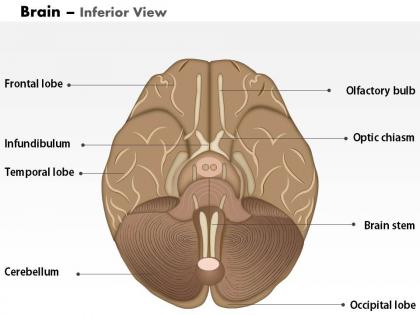
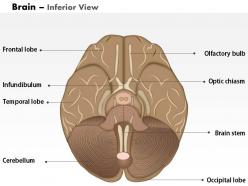
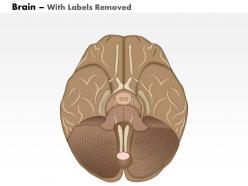
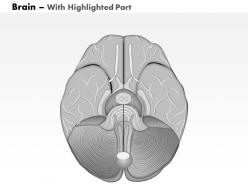
0514 brain inferior view medical images for powerpoint




Try Before you Buy Download Free Sample Product
 Impress Your
 Audience
 100%
100% Editable
 Save Hours
 of Time


Cater to the buyer with our 0514 Brain Inferior view Medical Images For PowerPoint. Convince them your goods have the desired class.
People who downloaded this PowerPoint presentation also viewed the following :
0514 brain inferior view medical images for powerpoint with all 12 slides:
Acquire a fundamental framework with our 0514 Brain Inferior view Medical Images For PowerPoint. They will cater for the fanciest designs.

FAQs for 0514 brain inferior view medical
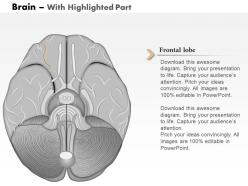
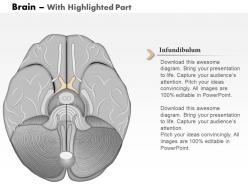
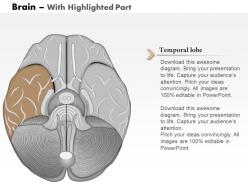
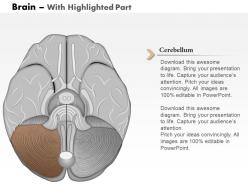
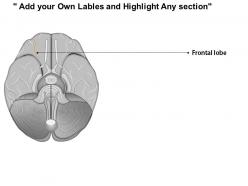
Inferior view brain medical images reveal the brainstem, cerebellum, temporal lobes, frontal lobes, and cranial nerve origins, along with major vascular structures like the Circle of Willis. These anatomical landmarks enable neurologists and radiologists to assess stroke damage, tumor locations, and vascular abnormalities, ultimately delivering faster diagnostic accuracy and more targeted treatment planning for neurological conditions.
Inferior view brain images aid diagnosis by revealing brainstem abnormalities, cranial nerve pathways, and vascular structures often obscured in standard views. These specialized perspectives enable neurologists to identify conditions like basilar artery strokes, acoustic neuromas, and brainstem tumors more accurately, while enhancing treatment planning precision and ultimately delivering faster diagnostic outcomes for complex neurological cases.
Commonly used imaging techniques for inferior view brain images include MRI with specialized sequences, CT scans with coronal reconstructions, diffusion tensor imaging, functional MRI, and high-resolution anatomical imaging. These advanced modalities enhance visualization by providing detailed soft tissue contrast, precise anatomical mapping, and comprehensive structural analysis, with many medical institutions finding that multimodal approaches ultimately deliver superior diagnostic accuracy and improved patient outcomes.
Inferior view brain images provide unique diagnostic value by revealing structures like the brainstem, cranial nerve origins, and skull base pathology that superior or lateral views cannot adequately visualize. While superior views excel at cortical assessment and lateral views optimize hemispheric evaluation, inferior perspectives enable clinicians to diagnose conditions affecting the posterior fossa, vascular malformations, and cranial nerve disorders, ultimately delivering comprehensive neurological assessment when combined strategically with other imaging planes.
Inferior view brain images play a critical role in surgical planning by providing detailed visualization of cranial nerves, blood vessels, brainstem structures, and skull base anatomy that surgeons must navigate carefully. These images enable neurosurgeons to map surgical approaches, identify risk areas, and plan precise interventions for procedures involving pituitary tumors, acoustic neuromas, and skull base lesions, ultimately enhancing surgical safety and improving patient outcomes.
Inferior view imaging significantly enhances tumor and lesion detection by providing clear visualization of the brain's base, including the temporal lobes, brainstem, and cranial nerve pathways often obscured in standard views. This perspective enables radiologists and neurosurgeons to identify acoustic neuromas, pituitary adenomas, and skull base tumors with greater precision, ultimately delivering more accurate diagnoses and improved surgical planning outcomes.
Age and sex differences in inferior brain anatomy manifest through variations in temporal lobe volume, hippocampal size, orbitofrontal cortex thickness, and cerebellar dimensions visible in MRI scans. These anatomical differences enable radiologists and neurologists to assess normal versus pathological changes, with many medical institutions finding that sex-specific reference ranges enhance diagnostic accuracy and treatment planning across diverse patient populations.
Interpreting inferior view brain medical images presents challenges including complex anatomical overlapping, limited visualization of deep structures, artifact interference from skull base density, and distinguishing normal variants from pathological findings. These imaging complexities require specialized radiological expertise and advanced techniques, with many medical institutions finding that combining multiple imaging modalities and AI-assisted analysis significantly enhances diagnostic accuracy and clinical outcomes.
Advanced imaging technology enhances inferior view brain clarity through high-resolution MRI sequences, diffusion tensor imaging, and multi-planar reconstruction techniques that minimize artifacts from bone and air interfaces. These technologies enable radiologists and neurosurgeons to visualize brainstem structures, cranial nerve pathways, and vascular formations with unprecedented detail, ultimately delivering more accurate diagnoses and improved surgical planning outcomes.
Inferior view brain imaging reveals critical connectivity patterns between temporal lobes, limbic structures, and brainstem regions that are often obscured in standard views. These perspectives enable researchers to map neural pathways involved in memory, emotion, and autonomic functions more comprehensively, with neuroscience laboratories and clinical research centers finding enhanced understanding of connectivity disorders.
Inferior view images assist in understanding cerebrovascular diseases by revealing critical vascular structures like the Circle of Willis, basilar artery, and posterior circulation pathways that are often affected in strokes and aneurysms. These perspectives enable clinicians to assess blood flow patterns, identify arterial blockages, and detect vascular malformations more effectively, ultimately delivering faster diagnostic accuracy and improved patient outcomes in neurological care.
Common artifacts affecting inferior view brain images include susceptibility artifacts from air-bone interfaces, motion artifacts from patient movement, magnetic field inhomogeneity near the skull base, and chemical shift artifacts. These imaging challenges particularly impact visualization of the brainstem, cerebellum, and temporal lobes, with many radiologists finding that advanced pulse sequences and artifact reduction techniques significantly enhance diagnostic accuracy, ultimately delivering clearer anatomical definition and improved clinical outcomes.
Inferior view images contribute to neurodegenerative disease research by revealing critical structural changes in the brain's base, including hippocampal atrophy, brainstem deterioration, and cerebellar damage patterns. These perspectives enable researchers to track disease progression markers, compare pathological variations across conditions like Alzheimer's and Parkinson's, and ultimately enhance diagnostic accuracy while accelerating therapeutic development timelines.
Techniques to enhance inferior view brain image resolution include high-field MRI systems, advanced gradient coils, parallel imaging methods, compressed sensing algorithms, and specialized acquisition protocols. These technologies streamline imaging by reducing motion artifacts, minimizing susceptibility distortions, and optimizing signal-to-noise ratios, with many medical institutions finding that enhanced resolution ultimately delivers faster diagnoses and improved patient outcomes.
Medical professionals communicate inferior view brain findings through simplified visual aids, analogies relating brain structures to familiar concepts, and step-by-step explanations of anatomical locations. They typically use annotated images, 3D models, and clear terminology while focusing on clinical significance rather than complex anatomical details, ultimately ensuring patients understand their diagnosis, treatment options, and prognosis through accessible, empathetic communication approaches.
-
Content of slide is easy to understand and edit.
-
Illustrative design with editable content. Exceptional value for money. Highly pleased with the product.