

0514 Business Consulting Diagram 5 Staged Infographic Business Design Powerpoint Slide Template




Try Before you Buy Download Free Sample Product
 Impress Your
 Audience
 100%
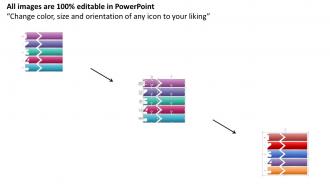
100% Editable
 Save Hours
 of Time


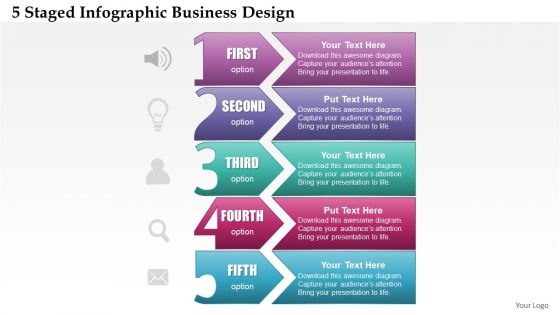
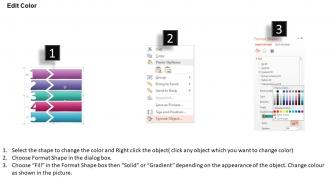
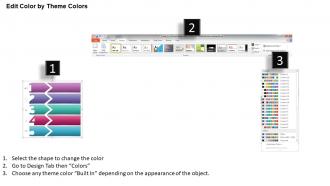
Create a beautiful business Presentation on the success or accomplishments of your business with our 0514 business consulting diagram 5 staged info graphic business design PowerPoint slide template. You can use this PPT design to define the various business achievements for its management within stipulated period of time such as percentage of customer and employees satisfaction rate of index, financial performance of the company with the rate of investments, rate of increase in customer base, business market and its position in the competitive market, rate of increase in the quality index of its related products, business profitability, index of reduced churn, profit margin of the company and many more. Whereas you can define the role of technological advancements in the growth of your business enterprise with this PPT diagram. Hence just start working with this PowerPoint slide now to enhance your knowledge and proficiency over the relevant notion and as well as providing an enticing experience to your related audiences. Our 0514 Business Consulting Diagram 5 Staged InfoGraphic Business Design Powerpoint Slide Template team are a gifted lot. Their abilities are completely fascinating.
People who downloaded this PowerPoint presentation also viewed the following :
0514 Business Consulting Diagram 5 Staged Infographic Business Design Powerpoint Slide Template with all 5 slides:
Our 0514 Business Consulting Diagram 5 Staged InfoGraphic Business Design Powerpoint Slide Template convey your convictions. They stress the reality of your views.
FAQs for 0514 Business Consulting Diagram 5 Staged Infographic Business Design
You'll want a solid problem definition first, then map out your methodology step-by-step. Include a realistic timeline and be super specific about deliverables - vague promises kill deals. Your exec summary needs to grab them right away (honestly, most people decide in the first paragraph). Case studies are huge - show you've actually done this before, not just theorized about it. When you write team bios, focus on relevant wins over credentials. Oh, and pricing should be transparent, none of that "call for quote" nonsense. End with clear next steps. Keep it tight but detailed enough that they feel confident you know what you're doing.
Don't just take what clients say at face value - they usually tell you symptoms, not the real problem. Ask stuff like "walk me through your typical day" and actually listen for where they're frustrated or wasting time. Half the time they don't even know what's really bugging them until you point it out. I've seen this so many times. Once you figure out the actual issues, rank them by what'll hurt most if left unfixed. Then pitch solutions that hit those exact problems. Generic advice is useless - always connect your recommendations back to their specific pain points.
Honestly, you can't go wrong starting with MECE - it's like the Swiss Army knife of problem-solving. Breaks everything into neat, non-overlapping categories. Design Thinking's clutch for anything innovation-related, way more human-focused than the others. For operational stuff, Lean Six Sigma is gold (though kinda boring if I'm being real). McKinsey loves their frameworks for a reason. SWOT analysis and Porter's Five Forces handle the strategic heavy lifting. Really depends what kind of mess you're trying to untangle - operational headaches versus big picture strategy stuff. MECE first though, trust me on that one.
Honestly, data analysis is like having a secret weapon against stubborn clients. You can walk in with actual proof instead of just "trust me on this." Like showing them their premium customers have insane lifetime value but are bailing at crazy high rates - suddenly they're listening. I've seen clients ignore gut-feeling advice for months, then implement the exact same recommendation when you back it with numbers. Wild how that works. You'll catch patterns they're totally blind to and actually measure those nagging problems they complain about but can't quantify. Start tracking their key metrics from day one. Seriously transforms how much weight your advice carries.
Honestly, change management can make or break your whole project. You might have this brilliant strategy, but if people hate implementing it? You're toast. Most of your time goes into the people stuff - training employees, getting stakeholders on board, addressing their complaints (and there will be many). Projects usually crash and burn here if you mess up. You'll create adoption plans, find your change champions early, then track how teams adapt to new processes. Oh, and always map out who's gonna resist what beforehand. Trust me on that one.
Honestly, most people skip the most important part - figuring out what success actually looks like before you start. Set your KPIs upfront and make them measurable. Revenue growth, cost savings, how happy your team is, client feedback, whatever makes sense. Then do check-ins at 30, 60, 90 days to see if you're hitting those targets. Get everyone to agree on the success metrics first though, or you'll be arguing about it later. Oh and document everything! Dashboards are clutch if you can swing it - makes those follow-up meetings way smoother and proves you're not just winging it.
Honestly, the big things to watch out for are conflicts of interest and overpromising what you can do. Never share client info between projects - I don't care how innocent it seems. Be real about your limitations upfront. I've watched too many consultants promise crazy results just to close deals, and it always blows up eventually. Don't recommend stuff that benefits you more than them. If you have stakes in vendors you're suggesting, say so. Money gets weird sometimes, but always pick what's actually best for the client even when it hurts your wallet.
Dude, consulting went completely digital - you can work with clients anywhere now without flying out to shake hands. COVID obviously sped things up, but we were heading there anyway. Data analytics tools give you insights in hours instead of weeks. AI does your research legwork. Cloud stuff means real-time collaboration actually works. Here's the thing though - clients now want everything faster and more data-backed than before. Honestly, the automation handles most boring tasks now. You really need to get on board with digital tools if you're not already. It's basically required at this point, not just nice to have.
Honestly, it's all about not being that consultant who vanishes after getting paid. Follow through on what you promise - sounds basic but you'd be amazed how many don't. Check in quarterly even when there's no active project. Those calls matter way more than people think. I always try to spot new problems they're dealing with before they even bring them up. Stay curious about what's happening in their industry too. The whole point is becoming someone they actually trust for advice, not just another service provider they hire occasionally. Oh and definitely don't treat them like a transaction - that's the fastest way to kill any future work.
Honestly, consultants are worth it because you get expert help without paying someone full-time. They'll actually look at YOUR specific mess - not just throw generic advice at you like everyone else does. The outside perspective thing is real too. When you've been drowning in the same issues for months, fresh eyes catch stuff you're totally blind to. They help you figure out what's actually worth fixing first instead of spinning your wheels on random tasks. I'd say nail down your biggest headache first, then find someone who really knows that space.
Ugh, communication barriers are the worst part honestly. You'll think you're being super direct and professional, but then accidentally offend someone from a more formal culture - happens to everyone. Language gets tricky even when you're all speaking English because nuances get lost. Decision-making styles vary tons too. Some places want everyone to agree first, others just expect the boss to decide. Oh and time perception? Completely different everywhere. I'd say just research their cultural norms ahead of meetings and don't be afraid to ask if you're unsure about something.
Honestly, staying current is all about mixing learning with good old networking. I'd start by finding 2-3 solid industry publications and actually reading them weekly - don't try to drink from the firehose. Conferences are great, but webinars work too if you're on a budget. LinkedIn's surprisingly useful if you follow the right people (though you'll have to wade through some garbage). Professional associations in your field are clutch for insider info. Other consultants will share what they're seeing way before it hits the mainstream publications. Oh, and certifications help, but pick ones that actually matter to your clients.
Oh man, stakeholder engagement can make or break your whole project. Here's the thing - if people don't buy into what you're doing, your recommendations just become fancy paperwork nobody uses. Trust me, I've been there and it sucks. Map out who matters from day one and actually talk to them regularly. They'll catch problems you'd never see coming from your consultant bubble. Sometimes they ramble about random stuff, but their insights are gold for figuring out what'll actually work when it's time to implement. Don't wait until the end to involve them.
Dude, visual stuff is a game changer for client presentations. Complex data becomes way easier to digest when you're using charts and infographics instead of boring spreadsheets. I've literally watched bad insights suddenly look brilliant just because someone made them pretty. Clients get it faster and actually remember your points later - which honestly is half the battle. Replace most of your text-heavy slides with visual elements. Even basic before/after diagrams work surprisingly well. Oh, and they'll stay way more engaged instead of zoning out halfway through.
Analytical skills are huge - you're constantly breaking down messy problems. Communication matters just as much though, since you'll pitch to CEOs one week and factory managers the next. Tech knowledge has gotten way more critical lately too. Basic data analysis, understanding digital tools, that whole side of things. Industry expertise is nice but honestly? Being adaptable is better since you bounce between sectors constantly. Oh, and work on your facilitation skills - like half the battle is just getting everyone in the room to actually agree on something and move forward together.
-
Awesome presentation, really professional and easy to edit.
-
Great designs, Easily Editable.