

0614 adenosine triphosphate and atp adp cycle medical images for powerpoint





Try Before you Buy Download Free Sample Product
 Impress Your
Audience
 100%
Editable
 Save Hours
of Time


Blow away the darkness with our 0614 Adenosine Triphosphate And ATP ADP Cycle Medical Images For Powerpoint. Your thoughts will bring in the dawn.
People who downloaded this PowerPoint presentation also viewed the following :
0614 adenosine triphosphate and atp adp cycle medical images for powerpoint with all 9 slides:
Reduce difficulties with our 0614 Adenosine Triphosphate And ATP ADP Cycle Medical Images For Powerpoint. Make it simpler for your team.




FAQs for 0614 adenosine triphosphate and atp adp cycle medical
ATP serves as the primary energy currency in cellular metabolism, powering essential processes like protein synthesis, active transport, muscle contraction, and enzymatic reactions. This molecule continuously cycles between ATP and ADP through phosphorylation and dephosphorylation, enabling cells to capture, store, and release energy efficiently, ultimately delivering the metabolic foundation for all cellular functions and biological activities.
ATP synthesis in mitochondria occurs through oxidative phosphorylation, where the electron transport chain pumps protons across the inner mitochondrial membrane, creating an electrochemical gradient. This proton gradient drives ATP synthase to produce ATP from ADP and inorganic phosphate, with cellular processes in muscle cells, brain tissue, and cardiac muscle finding that this mechanism delivers approximately 32-34 ATP molecules per glucose molecule, ultimately enabling sustained cellular energy production.
ATP hydrolysis occurs through enzymatic cleavage of phosphate bonds, nucleophilic attack by water molecules, and conformational changes in ATP-binding proteins. These mechanisms release energy by breaking high-energy phosphoanhydride bonds, driving cellular processes like muscle contraction, active transport, and metabolic reactions, ultimately delivering the biochemical power essential for life.
Cells regulate the ATP cycle through metabolic pathway modulation, enzyme activity control, and organelle specialization based on their specific energy requirements. Muscle cells increase glycolysis and oxidative phosphorylation during contraction, while brain cells maintain steady glucose metabolism, and liver cells switch between glucose production and storage, ultimately enabling each cell type to optimize energy production for peak performance and metabolic efficiency.
Key enzymes in ATP synthesis and hydrolysis include ATP synthase, ATPase, creatine kinase, adenylate kinase, and pyruvate kinase. These enzymes streamline cellular energy management by facilitating phosphorylation reactions, enabling rapid energy transfer, and maintaining metabolic balance, with pharmaceutical companies and biotechnology firms finding that understanding these pathways enhances drug development efficiency.
The ATP cycle powers muscle contraction by providing energy for myosin heads to bind with actin filaments, execute power strokes, and detach during the sliding filament mechanism. ATP hydrolysis enables cross-bridge cycling, while ATP regeneration through creatine phosphate and cellular respiration maintains continuous energy supply, with athletic training programs increasingly focusing on optimizing these metabolic pathways for enhanced performance and reduced fatigue.
ATP serves as a crucial energy source and signaling molecule in cellular communication pathways, powering protein phosphorylation, conformational changes, and enzymatic reactions that transmit signals across membranes. Through phosphorylation cascades and energy-dependent processes, ATP enables cells to amplify signals, maintain receptor sensitivity, and coordinate complex responses, ultimately delivering precise cellular control and adaptive functionality essential for organismal survival.
Photosynthetic organisms produce ATP during light-dependent reactions through photophosphorylation, where light energy drives electron transport chains that pump protons across thylakoid membranes, creating electrochemical gradients. This chemiosmotic process enables ATP synthase to harness proton flow for phosphorylating ADP into ATP, with chloroplasts in plants and cyanobacteria efficiently converting solar energy into chemical energy for cellular metabolism.
The ATP cycle maintains cellular homeostasis by regulating energy availability, supporting active transport processes, enabling protein synthesis and degradation, and facilitating metabolic pathway coordination. Through continuous ATP synthesis and hydrolysis, cells maintain optimal ion gradients, temperature regulation, and pH balance, while ensuring adequate energy reserves for essential functions like membrane repair and cellular communication.
Diseases associated with dysregulated ATP production include mitochondrial myopathies, Parkinson's disease, Alzheimer's disease, diabetes, and various cardiac conditions affecting cellular energy metabolism. These conditions significantly impact organizational healthcare costs and patient outcomes, with many healthcare institutions finding that early detection technologies and targeted therapeutic approaches ultimately deliver improved treatment efficiency, reduced long-term care expenses, and enhanced patient experiences.
ATP powers neurotransmitter release by providing energy for synaptic vesicle formation, calcium channel activation, and vesicle fusion with presynaptic membranes. Through these ATP-dependent processes, neurons achieve rapid signal transmission, precise synaptic communication, and sustained neurotransmitter availability, ultimately enabling efficient neural network function and synaptic plasticity essential for learning and memory.
Substrate-level phosphorylation directly transfers phosphate groups from high-energy molecules to ADP during glycolysis and the citric acid cycle, while oxidative phosphorylation uses electron transport chains and chemiosmosis in mitochondria. These mechanisms work together to maximize cellular energy production, with oxidative phosphorylation generating significantly more ATP molecules per glucose molecule, ultimately delivering the sustained energy output required for complex metabolic processes.
ATP interacts with GTP, UTP, and other nucleotide cycles through nucleoside diphosphate kinase enzymes, phosphoryl group transfers, and shared metabolic pathways that maintain cellular energy balance. These interconnected cycles enable cells to redistribute energy efficiently across biosynthetic processes, protein synthesis, and lipid metabolism, with many research institutions finding that understanding these interactions enhances drug development strategies.
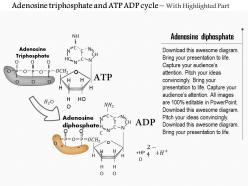
ATP dephosphorylation enables cellular energy transfer by releasing phosphate bonds that power metabolic processes, muscle contractions, active transport, and biosynthetic reactions. This controlled energy release drives essential functions like protein synthesis and membrane transport in organisms ranging from bacteria to complex tissues, ultimately delivering the consistent energy supply cells require for growth, maintenance, and specialized functions.
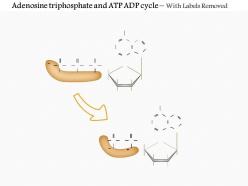
ATP's unique structure, featuring three phosphate groups connected by high-energy bonds, adenosine, and ribose, directly enables its role as cellular energy currency through rapid phosphorylation and dephosphorylation reactions. This molecular architecture facilitates energy transfer in metabolic pathways, muscle contractions, and biosynthetic processes, with cells efficiently cycling between ATP and ADP to power essential biochemical reactions.
-
Best Representation of topics, really appreciable.
-
Informative design.