

0614 bacterial flagella medical images for powerpoint





Try Before you Buy Download Free Sample Product
 Impress Your
Audience
 100%
Editable
 Save Hours
of Time


Flaws get fixed with our 0614 Bacterial Flagella Medical Images For Powerpoint. You will find them easier to discover.
People who downloaded this PowerPoint presentation also viewed the following :
0614 bacterial flagella medical images for powerpoint with all 9 slides:
Be an example to follow with our 0614 Bacterial Flagella Medical Images For Powerpoint. Display your best to all around.





FAQs for 0614 bacterial flagella medical
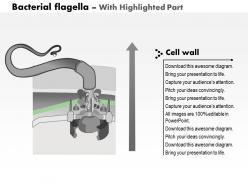
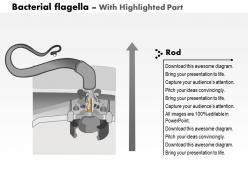
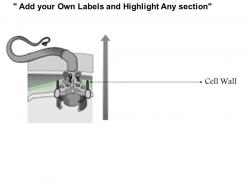
Bacterial flagella comprise the basal body, hook, and filament as primary structural elements, with the basal body containing rings, rod, and motor proteins that enable rotation. These components work together through sophisticated protein interactions, with the motor generating torque while the hook acts as a flexible coupling, ultimately delivering the propulsive force that enables bacterial motility and competitive survival advantages.
Bacterial flagella are composed of flagellin protein in a helical structure and rotate like propellers using proton gradients, while eukaryotic flagella contain microtubules with dynein motors that create wave-like beating motions. These structural differences enable bacteria to achieve rapid directional swimming for chemotaxis, whereas eukaryotic cells use flagellar beating for fluid movement and cellular propulsion in aquatic environments.
Bacterial flagella serve as the primary propulsion system for bacterial motility, functioning as rotating helical filaments that enable swimming, swarming, and directional movement toward nutrients or away from toxins. These molecular motors facilitate crucial survival behaviors including chemotaxis and biofilm formation, with pathogenic bacteria like E. coli and Salmonella leveraging flagellar motility for enhanced infection capabilities and host colonization strategies.
Bacterial flagella are powered by a rotary motor system driven by proton or sodium ion gradients across the cell membrane, creating electrochemical potential energy that rotates the flagellar base. Through specialized protein complexes like MotA and MotB, bacteria harness this ion flow to generate torque, enabling rapid directional movement and enhanced motility for competitive advantage in diverse environments.
The "run and tumble" behavior involves bacteria swimming straight during "runs" when flagella rotate counterclockwise in coordinated bundles, then randomly reorienting during "tumbles" when flagella reverse to clockwise rotation and separate. This chemotactic mechanism enables bacteria to navigate toward favorable conditions like nutrients or away from toxins, ultimately delivering enhanced survival advantages in competitive biological environments.
Bacterial flagella enhance pathogenicity by enabling motility toward infection sites, facilitating tissue invasion, and helping bacteria evade immune responses. Through chemotaxis and surface attachment, pathogenic bacteria like Salmonella and Helicobacter pylori penetrate host defenses more effectively, establish infections faster, and spread throughout tissues, ultimately delivering increased virulence and survival advantages.
Bacterial flagella include monotrichous (single flagellum), lophotrichous (clustered flagella), amphitrichous (flagella at both ends), peritrichous (flagella surrounding the cell), and atrichous (no flagella). These structural variations enable different bacterial species to optimize their motility strategies, with E. coli utilizing peritrichous arrangements for tumbling motion while Vibrio species leverage polar flagella for directed swimming, ultimately delivering enhanced survival advantages.
Environmental factors significantly influence bacterial flagella through temperature changes, nutrient availability, pH levels, osmotic pressure, and chemical gradients. These conditions trigger regulatory pathways that control flagellar gene expression, motor protein assembly, and rotational efficiency, with many bacteria like E. coli and Salmonella adapting their motility systems to optimize survival and competitive advantage across diverse environments.
Techniques for visualizing bacterial flagella include electron microscopy, fluorescence microscopy with flagellar protein labeling, negative staining, cryo-electron tomography, and immunofluorescence methods. These approaches enable researchers to study flagellar structure, dynamics, and motor function across various bacterial species, ultimately delivering insights into motility mechanisms, antibiotic resistance patterns, and pathogenesis pathways for pharmaceutical and biotechnology applications.
Flagellin proteins assemble into flagellar filaments through a sophisticated self-polymerization process, where individual flagellin monomers are transported through the hollow flagellar structure and added sequentially to the growing tip. This assembly mechanism enables rapid filament extension, structural flexibility, and rotational efficiency, with bacterial species like E. coli and Salmonella demonstrating how this streamlined construction ultimately delivers enhanced motility and competitive survival advantages.
Flagellar arrangement determines bacterial movement patterns and efficiency, with polar flagella enabling rapid directional swimming, peritrichous providing versatile tumbling and running motions, and lophotrichous offering coordinated movement through clustered propulsion. These configurations enhance bacterial survival strategies by optimizing navigation through different environments, with pathogenic bacteria like E. coli and Vibrio species leveraging specific arrangements for tissue invasion, nutrient acquisition, and ultimately delivering competitive advantages in diverse ecological niches.
Mutations in flagellar genes significantly impact bacterial motility by disrupting flagella assembly, rotation mechanisms, and chemotaxis pathways, often resulting in reduced swimming speed or complete immobilization. These genetic alterations affect bacterial behavior in clinical settings, with pathogens like E. coli and Salmonella showing altered infection patterns, ultimately influencing antibiotic resistance and treatment strategies.
Bacterial flagella facilitate initial surface attachment and cell positioning during early biofilm development, enabling bacteria to overcome repulsive forces and establish contact with surfaces or other cells. While flagella aid in initial colonization, many bacteria subsequently downregulate flagellar production as they transition to sessile biofilm growth, ultimately trading motility for enhanced surface adhesion and community formation.
Bacteria develop flagellar resistance mechanisms through structural modifications, regulatory changes, and adaptive motility patterns that help evade antimicrobials and immune responses. These mechanisms enable pathogens to alter flagellar protein composition, modify rotation patterns, and coordinate biofilm formation, with many infectious disease researchers finding that motile bacteria demonstrate enhanced survival rates and treatment evasion capabilities.
Manipulating bacterial flagella offers applications in targeted drug delivery, biosensors, microfluidics, and bioremediation technologies. These microscopic propellers enable engineered bacteria to navigate precisely through bodily systems for cancer treatment, create self-propelled diagnostic devices, and enhance industrial processes, with pharmaceutical companies increasingly finding that flagella-based systems deliver enhanced therapeutic targeting and reduced side effects.
-
It saves your time and decrease your efforts in half.
-
It saves your time and decrease your efforts in half.