

0614 bacteriophage replicative cycles medical images for powerpoint





Try Before you Buy Download Free Sample Product
 Impress Your
Audience
 100%
Editable
 Save Hours
of Time


Finish off fast with our 0614 Bacteriophage Replicative Cycles Medical Images For Powerpoint. Get the chance to go to bed early.
People who downloaded this PowerPoint presentation also viewed the following :
0614 bacteriophage replicative cycles medical images for powerpoint with all 8 slides:
Pick up the gaunlet with our 0614 Bacteriophage Replicative Cycles Medical Images For Powerpoint. Any challenge becomes easy to fight.




FAQs for 0614 bacteriophage replicative cycles medical
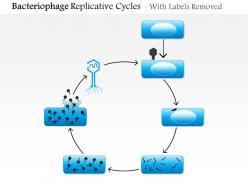
The lytic cycle includes attachment to host bacteria, injection of viral DNA, replication of genetic material, assembly of new viral particles, and cell lysis for release. This process enables rapid viral reproduction by hijacking bacterial cellular machinery, DNA synthesis pathways, and protein production systems, ultimately delivering efficient pathogen elimination in therapeutic applications across healthcare settings.
The lysogenic cycle involves viral DNA integrating into the host bacterial chromosome and remaining dormant, while the lytic cycle immediately produces new viruses and destroys the host cell. This strategic difference enables bacteriophages in lysogenic cycles to persist through multiple bacterial generations before activation, with many research applications finding that lysogenic phages ultimately deliver enhanced stability for therapeutic development and targeted treatments.
Bacteriophage receptors serve as specific binding sites on bacterial cell surfaces that determine host specificity and initiate viral attachment, acting as molecular locks that phages must match with their tail fibers or proteins. These receptors, including porins, lipopolysaccharides, and membrane proteins, ultimately control infection success by enabling phage DNA injection and replication, with many bacteria evolving receptor modifications for competitive survival advantage.
Bacteriophages recognize bacterial cells through highly specific receptor-binding proteins on their tail fibers or capsid surfaces that match complementary receptor molecules on bacterial cell walls, membranes, or pili. This lock-and-key mechanism enables targeted therapeutic applications in healthcare and biotechnology, with pharmaceutical companies increasingly leveraging this specificity for precision antimicrobial treatments, ultimately delivering enhanced treatment efficacy while minimizing resistance development.
Bacteriophages employ several sophisticated injection mechanisms including contractile tail sheaths that pierce bacterial cell walls, tail fibers that bind to specific receptor sites, and enzymatic degradation of peptidoglycan barriers. These precise delivery systems enable targeted genetic material transfer across diverse bacterial species, with many pharmaceutical companies finding that understanding these mechanisms enhances targeted antibiotic development and therapeutic applications.
Bacteriophage replication occurs through two primary pathways: the lytic cycle, where viral DNA immediately hijacks bacterial machinery to produce new virions, and the lysogenic cycle, where phage DNA integrates into the host chromosome as a prophage. These replication mechanisms enable biotechnology applications in gene therapy, antibiotic alternatives, and bacterial detection systems, with pharmaceutical companies increasingly leveraging phage specificity for targeted treatments and diagnostic tools.
Bacteriophage applications in biotechnology and medicine include targeted antibiotic alternatives, gene therapy vectors, bacterial detection systems, food safety treatments, and cancer therapeutics. These naturally occurring viruses enhance medical treatments by specifically targeting harmful bacteria without affecting beneficial microorganisms, with hospitals and pharmaceutical companies increasingly leveraging phage therapy to combat antibiotic-resistant infections, ultimately delivering personalized medicine solutions and improved patient outcomes.
Bacteriophage resistance develops through bacterial mutations affecting phage receptors, restriction-modification systems, and CRISPR-Cas immunity, presenting both challenges and opportunities for therapeutic strategies. While resistance emergence requires continuous phage cocktail optimization and adaptive treatment protocols, it ultimately drives innovation in personalized antimicrobial approaches, with many healthcare institutions finding that rotating phage therapies and combination treatments deliver sustained effectiveness against resistant bacterial infections.
Bacteriophage isolation methods include enrichment cultures using specific bacterial hosts, filtration through 0.22-micron filters to remove bacteria, cesium chloride density gradient centrifugation, and polyethylene glycol precipitation techniques. These approaches enable researchers in pharmaceutical companies, biotechnology firms, and academic institutions to obtain pure phage preparations for therapeutic applications, with many laboratories finding that combining multiple purification steps delivers higher yields and better specificity for targeted antimicrobial development.
CRISPR technology serves as a bacterial immune system that specifically targets and cleaves bacteriophage DNA during infection cycles, disrupting viral replication through programmable nucleases that recognize specific phage sequences. This interaction enables researchers to study phage-host dynamics more precisely, with biotechnology companies and pharmaceutical laboratories increasingly leveraging these mechanisms for developing targeted antimicrobial therapies and enhanced bacterial strain engineering applications.
Bacteriophages can be engineered for targeted gene delivery through capsid protein modification for specific cell recognition, genome editing to insert therapeutic genes, and surface display systems that enhance cellular uptake. These engineered phages enable researchers to deliver genes to specific bacterial populations, cancer cells, and immune cells with minimal off-target effects, ultimately advancing precision medicine and therapeutic applications.
The prophage serves as a dormant viral genome integrated into bacterial chromosomes, enabling long-term survival and facilitating horizontal gene transfer between bacterial populations through transduction mechanisms. This integration allows bacteriophages to transfer antibiotic resistance genes, virulence factors, and metabolic capabilities across bacterial species, with many healthcare organizations and pharmaceutical companies finding that understanding prophage behavior enhances treatment strategies and antimicrobial development efforts.
Environmental factors significantly influence bacteriophage efficacy through temperature fluctuations, pH levels, oxygen availability, nutrient concentrations, and ionic strength variations during replicative cycles. These conditions affect viral attachment, penetration, and replication rates, with pharmaceutical and biotechnology companies finding that optimized environmental controls enhance therapeutic applications, improve manufacturing consistency, and ultimately deliver more reliable bacteriophage-based treatments for antibiotic-resistant infections.
Methodologies for studying bacteriophage-bacterial host interactions include plaque assays, electron microscopy, genomic sequencing, proteomics analysis, and real-time PCR monitoring. These techniques enable researchers to analyze infection dynamics, viral replication mechanisms, and host resistance patterns, with pharmaceutical companies and biotechnology firms increasingly leveraging these approaches to develop targeted antimicrobial therapies and enhance drug discovery processes.
Bacteriophages contribute to nutrient cycling by lysing bacterial cells, releasing cellular contents including carbon, nitrogen, and phosphorus back into the environment for redistribution. Through this viral shunt mechanism, marine and terrestrial ecosystems maintain nutrient availability, with aquatic environments particularly benefiting from enhanced dissolved organic matter recycling, ultimately supporting primary productivity and microbial community dynamics.
-
Helpful product design for delivering presentation.
-
Good research work and creative work done on every template.