

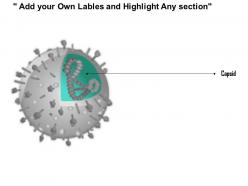
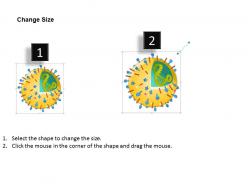
0814 structure of the influenza virion medical images for powerpoint





Try Before you Buy Download Free Sample Product
 Impress Your
Audience
 100%
Editable
 Save Hours
of Time


Clear the cobwebs with our 0814 Structure Of The Influenza Virion Medical Images For Powerpoint. Dust off any feelings of complacency.
People who downloaded this PowerPoint presentation also viewed the following :
0814 structure of the influenza virion medical images for powerpoint with all 10 slides:
Avoid early burn out with our 0814 Structure Of The Influenza Virion Medical Images For Powerpoint. They assist you in handling demands.




FAQs for 0814 structure of the influenza virion medical
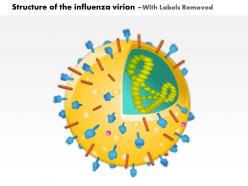
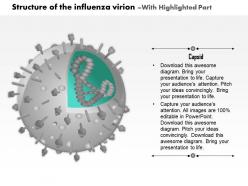
The main structural components of the influenza virion include the lipid envelope, surface glycoproteins (hemagglutinin and neuraminidase), matrix proteins, and segmented RNA genome with associated nucleoproteins. These components work together to enable viral attachment, cell entry, and replication, with pharmaceutical companies and research institutions leveraging this structural knowledge to develop targeted vaccines and antiviral therapeutics for improved patient outcomes.
The influenza virion's lipid bilayer enables infectivity by facilitating host cell membrane fusion, protecting internal viral components during transmission, and providing anchoring sites for essential surface proteins like hemagglutinin and neuraminidase. This membrane structure streamlines viral entry through endocytosis and membrane merger processes, ultimately delivering efficient cellular invasion and replication capabilities across diverse host environments.
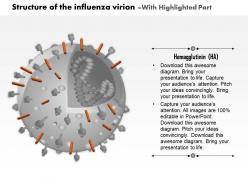
Surface glycoproteins hemagglutinin and neuraminidase serve as critical structural components that enable viral attachment, cell entry, and progeny release from infected cells. These proteins function as primary antigenic determinants, facilitating immune recognition while enabling viral replication cycles, with pharmaceutical companies and research institutions leveraging their structural properties for vaccine development and antiviral therapeutic strategies.
The influenza virus RNA genome consists of eight separate negative-sense RNA segments packaged within the viral core, each associated with nucleoprotein complexes and viral polymerase components. This segmented organization enables antigenic shift through reassortment when different viral strains co-infect cells, ultimately facilitating pandemic potential and complicating vaccine development strategies.
Influenza A, B, and C virions differ primarily in their surface proteins, genetic segments, and structural complexity. While A and B contain eight RNA segments with hemagglutinin and neuraminidase proteins, influenza C has seven segments with hemagglutinin-esterase-fusion protein, ultimately affecting their pandemic potential and vaccine development strategies across pharmaceutical research organizations.
The segmented influenza genome enables rapid evolution through reassortment, where different viral strains exchange gene segments during co-infection, and higher mutation rates due to error-prone RNA polymerase. This genetic flexibility allows influenza to continuously evade immune responses and develop drug resistance, with healthcare systems and pharmaceutical companies finding that seasonal vaccine updates and enhanced surveillance become essential for effective pandemic preparedness and public health management.
The influenza virion's segmented RNA genome and surface protein variability present both challenges and opportunities for vaccine development, requiring frequent updates due to antigenic drift and shift. These structural characteristics enable targeted approaches through universal vaccine strategies, adjuvant optimization, and multi-strain formulations, with pharmaceutical companies increasingly finding that understanding viral architecture delivers more effective immunization strategies and broader population protection.
Influenza virions' lipid envelope membrane makes them relatively fragile outside hosts, with structural proteins like hemagglutinin and neuraminidase degrading rapidly in environmental conditions. These structural characteristics mean the virus survives longer in cool, humid environments, with healthcare facilities and research laboratories finding that understanding virion stability enables better infection control protocols, enhanced vaccine storage methods, and more effective antiviral strategies.
The influenza virion's hemagglutinin proteins bind to sialic acid receptors on host cells, while its lipid envelope enables membrane fusion, and neuraminidase facilitates viral release and spread. These structural components work synergistically, with hemagglutinin triggering endocytosis, the envelope delivering genetic material into cells, and neuraminidase ensuring efficient viral propagation, ultimately enabling influenza's highly effective cellular invasion mechanisms.
Techniques for visualizing influenza virion structure include electron microscopy, cryo-electron microscopy, X-ray crystallography, nuclear magnetic resonance spectroscopy, and mass spectrometry. These advanced imaging methods enable researchers to examine viral components, protein configurations, and structural dynamics, while pharmaceutical companies and research institutions increasingly leverage these technologies for vaccine development, antiviral design, and therapeutic innovations, ultimately delivering faster drug discovery and enhanced pandemic preparedness.
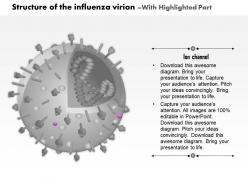
Mutations in influenza virion structure significantly alter antiviral drug susceptibility by modifying target protein binding sites, enzyme active sites, and viral membrane components. These structural changes enable resistance mechanisms against neuraminidase inhibitors, M2 ion channel blockers, and emerging polymerase inhibitors, with many pharmaceutical companies finding that combination therapies and next-generation antivirals help overcome resistance patterns.
The matrix protein (M1) serves as the structural backbone of influenza virions, forming a rigid shell beneath the viral envelope that maintains particle integrity, facilitates viral assembly, and regulates genome packaging. This protein enables efficient viral replication by coordinating membrane curvature, nucleocapsid organization, and budding processes, with research institutions finding that M1's architectural role ultimately determines viral stability and infectivity across different influenza strains.
Structural variations in influenza viruses, particularly in hemagglutinin and neuraminidase proteins, enable cross-species transmission by altering receptor binding specificity and immune evasion capabilities. These molecular adaptations allow viruses to jump between avian, swine, and human hosts through receptor switching mechanisms, ultimately creating pandemic potential with enhanced transmissibility across diverse species barriers.
The host immune response significantly compromises influenza virion structural integrity through antibody neutralization, complement-mediated lysis, and cytotoxic T-cell destruction of infected cells. These immune mechanisms target viral surface proteins, disrupt membrane stability, and prevent viral replication, with healthcare systems increasingly leveraging this understanding to develop more effective vaccines and antiviral therapies that enhance natural immune responses.
Understanding influenza virion structure reveals critical targets for antiviral development, including surface glycoproteins, internal ribonucleoproteins, matrix proteins, and viral polymerase complexes. This structural knowledge enables pharmaceutical companies to design targeted inhibitors, neutralizing antibodies, and combination therapies that disrupt viral entry, replication, and assembly processes, ultimately delivering more effective treatments and enhanced pandemic preparedness capabilities.
-
Awesomely designed templates, Easy to understand.
-
Understandable and informative presentation.