

100 Day Plan Ppt Summary Graphics Download Deliver Strategic Proposal





Try Before you Buy Download Free Sample Product
 Impress Your
Audience
 100%
Editable
 Save Hours
of Time


Influence developments with our 100 Day Plan Ppt Summary Graphics Download Deliver Strategic Proposal. Folks will find your advice genuinely helpful.
People who downloaded this PowerPoint presentation also viewed the following :
100 Day Plan Ppt Summary Graphics Download Deliver Strategic Proposal with all 15 slides:
Establish how animosity has been generated with our 100 Day Plan Ppt Summary Graphics Download Deliver Strategic Proposal. Investigate the cause of intolerance.

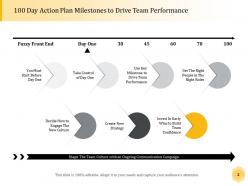
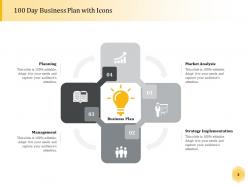
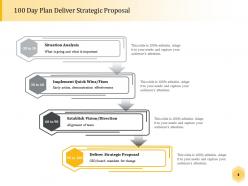
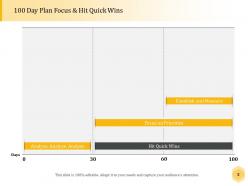




FAQs for 100 Day Plan Ppt Summary Graphics Download
Key components include clear objectives, prioritized initiatives, stakeholder engagement strategies, milestone tracking systems, and resource allocation frameworks. These elements work together by establishing measurable goals, defining accountability structures, and creating communication protocols, with many organizations finding that strategic focus during critical transition periods ultimately delivers faster execution, enhanced team alignment, and sustainable competitive advantage.
Businesses align their 100 Day Plan with strategic goals by establishing clear connections between short-term initiatives and long-term objectives, prioritizing high-impact activities that advance strategic priorities, and implementing measurable milestones that track progress toward broader goals. This strategic alignment ensures focused resource allocation, accelerates momentum on critical initiatives, and delivers early wins that build confidence while maintaining direction toward comprehensive organizational objectives.
Key metrics for a 100 Day Plan include milestone completion rates, budget adherence, stakeholder engagement scores, team productivity indicators, and objective achievement percentages. These measurements enable organizations to track progress systematically while identifying bottlenecks early, with many companies finding that balanced scorecards combining quantitative targets with qualitative feedback deliver the most comprehensive performance insights.
A 100 Day Plan adapts to organizational maturity through different priorities, timelines, and success metrics, with startups focusing on rapid market validation, product development, and initial customer acquisition while established companies emphasize strategic pivots, process optimization, and stakeholder alignment. Through targeted milestones, startups accelerate growth and resource allocation, whereas established organizations streamline existing operations and enhance competitive positioning, ultimately delivering faster market responsiveness.
Stakeholder communication serves as the foundation for 100 Day Plan success, ensuring alignment, managing expectations, and securing necessary resources and support throughout execution. Regular updates, transparent progress reporting, and proactive issue resolution enable leaders to maintain momentum, address concerns quickly, and build confidence, with many organizations finding that structured communication frameworks ultimately deliver stronger buy-in and smoother implementation outcomes.
Teams ensure accountability throughout 100 Day Plan execution by establishing clear ownership assignments, implementing regular check-in schedules, creating transparent progress tracking systems, and defining measurable milestones with specific deadlines. These accountability mechanisms streamline project oversight by enabling real-time performance monitoring, facilitating quick course corrections, and maintaining team alignment, with many organizations finding that structured accountability frameworks ultimately deliver higher completion rates and stronger strategic outcomes.
Common pitfalls include setting unrealistic expectations, lacking stakeholder buy-in, insufficient resource allocation, poor milestone tracking, and inadequate contingency planning. These challenges can derail progress by creating overwhelming workloads, resistance to change, and missed deadlines, with many organizations finding that balanced goal-setting and regular check-ins ultimately deliver sustainable momentum and measurable outcomes.
A 100 Day Plan can be adapted mid-course through regular milestone reviews, stakeholder feedback sessions, performance metric analysis, and flexible goal adjustments based on emerging challenges or opportunities. These adaptation strategies enable organizations to pivot resources, refine priorities, and modify timelines while maintaining momentum, with many companies finding that systematic course corrections ultimately deliver better outcomes than rigid adherence to original plans.
Successful 100 Day Plans include Microsoft's cloud transformation initiative, Amazon's acquisition integration strategies, and healthcare systems' digital implementation roadmaps. These plans streamline organizational change by establishing clear milestones, stakeholder alignment, and measurable outcomes, with many organizations finding that structured approaches deliver faster ROI, improved team performance, and sustainable competitive advantage across industries.
Leadership drives 100 Day Plan success through strategic vision setting, resource allocation, stakeholder alignment, and accountability establishment. Effective leaders streamline implementation by facilitating cross-functional collaboration, removing operational barriers, and maintaining momentum through regular check-ins, with many organizations finding that executive sponsorship and clear communication ultimately deliver faster goal achievement and enhanced team engagement.
Financial implications include budget allocation for new initiatives, resource reallocation costs, potential revenue impacts from operational changes, cash flow considerations, and ROI projections for planned investments. These factors require careful analysis by finance teams, with many organizations finding that front-loading strategic investments during the initial 100 days ultimately delivers enhanced operational efficiency and competitive positioning.
Technology assists in tracking progress through project management platforms, real-time dashboards, automated reporting tools, milestone tracking systems, and collaborative workspaces that centralize data collection. These solutions enable managers to monitor KPIs continuously, generate instant progress reports, and identify bottlenecks early, with many organizations finding that digital tracking accelerates decision-making and ensures accountability throughout their strategic initiatives.
A 100 Day Plan should be reviewed weekly for progress tracking and monthly for strategic adjustments, with formal revisions occurring at 30, 60, and 90-day milestones. This structured approach enables organizations to address emerging challenges, capitalize on unexpected opportunities, and maintain momentum, with many leaders finding that frequent touchpoints ultimately deliver better outcomes and enhanced accountability.
Cross-functional teams collaborate effectively on 100 Day Plans by establishing shared objectives, creating integrated workflows, and implementing regular communication touchpoints across departments. Through structured project management frameworks, teams from marketing, operations, finance, and technology can streamline decision-making, eliminate silos, and accelerate execution, with many organizations finding that cross-departmental collaboration delivers faster results and enhanced strategic alignment.
Essential resources for executing a 100 Day Plan include dedicated team members, clear budget allocation, project management tools, executive sponsorship, and regular communication channels. These resources streamline implementation by ensuring accountability, maintaining momentum, and removing operational barriers, with many organizations finding that combining strong leadership support with systematic tracking tools ultimately delivers faster goal achievement and measurable business outcomes.
No Reviews