

11 Step Hiring Process For Employee Onboarding




Try Before you Buy Download Free Sample Product
 Impress Your
 Audience
 100%
100% Editable
 Save Hours
 of Time


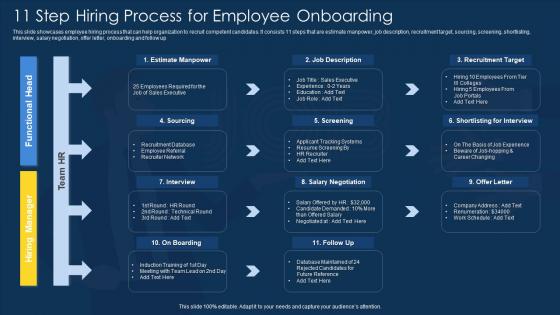
This slide showcases employee hiring process that can help organization to recruit competent candidates. It consists 11 steps that are estimate manpower, job description, recruitment target, sourcing, screening, shortlisting, interview, salary negotiation, offer letter, onboarding and follow up
People who downloaded this PowerPoint presentation also viewed the following :
11 Step Hiring Process For Employee Onboarding with all 6 slides:
Use our 11 Step Hiring Process For Employee Onboarding to effectively help you save your valuable time. They are readymade to fit into any presentation structure.





FAQs for 11 Step Hiring Process
Send the laptop and paperwork ahead of time - nobody wants to spend their first day filling out forms. Get them set up with a buddy right away, someone who can handle all those weird random questions that always pop up. First week should be introductions, company culture stuff, and setting clear goals. Yeah, the IT setup and compliance training is boring as hell, but do it early so they're not locked out of everything on day two. Role-specific training comes next. I'd schedule check-ins at 30, 60, and 90 days to catch any issues before they blow up into bigger problems.
Honestly, just start by ditching all that boring paperwork - automate it. New hires actually get excited about interactive stuff like virtual office tours and gamified training (way better than those soul-crushing PowerPoint marathons). Real-time progress tracking is clutch because you'll spot who's struggling before they do. Oh, and definitely set up a chatbot for random questions - saves everyone from that awkward "sorry to bother you again" dance. I'd probably tackle your biggest time-waster processes first since that's where you'll see results fastest.
Look, company culture is like the foundation for your whole onboarding thing. New hires need to get "how we actually work here," not just their job description. Weave it into everything - first day intros, team lunches, even explaining why you do certain processes the way you do. Don't just hope they'll figure it out by watching everyone else (spoiler: they won't). You've got to point out the cultural stuff directly. Otherwise they're gonna feel totally lost for months. It's the difference between knowing what to do and knowing how to actually succeed at your place.
Dude, new hire feedback is seriously underrated. They'll spot stuff you completely missed - like paperwork that makes zero sense or training gaps that leave people floundering. I've watched companies realize their "amazing" first week was actually drowning people. Ask what felt too fast, what they needed earlier, and honestly what made them feel welcome (that last one's huge). Then actually fix things based on what they tell you. Quick survey after a month works great, maybe chat again at 90 days while it's all still fresh in their heads.
Ugh, the worst thing you can do is dump everything on them day one - like here's your laptop, 47 training modules, and good luck! No structure kills people. Make sure they get the cultural stuff too, not just "here's how to use the printer." I learned this the hard way - always pair them with someone decent who actually wants to help. Oh and don't just disappear after week one! Check in at 30/60/90 days or they'll quietly hate their life and you won't know until they quit.
Send welcome stuff ahead of time and get their tech sorted before day one. Virtual coffee chats are clutch - pair them with a buddy for random questions. Leadership should record quick welcome videos (sounds cheesy but it actually works). Remote people miss those random hallway conversations, so you've got to be way more intentional about intros. Slack channels for newbies help tons. Check in more often their first month since they can't just pop by your desk. Oh, and nail down communication rules upfront - when to Slack vs email vs call.
Track how long it takes new hires to actually be productive - that's huge. Also watch your 90-day and one-year retention rates, plus those onboarding survey scores. Oh, and definitely ask managers how prepared they think new people are after going through everything. People always forget that one but it tells you so much. I'd throw in training completion rates too, maybe some early performance stuff. You don't want to go overboard though - pick like 3 or 4 things that actually matter to your company first, then build from there.
Honestly, the buddy system works great if you do it right. Match each new person with two people - a mentor for the big career stuff and a buddy for random daily questions. The buddy thing is clutch because they need someone to ask "wait, how does this printer work?" without feeling dumb. Train both people on what they're supposed to do though, don't just wing it. I'd do weekly check-ins the first month, then maybe monthly after. Oh and actually think about personalities when you're pairing people up - some combos just don't click.
Start with the basics - training materials for their role, company handbook, compliance stuff (yeah it's boring but whatever). Get them access to your learning system too. Product demos are clutch so they actually know what you guys do. I'd throw in customer personas and some case studies. Definitely pair them with someone as a mentor - honestly that's probably the most important part. Just dump everything in one shared folder or portal so they're not texting you every five minutes asking where to find things. Trust me on that one.
Yeah so it totally depends on what field you're in. Tech companies go hard on tools and culture stuff since you're basically living with your teammates. Finance and healthcare? They'll bore you to death with compliance training, but honestly it makes sense - one screw-up and they're toast. Manufacturing is all about safety and learning the actual equipment. Retail keeps it short and sweet - customer service basics and how to work the register. Really just comes down to what'll get you fired fastest if you mess it up, you know?
Dude, good onboarding is seriously a game-changer - like 82% better retention rates. Your new people need that roadmap from day one, not just random paperwork dumps (we've all been the confused newbie wandering around). Map out what you're doing now first. Look for those annoying gaps where people get lost. The whole thing should feel consistent across departments too. When someone actually understands their role and feels connected to the company culture early on, they'll stick around way longer. It's honestly one of those things that seems obvious but so many places totally botch it.
Honestly, onboarding is perfect for this since new people notice everything anyway. Start by checking who you're introducing them to - make sure it's actually diverse talent, not just whoever's around. Your welcome stuff should reflect different backgrounds too. Oh, and definitely set up mentoring across departments and levels rather than the lazy "here's Jim from accounting" approach. Employee resource groups are huge to mention early on. The trick is being intentional about it instead of crossing your fingers and hoping diversity magically appears. Take a look at your current process first - you'll probably spot tons of easy places to add more inclusive moments.
Get their tech and login stuff sorted before they even start - trust me on this one. Mix up their first week with some virtual meetings and actual face time. Those random coffee chats? They work way better than formal introductions for some reason. Don't overwhelm them day one though. Set them up with buddies both in office and remote. I'd do weekly check-ins their first month since hybrid culture is weird to figure out. You can't just pick it up by being around people like before. Be really clear about when they should be where and how things actually work.
Start with a quick survey before they even show up, then do some practical stuff their first week - maybe role-playing scenarios or whatever fits the job. Manager check-ins are obvious but necessary. Honestly though? The casual conversations usually tell you way more than any formal assessment. I'd also loop in their future teammates early since they'll spot knowledge gaps pretty fast once they start collaborating. Oh and make sure it doesn't feel like you're constantly testing them - that's just gonna stress everyone out. The whole thing should feel more like "how can we help you succeed" rather than "prove yourself."
Check out SHRM and Harvard Business Review first - HBR's case studies are actually really solid. BambooHR and Workday have decent onboarding tools that'll handle most of the boring stuff automatically. Your industry association might have specific tips too, which I always forget to look at but probably should. LinkedIn Learning has some courses on employee experience design if you're into that. Oh, and definitely audit what you're doing now before diving into new stuff. Pick maybe two resources max so you don't overwhelm yourself.
-
Stunning collection! With a wide variety of options available, I was able to find a perfect slide for my presentation. Thank you, SlideTeam!
-
Design layout is very impressive.