3 steps for achieving end to end product traceability

3 steps for achieving end to end product traceability
Slide 1 of 2
Favourites Favourites

Try Before you Buy Download Free Sample Product

Audience Impress Your
Audience
Editable 100%
Editable
Time Save Hours
of Time
The Biggest Sale is ending soon in
0
0
:
0
0
:
0
0
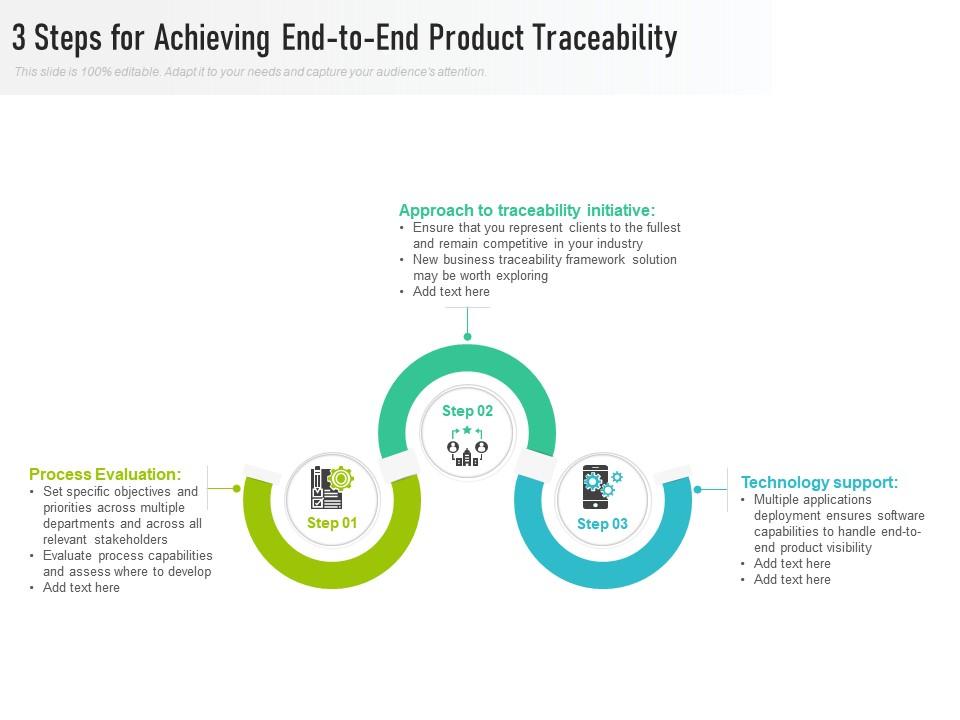
Presenting this set of slides with name 3 Steps For Achieving End To End Product Traceability. This is a three stage process. The stages in this process are Approach To Traceability Initiative, Technology Support, Process Evaluation. This is a completely editable PowerPoint presentation and is available for immediate download. Download now and impress your audience.

People who downloaded this PowerPoint presentation also viewed the following :

FAQs for 3 steps for achieving end to

Product traceability enhances supply chain transparency by providing real-time visibility into product origins, manufacturing processes, and distribution pathways through comprehensive tracking systems. Through technologies like blockchain, RFID, and IoT sensors, companies streamline quality control, accelerate recall processes, and strengthen consumer trust, with many retailers and manufacturers finding that enhanced transparency ultimately delivers competitive advantage and operational efficiency.

Key technologies for product traceability include RFID tags, blockchain systems, IoT sensors, barcode scanning, and GPS tracking solutions. These technologies enhance supply chain transparency by enabling real-time monitoring, automated data collection, and immutable record keeping, with industries like pharmaceuticals, food processing, and automotive manufacturing finding that comprehensive traceability ultimately delivers improved quality control and regulatory compliance.

Companies leverage blockchain to improve product traceability by creating immutable records, enabling real-time tracking, and providing transparent supply chain visibility across all stakeholders. Through distributed ledgers, organizations in food, pharmaceuticals, and manufacturing can verify authenticity, reduce counterfeiting, and accelerate recall processes, ultimately delivering enhanced consumer trust and operational efficiency.

Product traceability enables organizations to meet regulatory compliance by maintaining detailed records of product origins, manufacturing processes, supply chain movements, and quality control measures. Through comprehensive tracking systems, companies can quickly respond to regulatory audits, demonstrate adherence to safety standards, and provide transparent documentation, ultimately reducing compliance risks and avoiding costly penalties while building consumer trust.

Traceability enables rapid identification and isolation of contaminated products by tracking their complete journey from raw materials through distribution channels. With comprehensive tracking systems, companies can pinpoint affected batches within hours rather than days, minimize consumer exposure, reduce recall costs, and protect brand reputation while demonstrating regulatory compliance.

Companies face challenges including complex supply chains with multiple vendors, legacy systems lacking integration capabilities, high implementation costs, and data standardization issues across partners. While these obstacles require strategic planning and investment, organizations in food, pharmaceuticals, and manufacturing are finding that phased rollouts and collaborative vendor partnerships ultimately deliver enhanced transparency and regulatory compliance.

Product traceability significantly enhances consumer trust by providing transparency into sourcing, manufacturing processes, and supply chain integrity, enabling customers to make informed purchasing decisions. Through detailed tracking systems, brands can demonstrate quality commitments, respond quickly to safety concerns, and build authentic relationships with consumers, ultimately delivering stronger brand loyalty and competitive differentiation in increasingly conscious markets.

IoT devices integrate into traceability solutions through RFID tags, GPS sensors, temperature monitors, barcode scanners, and blockchain connectivity, enabling continuous data collection throughout supply chains. These technologies streamline operations by providing real-time location tracking, environmental condition monitoring, and automated quality alerts, with manufacturers in food, pharmaceuticals, and automotive sectors finding significantly enhanced transparency and faster recall responses.

Industries such as pharmaceuticals, food and beverage, automotive, electronics, and medical devices benefit most from robust product traceability systems. These sectors face stringent regulatory requirements, safety concerns, and complex supply chains, with many organizations finding that comprehensive traceability enables faster recall responses, enhanced regulatory compliance, and improved customer trust, ultimately delivering competitive advantage in increasingly regulated markets.

Product traceability enhances sustainability by enabling precise tracking of materials, energy consumption, production processes, and distribution chains throughout product lifecycles. Through detailed monitoring systems, organizations streamline resource allocation, minimize overproduction, and reduce packaging waste, while identifying inefficiencies across supply networks, ultimately delivering lower environmental impact and operational cost savings.

Best practices for accurate traceability data collection include implementing automated scanning systems, establishing standardized data entry protocols, conducting regular quality audits, integrating real-time monitoring technologies, and maintaining comprehensive staff training programs. These approaches streamline operations by minimizing human error, enhancing data consistency, and ensuring regulatory compliance, with many manufacturing and pharmaceutical companies finding that automated systems ultimately deliver greater transparency and faster recall responses.

Small businesses can implement product traceability through cost-effective solutions like QR codes, basic barcode systems, cloud-based inventory software, and simple batch numbering processes. Many retailers, food producers, and manufacturers find that starting with digital tracking tools and leveraging existing smartphone technology delivers enhanced transparency and customer trust while minimizing upfront investment costs.

Key metrics for measuring traceability system effectiveness include time-to-trace incidents, data accuracy rates, system response times, compliance audit scores, and cost per traced unit. These measurements enable organizations to optimize supply chain visibility, reduce recall response times from days to hours, and demonstrate regulatory compliance, with many manufacturers finding that comprehensive tracking ultimately delivers enhanced customer trust and operational efficiency.

Product traceability facilitates ethical sourcing by providing end-to-end visibility into supply chains, enabling companies to verify supplier practices, monitor labor conditions, and ensure sustainable sourcing methods. Through blockchain technology and digital tracking systems, organizations can authenticate ethical claims, quickly identify problematic suppliers, and demonstrate compliance to consumers, ultimately delivering enhanced brand trust and competitive advantage in increasingly conscious markets.

Data analytics enhances product traceability by identifying patterns in supply chain disruptions, predicting potential contamination risks, and optimizing recall processes through real-time monitoring. These capabilities enable manufacturers and retailers to minimize response times during safety incidents, reduce waste through targeted interventions, and ultimately deliver greater consumer confidence while maintaining competitive advantage in increasingly regulated markets.

Ratings and Reviews

0% of 100
Review Form
Write a review
Most Relevant Reviews

No Reviews