


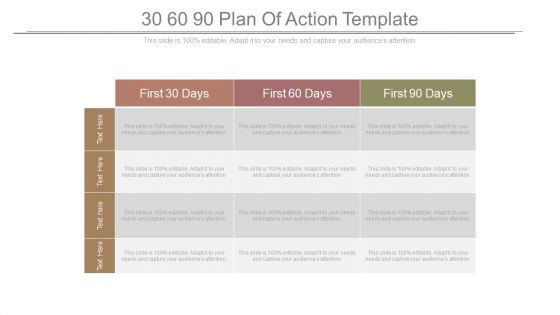
30 60 90 plan of action template powerpoint templates





Try Before you Buy Download Free Sample Product
 Impress Your
 Audience
 100%
100% Editable
 Save Hours
 of Time


If you have duties and responsibilities glued to your priority list then you will definitely require our 30 60 90 plan of action template PowerPoint templates. Our team of experts has made all possible efforts to come up with a design which is structured, systematic and well articulated. Any strategic move within the organization is governed by a plan of action which might be for 30, 60 or 90 days depending on the need of the organization or project it is aiming at. This 30, 60, 90 day plan PPT presentation PowerPoint model can help the presenter to design a presentation on a strategic planning schedule. A 30-60-90 day plan is a written outline of the strategy and the plans one has for the first three months of the job. It’s one of the most impactful tools one can bring to the final stage of the employment interview. The 30 60 90 day transition plan presentation model can be a PowerPoint presentation or paper-based.Discharge your responsibility with our 30 60 90 Plan Of Action Template Powerpoint Templates. Match up to the expectations of you.
People who downloaded this PowerPoint presentation also viewed the following :
30 60 90 plan of action template powerpoint templates with all 7 slides:
Directions are clear cut with our 30 60 90 Plan Of Action Template Powerpoint Templates. They ensure explicit compliance.


FAQs for 30 60 90 plan of action
Okay so break it into three chunks - first month is all about learning the ropes, meeting people, figuring out how things actually work there. Month two you start jumping into real projects while still soaking up info. Last stretch is when you're really hitting your stride and maybe even spotting things that could work better. Here's the thing though - most people totally skip that first learning phase and dive straight into doing stuff, which honestly backfires. Oh, and definitely set some concrete goals for each phase so you can actually show your boss what you've been up to. Makes those check-ins way less awkward.
So basically you split your project into three chunks - 30, 60, and 90 days. First month is all about quick wins you can knock out fast. Days 31-60, you're building momentum with the meatier stuff. Then by day 90, you hit those big strategic goals. Honestly, it just stops you from flying blind on timelines. Your stakeholders will actually thank you because they can see real progress instead of wondering what the hell you're doing all day. Plus it forces you to figure out what's actually urgent vs what can wait. Just take whatever project you're working on and try breaking it down this way - game changer.
Honestly, sales and healthcare are where I see these plans work best. Tech companies love them too - there's just so much to learn with all their systems and processes. Consulting firms basically require them at this point. Marketing teams? Total mess without clear 30-60-90 goals, trust me. You've got campaigns everywhere and like a million stakeholders breathing down your neck. Finance and manufacturing need the structure for compliance stuff. But really, if someone's managing relationships or has specific performance targets, they'll probably benefit. I'd start with your most important new hires first though.
Honestly, you gotta tailor this to whatever job you're going for - a sales plan looks nothing like an engineering one. First 30 days should be all about soaking up info. Meet everyone, figure out the tools, understand how stuff actually works there. Month two is where you start pulling your weight on real projects and building solid relationships. By day 90, you need to show you can work independently and think bigger picture. Here's what I'd do though - skip the generic "learn company culture" fluff and ask your manager straight up what they want to see in each phase. They'll tell you exactly what matters most.
Don't make your goals super vague - like "understand the company culture" means nothing measurable. Get specific instead: meet 5 key people by day 30, that kind of thing. Also, resist cramming everything into your first month because honestly, that's just setting yourself up to fail. Make sure your plan isn't so rigid that when your boss suddenly throws a random project at you (which always happens), you're completely thrown off. Oh, and avoid those generic goals that sound good on paper but don't actually help you succeed. Keep things realistic and leave room to pivot.
So basically, you give new people a clear roadmap instead of just dumping them in and crossing your fingers. First month is all systems training and meeting the team. Month two they start taking on real work with backup. By month three? They're doing stuff on their own. Honestly saved my sanity when I started doing this - no more deer-in-headlights looks from new hires wondering what they're supposed to do. Sets expectations for everyone too. Oh and make templates for different roles so you don't have to reinvent the wheel every single time.
So track different stuff as you move through each month. Your first 30 days? Just focus on learning - training done, meetings you went to, people you actually talked to. Month two gets weird because you're doing small projects and getting feedback but you're still not really "productive" yet (totally normal btw). Then the final stretch is when you measure real output - goals hit, actual work you can do solo. Honestly, the middle phase always feels awkward but don't stress about it. Just set up some simple way to track this stuff from day one and be real about where you're at.
Set up check-ins at week 2, then 30, 60, and 90 days with your manager and anyone else who matters. Don't just listen though - ask specific questions about how you're doing and what needs tweaking. The informal chats are honestly where you'll get the best intel, so grab coffee with people between meetings. Write down what they tell you and actually adjust your approach. Shows you're not just nodding along, you know? At each check-in, I always ask "what should I start, stop, or continue?" Super straightforward but you'll get real actionable stuff for your next phase.
Honestly, just use whatever you're already comfortable with. Word or Google Docs work fine for basic stuff. Project management tools like Trello or Asana are solid if you want to track progress over time. I've been using Notion lately and it's pretty clean for templates - maybe overkill though? Excel works too if you're into spreadsheets. The main thing is picking something you'll actually stick with. Don't get caught up in finding the "perfect" tool when a simple document might do the trick.
Honestly, just make it a simple doc or slides you can walk through with your manager. Split each 30/60/90 section into concrete goals - like "finish modules 1-3" instead of the useless "get familiar with stuff." Bullet points are your friend here, trust me. Include who you'll be working with and what resources you need. The trick is being super specific about how you'll measure success at each checkpoint. Oh, and don't overthink the format - I've seen people spend way too much time making theirs look fancy when the content matters more. Present it confidently and be ready to explain your reasoning.
Honestly, stakeholder engagement can totally make or break your 30-60-90 day plan. Without buy-in from your manager and team, you're basically just making a pretty document nobody cares about. I've seen this happen so many times. You'll want to set up regular check-ins from the start because priorities always shift - like, always. When you involve people in the actual planning process, they become invested in seeing you succeed instead of just watching you struggle. Oh, and actually stick to those scheduled touchpoints once you set them up. People notice when you don't follow through on that stuff.
First thing - dig into your company's quarterly goals before you even touch a pen. Map your plan phases to whatever they're prioritizing. Customer retention is big this quarter? Make that your 60-day focus. Honestly, just ask your manager straight up: "what does success look like for me supporting our team goals?" Saves you from guessing wrong later. Don't just tick boxes - aim for metrics leadership actually cares about. Oh, and definitely schedule a 30-day check-in to pivot if things aren't working. Trust me on that one.
Yeah, most big companies keep their 30-60-90 plans pretty close to the vest, but here's what I've seen work. Google goes heavy on relationship-building first 30 days, then you're diving into actual projects by day 60. Salesforce does this thing where it's learn the product (30), shadow calls (60), then boom - you're managing accounts (90). HubSpot's similar but they throw in specific metrics at each stage, which honestly makes way more sense than just winging it. The whole thing breaks down to learning stuff, building relationships, and having something concrete to show for it. Oh and metrics aren't negotiable - without them you're just hoping things work out.
Honestly, flexibility is everything with these plans. Don't lock yourself into crazy rigid deadlines - give yourself target ranges and buffer time because stuff always comes up. Weekly check-ins with your manager are clutch for staying on track (and they actually want to help you succeed). I always keep a "parking lot" list for random requests that pop up, then decide if they're worth ditching current priorities for. Your plan should evolve as you go. Business needs shift constantly, so update it and don't feel bad about pivoting when necessary.
Honestly, just be super transparent those first few months. Weekly one-on-ones with your boss are clutch, plus check in with key people every couple weeks. I'd rather overshare than leave people wondering what I'm up to, you know? Document everything in Slack or whatever - your wins, roadblocks, all of it. People actually expect tons of questions from the new person, so don't hold back. Oh and grab coffee with teammates when you can. The informal stuff matters too. Just make sure you follow through on anything you promise to do.
-
Excellent template with unique design.
-
Designs have enough space to add content.