


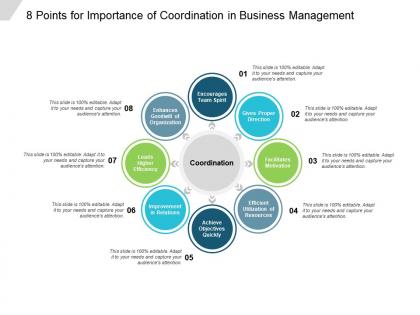
8 points for importance of coordination in business management




Try Before you Buy Download Free Sample Product
 Impress Your
 Audience
 100%
100% Editable
 Save Hours
 of Time


Cement the connections you build with our 8 Points For Importance Of Coordination In Business Management. It helps forge enduring friendships.
People who downloaded this PowerPoint presentation also viewed the following :
8 points for importance of coordination in business management with all 5 slides:
Access anything and everything with our 8 Points For Importance Of Coordination In Business Management. Gain entry into any corner of the globe.




FAQs for 8 points for importance of coordination
Honestly, most coordination problems come down to people not knowing who's supposed to do what. Map out your dependencies first - trust me, finding bottlenecks early saves so much drama later. Daily check-ins work way better than those marathon weekly meetings everyone zones out in. Don't just buy fancy project management software and hope people use it - you actually have to make them care about updating it. The trick is holding people accountable without being that micromanager everyone hates. Oh, and shared timelines aren't negotiable. Sounds basic but half the teams I've worked with skip this step entirely.
Cross-functional teams are honestly a pain because you're juggling different departments with totally different priorities. Regular teams? Way easier since everyone reports to the same boss and follows similar processes. But when you're working cross-functionally, prepare to live in meetings - I swear half my time goes to "alignment" calls and status updates. Documentation becomes super important too, along with cleaner handoffs between people. My advice: set up regular check-ins from day one and pick someone to be the main coordinator. Without that structure, things fall apart quick. It's just the nature of the beast when everyone has different goals pulling them in different directions.
Okay so basically you need three types of tools. Slack or Teams for messaging, Zoom for video calls - pretty standard stuff. Project management is where it gets tricky though. Asana, Trello, Monday.com all work, but honestly just pick whatever doesn't annoy you because you'll be staring at it constantly. Google Workspace or Notion handle the document sharing side of things. Here's the thing - don't overthink it. Pick one tool for each thing and force everyone to stick with it. I've seen teams waste so much time bouncing between apps it's ridiculous.
Think of good coordination like your body's nervous system - when it's working, everything just clicks. You'll see decisions happen faster, less wasted effort, and resources actually go where they're needed. Teams stop accidentally sabotaging each other (which happens more than you'd think). Projects finish on schedule, productivity shoots up, people are happier at work. The financial results follow naturally. Honestly, I'd start by figuring out where things fall apart in your current setup - those broken spots are usually goldmines for quick improvements.
You've gotta model it first - they'll copy what you do. Set up regular check-ins focused on blockers and dependencies, not just boring status stuff. Default to sharing everything through docs and open channels. Cross-functional projects work great since people actually have to collaborate on shared goals. Here's what I learned the hard way though - coordination feels pointless until it saves your butt during a crisis! So celebrate those wins when they happen. Make it safe for people to flag problems early without getting blamed. Oh, and start tomorrow by asking everyone what info they need from others to actually do good work. Simple but works.
Dude, communication literally makes or breaks everything. Without it, people are just guessing what they're supposed to do. I've watched projects completely fall apart because someone thought "oh, they'll figure it out" - spoiler alert, nobody did. You need those regular check-ins and shared docs so everyone actually knows who's handling what and when stuff's due. Being honest about delays saves way more headaches later, trust me. Set up a rhythm early - even if it feels like overkill at first. Your stressed future self will definitely appreciate it when things get crazy.
Honestly, cultural differences can totally derail team coordination if you're not careful. Some people are super direct while others hint around issues - drives me crazy sometimes! Time zones are obvious but what really gets you is different expectations about punctuality and hierarchy. Like, is "10am" actually 10am or 10:15? Does everyone need to weigh in on decisions or just the senior person? My advice: set clear communication rules from day one. Ask people straight up how they prefer to work instead of guessing. Regular check-ins help too, especially across time zones. Trust me, a quick "how's this working for everyone?" saves so much headache later.
Ugh, communication breakdowns are the worst part honestly. Teams in different time zones miss stuff constantly, then dependencies turn into total disasters. I've watched projects get delayed for months because nobody realized Team A was stuck waiting on Team B. Scope creep happens too - suddenly everyone thinks their piece is the most urgent. Plus you're constantly fighting over resources since people get pulled everywhere. The stakeholder alignment thing is brutal. Set up solid check-ins from day one and be super clear about who talks to who. Catch problems before they snowball into chaos.
Honestly, templates are a game changer for keeping everyone on the same page. Your team won't waste time figuring out where to put stuff or how to format things. Charts make complex ideas way clearer than just explaining everything verbally - like, why make people work harder to understand your point? I learned this the hard way after sitting through too many messy presentations. Create 2-3 standard templates for your common meeting types. You'll see coordination improve pretty much right away. It's one of those simple fixes that actually works.
Ugh, coordination issues are the worst! First thing - figure out where it all went sideways. Was someone unclear on their role? Did deadlines get missed? Maybe people were working off different info (happens more than you'd think). Set up regular check-ins and get everyone using the same project tools. Seriously, make sure there's ONE place for updates and decisions - not scattered across email, Slack, and random docs. Oh, and don't let people stay confused just because they're embarrassed to ask. I've watched teams spiral for weeks over that. Deal with problems right when they pop up instead of hoping they'll magically fix themselves.
Track stuff like project completion rates and how often handoffs get delayed. Numbers help, but they're not everything. I'd also sit in on meetings to see if info actually flows between people. Quick surveys work too - ask where collaboration sucks. Watch for duplicate work or missed dependencies, that's usually a dead giveaway. Honestly, most coordination problems boil down to unclear roles or people just not talking. Regular check-ins catch this stuff early before it becomes a mess.
Honestly, you need clear roles or your team will be a mess. Nobody knows who's doing what, so stuff gets done twice or not at all. I've seen so many projects where people just assume someone else is handling the important bits. Decision-making gets way faster too since everyone knows who calls the shots on different stuff. Otherwise you're stuck in endless meetings just sorting out basic logistics - such a waste of time. Try mapping out who owns what in your current work. You'll probably find some pretty obvious gaps nobody noticed before.
Honestly, Agile is pretty great for getting teams on the same page. Daily standups are where the magic happens - everyone quickly shares what they're doing and if they're stuck on anything. No more wondering what your teammates are up to. Sprint planning helps you all agree on what's actually important this round, and retrospectives let you figure out what's working (or totally isn't). The visual boards are clutch too - you can literally see progress happening. Short sprints mean you're constantly checking in and pivoting if needed. If you're not doing standups yet, start there. They'll change everything.
Dude, failed projects are brutal but they teach you coordination isn't negotiable. Communication breakdowns will torpedo your project faster than running out of money - I've seen it happen so many times. Teams end up doing the same work twice, deadlines get missed because nobody knows their role, and stakeholders get blindsided by problems. Those "simple" fixes? They become total nightmares when there's no clear ownership. People make assumptions instead of actually talking. Weekly check-ins are a lifesaver though. Define who's responsible for what from day one, and honestly just overcommunicate everything rather than hoping everyone gets it.
Yeah, training programs can totally help with team coordination! I'd focus on cross-functional workshops and communication exercises - maybe some role-playing where people practice those department handoffs. Active listening and conflict resolution training work great too. Honestly, most coordination issues boil down to people not communicating well in the first place. The trick is making it hands-on with real feedback, not just sitting through PowerPoint slides (ugh). Start by figuring out where things break down most in your processes right now, then build training around fixing those exact problems.
No Reviews