

Acquiring Competitive Advantage With Brand Repositioning Strategy Powerpoint Presentation Slides





Try Before you Buy Download Free Sample Product
 Impress Your
Audience
 100%
Editable
 Save Hours
of Time


Repositioning can refresh a companys brand image and bring new life to an aging product. Grab our Acquiring Competitive Advantage with Brand Repositioning Strategy template. It is professionally curated for a company to address market gaps and offer new solutions to customers. Our Brand repositioning deck includes the business overview, which describes the products delivered with a price list and highlights the companys current problem. It focuses on the need and importance of product repositioning. Additionally, our Market repositioning PPT mentions the internal and external product analysis with SWOT and brand comparative analyses. It also emphasizes current positioning vs. expected positioning. Moreover, our Strategic repositioning PPT describes the powerful strategies for repositioning, which include packaging selection, pricing strategy, tagline revamp, and redesign of product logo, along with detailed marketing strategies. Lastly, it contains dashboards to measure the success of product repositioning. Get access to this powerful template now.
People who downloaded this PowerPoint presentation also viewed the following :
Content of this Powerpoint Presentation
Slide 1: This slide displays the title Acquiring Competitive Advantage with Brand Repositioning STRATEGY.
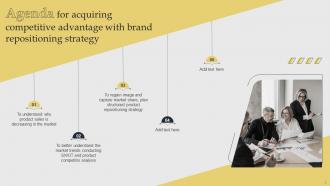
Slide 2: This slide displays the title Agenda for acquiring competitive advantage with brand repositioning strategy.
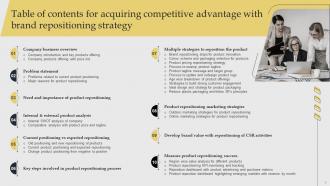
Slide 3: This slide exhibit table of content.
Slide 4: This slide exhibit table of content that is to be discuss further.
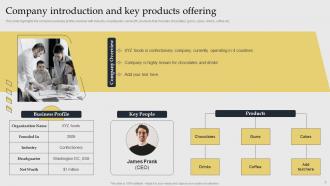
Slide 5: This slide highlights the company business profile overview with industry, headquarter, net worth, products that includes chocolates, gums, cakes, drinks, coffee etc.
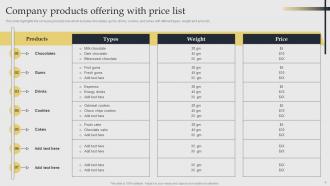
Slide 6: This slide highlights the company products line which includes chocolates, gums, drinks, cookies, and cakes with different types, weight and price list.
Slide 7: This slide exhibit table of content that is to be discuss further.
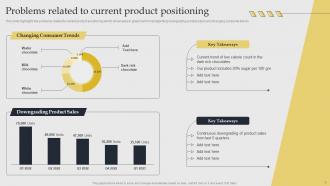
Slide 8: This slide highlights the problems related to current product positioning which showcases in graphical format depicting downgrading product sales.
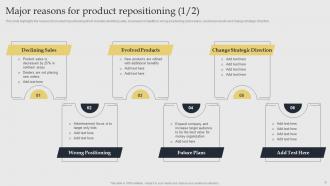
Slide 9: This slide highlights the reasons for product repositioning which includes declining sales, increased competition, wrong positioning, future plans.
Slide 10: This slide highlights the factors which trigger towards product repositioning which includes increased competition, consumer trends, market environment.
Slide 11: This slide exhibit table of content that is to be discuss further.
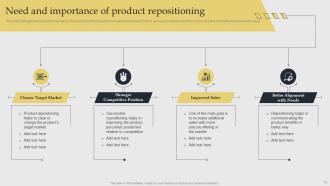
Slide 12: This slide highlights the need and importance of product repositioning which includes clearer target market, stronger competitive position, improved sales.
Slide 13: This slide exhibit table of content that is to be discuss further.
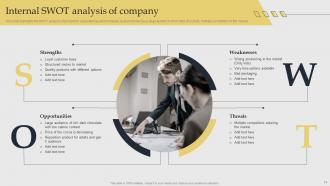
Slide 14: This slide highlights the SWOT analysis of product for repositioning which includes loyal customer base, large audience of rich dark chocolate, multiple competitors.
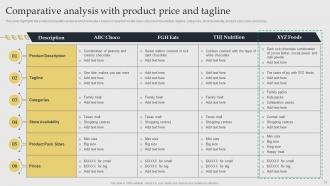
Slide 15: This slide highlights the product competitor analysis which includes 4 brand comparison on the basis of product description, tagline, categories, store availability.
Slide 16: This slide exhibit table of content that is to be discuss further.
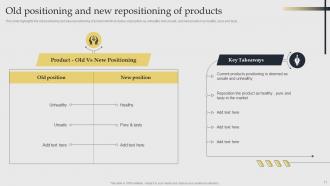
Slide 17: This slide highlights the old positioning and new repositioning of product which includes old position as unhealthy and unsafe, and new position.
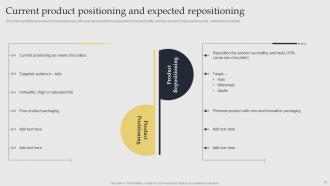
Slide 18: This slide highlights the product current positioning with expected repositioning target which includes healthy and tasty product, target audience kids.
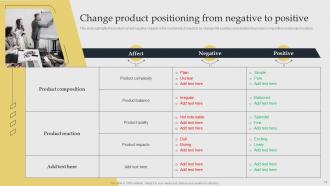
Slide 19: This slide highlights the product current negative impacts in the market which needs to be change into positive consideration for product composition.
Slide 20: This slide exhibit table of content that is to be discuss further.
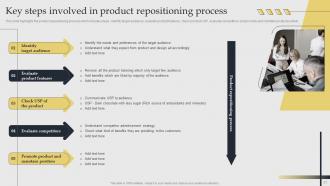
Slide 21: This slide highlights the product repositioning process which includes steps - identify target audience, evaluate product features, check product USP.
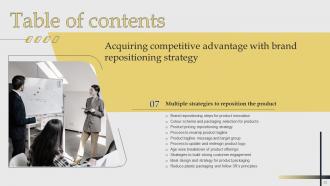
Slide 22: This slide exhibit table of content that is to be discuss further.
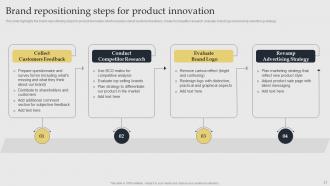
Slide 23: This slide highlights the brand repositioning steps for product innovation which includes collect customer feedback, conduct competitor research.
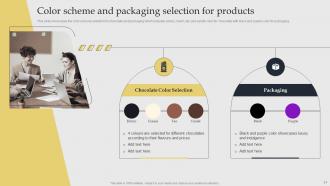
Slide 24: This slide showcases the color scheme selection for chocolate and packaging which includes ebony, cream, tan and carafe color for chocolate.
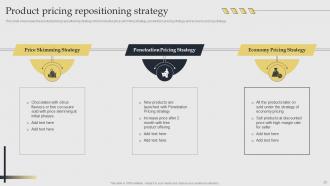
Slide 25: This slide showcases the product pricing repositioning strategy which includes price skimming strategy, penetration pricing strategy and economy pricing strategy.
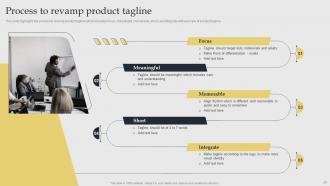
Slide 26: This slide highlights the process to revamp product tagline which includes focus, meaningful, memorable, short, and integrate with example of product tagline.
Slide 27: This slide highlights the process to revamp product tagline which includes focus, meaningful, memorable, short, and integrate with example of product tagline
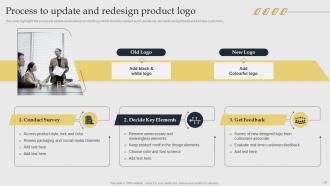
Slide 28: This slide highlights the process to update and redesign product logo which includes conduct audit, decide key elements and get feedback from the customers.
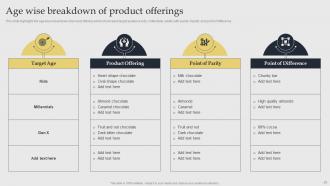
Slide 29: This slide highlights the age wise breakdown of product offering which showcases target audience kids, millennials, adults with points of parity and difference.
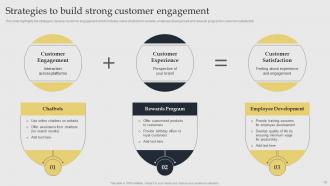
Slide 30: This slide highlights the strategy to develop customer engagement which includes online chatbots for website, employee development and rewards program.
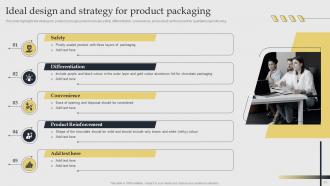
Slide 31: This slide highlights the strategy for product packaging which includes safety, differentiation, convenience, and product reinforcement for qualitative repositioning.
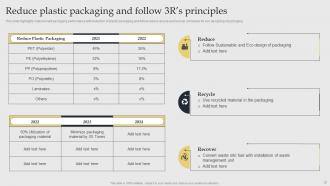
Slide 32: This slide highlights improvement packaging performance with reduction of plastic packaging and follow reduce recycle and recover principles for eco designing.
Slide 33: This slide exhibit table of content that is to be discuss further.
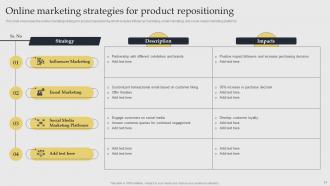
Slide 34: This slide showcases the online marketing strategy for product repositioning which includes influencer marketing, email marketing, and social media marketing.
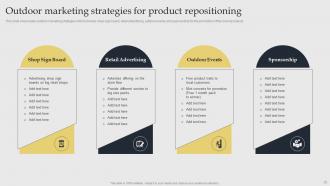
Slide 35: This slide showcases outdoor marketing strategies which involves shop sign board, retail advertising, outdoor events and sponsorship for the promotion of the brand.
Slide 36: This slide exhibit table of content that is to be discuss further.
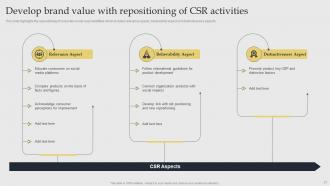
Slide 37: This slide highlights the repositioning of corporate social responsibilities which includes relevance aspect, believability aspect and distinctiveness aspects.
Slide 38: This slide exhibit table of content that is to be discuss further.
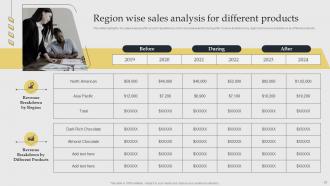
Slide 39: This slides highlights the sales analysis after product repositioning which showcases before during after revenue breakdown by region and revenue breakdown.
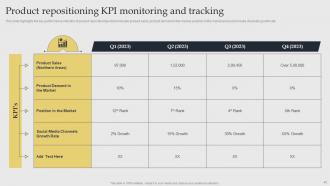
Slide 40: This slide highlights the key performance indicator of product repositioning which includes product sales, product demand in the market, position in the market.
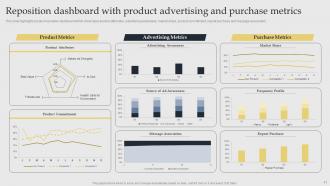
Slide 41: This slide highlights product reposition dashboard which showcases product attributes, advertising awareness, market share, product commitment.
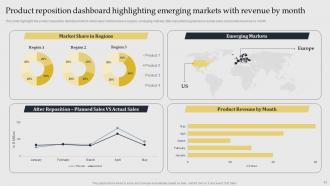
Slide 42: This slide highlights the product reposition dashboard which showcases market share in regions, emerging markets, after repositioning planned vs actual sales.
Slide 43: This is the icons slide.
Slide 44: This slide presents title for additional slides.
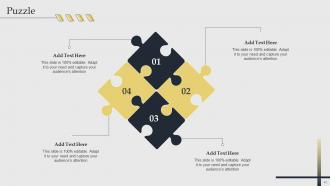
Slide 45: This slide shows puzzle for displaying elements of company.
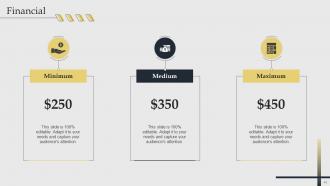
Slide 46: This slide showcase Financial.
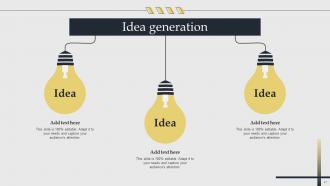
Slide 47: This slide exhibits ideas generated.
Slide 48: This slide showcase Target.
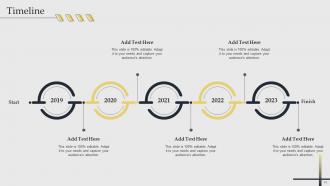
Slide 49: This slide exhibit Timeline.
Slide 50: This slide depicts 30-60-90 days plan for projects.
Slide 51: This slide shows about your company, target audience and its client's values.
Slide 52: This is thank you slide & contains contact details of company like office address, phone no., etc.
Acquiring Competitive Advantage With Brand Repositioning Strategy Powerpoint Presentation Slides with all 57 slides:
Use our Acquiring Competitive Advantage With Brand Repositioning Strategy Powerpoint Presentation Slides to effectively help you save your valuable time. They are readymade to fit into any presentation structure.












FAQs for Acquiring Competitive Advantage With Brand Repositioning Strategy
Honestly, the writing's on the wall when your sales keep dropping and competitors are stealing customers left and right. Your audience might be telling you straight up that you feel outdated - that feedback stings but listen to it. Big demographic shifts are another red flag, or when you're constantly justifying your prices because people don't get the value anymore. Here's the thing that really gets me though - if your own team can't explain what makes you different, you're in trouble. That's when you know it's time to step back and figure out where you actually stand versus where you want to be.
Start with surveys to see how customers actually view your brand - the gap between reality and your assumptions can be brutal. Social listening tools show what people really say online too. Check your market share trends and whether you're hitting the right demographics. I'd also compare your messaging against competitors to see if you're even standing out. Customer acquisition costs tell a story here. The big question: is your positioning driving actual purchases and loyalty? That's what matters. Oh, and run these checks quarterly - brand perception shifts faster than you think, especially these days.
Dude, customer feedback is everything when you're repositioning. First, you need to figure out what's broken with your current brand - like, what are people actually thinking about you? Then test your new ideas before going all-in. I've watched companies blow months on repositioning just to launch something that made zero sense to customers. Pretty painful to watch, honestly. Don't just collect feedback to say you did it - actually use what people tell you. Short surveys work. Focus groups too. Keep asking throughout the whole process because you'll save yourself from looking completely out of touch later.
So basically, when market trends shift, you're kinda forced to reposition or risk looking totally out of touch. Like when sustainability became huge and every brand suddenly went green, or how traditional companies had to start flexing their tech muscles during digitization. You'll know it's time when competitors start eating your lunch by riding new trends while you're still stuck in the past. Honestly, being a CMO these days is like half marketer, half trend forecaster. The trick is constantly watching cultural shifts and consumer behavior - then audit how those trends match up against where people actually see your brand's strengths and weaknesses.
Honestly, the biggest thing is don't alienate your current customers - they'll feel like you abandoned them if you change too drastically. Market confusion is another huge one. People won't know what you actually do anymore. Your team might get lost too if everyone's not on the same page about where you're headed. Oh, and there's always that awkward possibility that your new positioning just... doesn't land with anyone. I've seen so many companies completely bomb this. Test it out with focus groups first, for sure. Gradual changes work way better than shocking everyone overnight.
Start with a messaging doc - your main guide for tone, key points, all that stuff. Share it with literally everyone involved, and I mean everyone. Had a friend whose campaign got weird because customer service wasn't looped in and kept saying outdated things. Pretty embarrassing honestly. Check in regularly across all your channels - social, PR, sales stuff, whatever. Short sentences work here. Having one person or small team review everything before it launches is clutch. They're basically your messaging gatekeepers making sure nothing goes off-brand.
Apple's the obvious one - went from almost dead to lifestyle brand with "Think Different" and the iPod. Old Spice was brilliant too, flipping from dad's boring aftershave to young guys' must-have with those crazy viral ads. Then there's McDonald's trying the "quality ingredients" angle plus all-day breakfast when sales tanked. Oh, and Domino's straight-up said "yeah our pizza sucks" then rebuilt everything around better recipes. The thing is, you've gotta admit what's broken first. Find something that actually sets you apart, then go all-in on changing everything to match that new direction.
Don't do a massive rebrand overnight - that's brand suicide honestly. Instead, tweak things bit by bit. Your logo shape and main colors? Those stay. But maybe freshen up the fonts or switch your photo style. I'd test new directions with some focus groups first (saves you from disasters later). Then roll changes out slowly - update your website first, then business cards, whatever. People need time to adjust without feeling like you're a totally different company. It's kinda like... you're still you, just with better style. Your loyal customers won't freak out, and you'll attract new ones too.
Okay so first thing - blast it everywhere at once. Website, social media, packaging, all that stuff needs to match up or you'll confuse people. Tell the story behind why you're changing through PR and content marketing (this part's actually kinda fun). Email your existing customers since they'll be like "wait what happened?" Your employees are huge here too - they gotta get it before anyone else will. Oh and don't go overboard trying to be fancy. Keep it real and give it time to actually sink in with people.
Honestly, the biggest thing is that established brands are stuck dealing with all their baggage - like, years of customer perceptions you've got to work around. Startups get a clean slate, which sounds amazing until you realize nobody knows who you are. When big brands reposition, they can't go too crazy or they'll piss off existing customers. Startups? They can pivot hard since there's not much to lose anyway. I'd say figure out what brand equity you actually have first - that'll tell you how bold you can be with changes.
Honestly, the internal stuff is what'll make or break this whole thing. Get your leadership on the same page first - that's non-negotiable. Then work your way down through the team so everyone actually gets the new direction. Your sales people especially need to believe it, not just recite it. Update how you hire and train people too. Oh, and don't forget about your actual workspace and processes - they should match what you're trying to become. This whole internal alignment thing always takes way longer than anyone expects, but it's what separates the companies that nail repositioning from the ones that just confuse everyone.
Honestly, social media is perfect for testing your repositioning before you fully commit. Post some behind-the-scenes stuff about how your brand's evolving - people eat that up. Run polls, get feedback on new messaging. Instagram Stories and LinkedIn work great for this kind of thing because your audience feels like they're getting the inside scoop. Don't just announce the final result though. Be transparent about the whole journey and let people actually help shape where you're going. I swear, your followers will give you better insights than most consultants. Try posting one "work-in-progress" piece this week and see what happens.
So you need both the perception stuff and the hard numbers, honestly. Brand awareness surveys and sentiment analysis will tell you if people actually get your new positioning. The business side - market share, customer acquisition, revenue from those repositioned segments - that's where you'll see real impact, though repositioning is slow to show up in sales data which is annoying. Don't forget employee engagement scores because if your team doesn't buy in, you're screwed. Oh, and do quarterly check-ins instead of waiting a whole year to see what's working.
You definitely need to check out what your competitors are doing first - can't reposition in a bubble. Map out where the top 5-7 players sit so you can spot the gaps and avoid looking like a copycat. I've watched brands crash because they skipped this step and ended up way too similar to someone already established. Their positioning statements, visuals, messaging - audit all of it. You'll figure out what actually works with customers and what price points make sense. Plus you won't repeat their dumb mistakes, which honestly saves so much time and money.
Ugh, so many ways to screw this up. First mistake is skipping customer research - you think you know what they want but you don't. Companies also rush without testing anything first, which is just dumb. Then they throw away everything that made their brand special to begin with. Oh, and they make their messaging way too complicated when simple actually works better. But honestly? The worst is not getting your own team on board first. Then you've got employees who can't explain why you're changing, and it's a mess. My advice - figure out if customers even want this new direction before you do anything else.
-
I came across many PowerPoint presentations with excellent creatives and I believe they would be beneficial to my work.
-
A perfect platform for all your presentation needs. Unlimited products at an affordable price.