

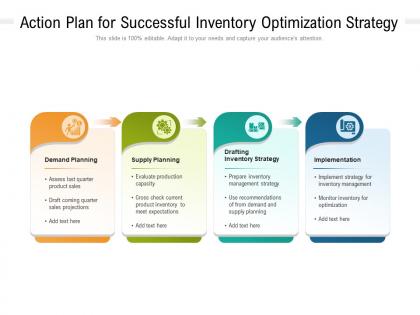
Action plan for successful inventory optimization strategy




Try Before you Buy Download Free Sample Product
 Impress Your
 Audience
 100%
100% Editable
 Save Hours
 of Time


Our Action Plan For Successful Inventory Optimization Strategy are topically designed to provide an attractive backdrop to any subject. Use them to look like a presentation pro.
People who downloaded this PowerPoint presentation also viewed the following :
Action plan for successful inventory optimization strategy with all 2 slides:
Use our Action Plan For Successful Inventory Optimization Strategy to effectively help you save your valuable time. They are readymade to fit into any presentation structure.
FAQs for Action plan for successful
Honestly, the biggest wins are cutting costs and freeing up cash flow - that stuff adds up fast. Your holding costs drop, you avoid those annoying stockouts, and suddenly you have warehouse space you didn't know existed. Customers actually get their stuff on time too, which keeps them from complaining. Over time you'll get way better at predicting what people want, so less money wasted on random overstock. Oh, and definitely start with your top 20% of products first - that's where the money is. Everything else can wait.
So instead of just winging it with inventory, you can actually use data to predict what you'll need. Predictive models help you spot demand patterns and seasonal stuff way better than Excel ever could. Machine learning finds crazy connections too - like rain boosting umbrella sales (obviously) or weird stuff you'd never think of. You'll have fewer stockouts and won't tie up cash in dead inventory. The goal is having the right amount when you need it. Honestly, I'd start small with demand forecasting for your bestsellers first, then expand from there.
So JIT inventory means you only order stuff right when you need it - no stockpiling. Honestly, it's pretty smart because you're not tying up cash in inventory just sitting there. Plus way lower storage costs. The catch? Your suppliers better be reliable, and you need solid demand forecasting. One late shipment or surprise rush order and you're kinda screwed. My cousin's company learned that the hard way during COVID. But when everything clicks, you've got minimal waste and fresher stock. I'd say test it with your most predictable items first.
Yeah, supply chain chaos basically means you need way more safety stock now. Just-in-time? Forget about it when suppliers flake constantly. Build bigger buffers or you'll face stockouts left and right. The cash flow hit sucks though - we learned that lesson hard during COVID mess. Diversifying suppliers helps too, maybe look into closer options instead of overseas. Honestly, I'd start with your most critical products first. Give those extra cushion, then work down your list. It's not perfect but beats scrambling when shipments don't show up.
Ugh, demand forecasting is such a pain - you're always either overstocked or running out of stuff. Then there's the whole nightmare of keeping inventory balanced across different locations. Your systems probably don't sync properly either, which drives everyone crazy. Supplier lead times are all over the place too, makes planning impossible. Seasonal stuff really messes with your numbers, and don't even get me started on figuring out when to discount slow movers without losing your shirt. Honestly though, if I were you I'd start by looking at your data and how you're forecasting - that's where you'll find the easiest fixes.
So I've been looking into this for my own business - AI can actually predict what you'll need way better than just eyeballing past sales. The crazy part is how it picks up on stuff like weather patterns affecting demand. You can set up automatic reordering and catch stockouts before they wreck your day. Plus the system learns as it goes, so forecasts get more accurate over time. Honestly? Start with just one product line first. Don't go overboard right away. You'll probably see results within a few weeks.
So there's a few numbers you really need to watch. Inventory turnover ratio shows how fast you're moving stuff - super important. Then track days sales outstanding (how long things sit around) and stockout frequency because running out of popular items is the worst. Carrying costs matter too - what percentage of your inventory value you're spending to hold everything. Oh and fill rate obviously. It's tricky finding that balance between having enough stock but not drowning in it financially. I'd pull these monthly and set up some kind of alert system when things get wonky.
Look at your sales data from the past 2-3 years first - you'll spot the patterns pretty quick. Figure out when your busy seasons hit and when things slow down. Then bump up your reorder points before the crazy times and cut back when it's dead. Honestly, I've watched so many businesses just order the same stuff every month like robots when they could totally see these cycles coming. Try setting up deals with suppliers that let you flex your orders up and down too. My buddy's company got stuck with tons of winter gear in March once - don't be that guy. Planning beats scrambling every time.
Do the ABC thing first - just sort your inventory by what actually sells in a basic spreadsheet. Your A-items are the moneymakers, so keep those stocked. B and C stuff? Way less inventory needed there. Set reorder points based on how fast things move and how long suppliers take. Most people just wing it then complain about being out of stock constantly (guilty of this myself honestly). Check your turnover ratio each month - higher is better since it means you're not sitting on dead stock forever. Build from there once you get the hang of it.
So basically, faster inventory turnover = more money in your pocket. You're not stuck with cash tied up in products gathering dust on shelves. Start with better demand forecasting - seriously, most people just guess and wonder why they're drowning in inventory. Try just-in-time ordering instead of bulk buying everything. Also check which items are slow movers and either promote them hard or ditch them completely. I'd focus on your product mix too. Push the bestsellers more and phase out the dead weight. You want enough stock to avoid stockouts but not so much that storage costs kill your margins.
Look, you can't make good inventory calls when you're flying blind. Real-time stock levels, demand trends, supplier data - you need to see it all in one place. Otherwise you're just guessing and trust me, that never ends well. You'll have warehouses full of stuff nobody wants while bestsellers sit empty on shelves. The tricky part is getting all your different systems to actually talk to each other (why is that always such a pain?). My advice? Figure out where your biggest data gaps are first, then tackle those.
Honestly, you gotta dig into your actual data first - track demand patterns, lead times, all that stuff to figure out when to reorder and how much safety stock you need. ABC analysis is your friend here. Focus on the expensive items that matter and don't stress about the cheap widgets. Set up automatic triggers based on real consumption, not just guessing. Oh, and start with your top 20% of products - that's where you'll actually move the needle on costs and service levels. Just remember demand changes constantly, so review this stuff regularly or you'll be stuck with too much inventory again.
Honestly, it depends totally on what you're dealing with. Retail's all about predicting seasonal stuff and moving inventory fast. Manufacturing companies use MRP systems to time raw materials with production - pretty logical. Healthcare's tricky because expiration dates matter and you literally can't run out of critical meds. Tech is weird though - they do just-in-time for parts but stock up on finished products since demand's so unpredictable. You'll want to look at your lead times and seasonal patterns first. That'll show you which approach actually works for your situation instead of just copying what everyone else does.
So here's the thing - when you actually talk to your suppliers regularly, you stop guessing what's coming next. Share your forecasts with them, they tell you their production plans, and boom - way less chaos. We had one client (manufacturing company, super boring stuff honestly) who cut their safety stock by 30% just from weekly supplier calls instead of crossing their fingers. You'll catch disruptions early too since suppliers know their own problems first. Don't overthink it - grab your top 3 suppliers and set up basic check-ins where you share demand numbers. Makes inventory planning so much smoother.
Customer feedback is like your secret weapon for inventory stuff. Reviews and support tickets show you what's actually moving vs what's just sitting there. I swear, so many companies miss obvious seasonal patterns because they're not paying attention to what people are saying. You can predict demand spikes, catch quality problems before they become return nightmares - honestly the whole thing. Short sentences work too. Start with your bestsellers and see how customer sentiment matches up with your sales numbers. It's wild how much you can learn just from listening.
No Reviews