

Action Plan To Combat Cyber Crimes NIST Cybersecurity Framework With Subcategories




Try Before you Buy Download Free Sample Product
 Impress Your
Audience
 100%
Editable
 Save Hours
of Time


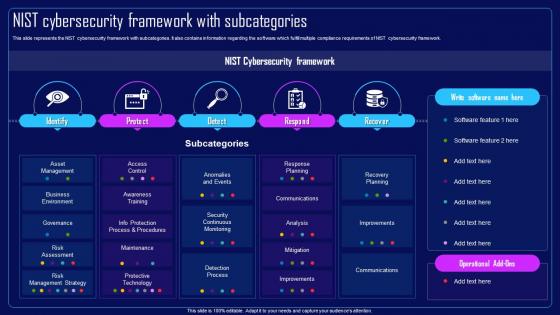
This slide represents the NIST cybersecurity framework with subcategories. It also contains information regarding the software which fulfill multiple compliance requirements of NIST cybersecurity framework.
People who downloaded this PowerPoint presentation also viewed the following :
Action Plan To Combat Cyber Crimes NIST Cybersecurity Framework With Subcategories with all 9 slides:
Use our Action Plan To Combat Cyber Crimes NIST Cybersecurity Framework With Subcategories to effectively help you save your valuable time. They are readymade to fit into any presentation structure.









FAQs for Action Plan To Combat Cyber Crimes NIST Cybersecurity
Honestly, ransomware's probably your biggest headache right now - that stuff will completely lock down your systems until you pay. Phishing emails are still everywhere too, and let's be real, even smart people click on sketchy links sometimes. You've also got regular malware sneaking around stealing data or creating backdoors. What's getting worse though is social engineering attacks. Hackers figured out it's way easier to trick your employees than actually hack through security. My cousin's company got hit that way last year, total nightmare. Start with email security training for your team and keep everything updated.
Skip those awful all-day training sessions - nobody remembers anything anyway. Do short, regular ones instead. Cover the usual stuff like spotting phishing emails and password basics, but use real examples from your field. Those generic corporate videos are completely pointless, honestly. Run fake phishing tests and actually reward people when they do the right thing instead of just yelling at them for screwing up. Your CEO needs to participate too because if they don't give a damn, why should anyone else? Oh, and track your click rates so you know if it's working.
Dude, AI is like having a superhuman security guard for your network. It'll crunch through tons of data and catch sketchy stuff humans totally miss. Pretty wild how it can predict attacks before they even happen - way faster than doing everything manually. The system gets smarter after each attack too, which is honestly pretty cool. But here's the thing: you can't just plug it in and forget about it. You need people who know what they're doing to set it up right. My advice? Figure out where you're bleeding the most security-wise, then find AI tools built for exactly those problems.
Start with vulnerability scans - tools like Nessus or OpenVAS will find the weak spots before bad actors do. After that, hire some ethical hackers for pen testing (honestly it's pretty cool watching them work). Don't skip phishing simulations either - you'd be shocked how many people still click suspicious links. Run these quarterly minimum, and definitely after big system updates. Oh, and make sure you're checking for outdated software and misconfigurations too. Most companies forget that part until it bites them.
Honestly, just get a password manager - it changed my life lol. Make your passwords at least 12 characters with a mix of everything (caps, lowercase, numbers, symbols). Don't reuse passwords, especially for banking or work stuff. Turn on two-factor authentication everywhere you can, but use an authenticator app instead of SMS if possible. Skip the obvious stuff like "Password123!" or your dog's name. I used to think I could remember unique passwords for everything... yeah, that lasted about a week. Password managers handle all the heavy lifting anyway.
GDPR basically makes you build privacy into your security from the start instead of slapping it on later. The 72-hour breach notification thing is terrifying but keeps companies honest. Now your incident response has to include lawyers, plus way tighter rules on what data you can even collect. Those fines hit different too - up to 4% of your entire global revenue, which is insane. Honestly, most companies don't realize how much personal data they're sitting on until they actually map it out. Start there and audit what you've got stored. Access controls and encryption become non-negotiable after that.
So cybersecurity is just the digital stuff - protecting computers, networks, data from hackers and malware. Information security covers way more though. It's protecting ALL your sensitive info, whether that's digital files, physical papers, or even private conversations. You've got to think about shredding documents, controlling who gets into your building, secure phone lines - the whole nine yards. Cybersecurity honestly fits inside infosec as just one piece. My advice? Figure out what kind of information you're actually trying to protect first, then you can map out which digital and physical safeguards make sense.
Honestly, you've gotta bake security checks right into your buying process from the start. Make vendors fill out security questionnaires and show you their SOC 2 or ISO 27001 certs before you even think about signing anything. If they whine about it? Major red flag - I'd run. Put specific cybersecurity rules in your contracts with real penalties if they screw up. Oh, and don't just check once - schedule regular audits throughout the whole relationship. Security can't be an afterthought anymore, it needs to be part of how you pick vendors.
Honestly, the biggest mistake people make is not having a plan ready beforehand. When shit hits the fan, you're gonna want to contain the breach immediately, figure out how bad the damage is, and start calling people - your legal team, customers, maybe regulators depending on what happened. Document absolutely everything because you'll need that trail later. After that it's all about recovery: patch whatever got exploited, restore from clean backups, keep watching for anything suspicious. Having your response team sorted out ahead of time makes all the difference. Trust me, you don't want to be scrambling around trying to figure out roles while you're dealing with a crisis.
So basically you're splitting security duties with your cloud provider instead of doing it all yourself. They handle the physical stuff - servers, network security, platform maintenance. You're still on the hook for your data, who gets access, and securing your apps. Honestly, not dealing with server rooms anymore is such a relief! Different providers split things up differently though, which can get confusing. I'd map out who covers what first - there's always gaps you don't expect. Then figure out your security from there. Way less headache than the old days.
Look, when shit hits the fan cyber-wise, you'll be SO glad you planned ahead. Your team won't be scrambling around making dumb mistakes under pressure. Instead, everyone knows their job and you can actually contain the mess fast. Honestly? The speed difference is everything - less damage, way cheaper recovery. Plus you look competent to the higher-ups instead of like you're winging it. Oh and it checks those annoying compliance boxes too. Just start writing down whatever processes you have now, even if they're garbage. You can clean them up later.
So pen testing is basically having good hackers attack your stuff before the actual bad guys do it. You'll get a real picture of where things actually fall apart - not just what your security team thinks works. Honestly, most companies are way more vulnerable than they realize. Focus on your most critical systems first since you probably can't test everything at once. The cool part is it shows you which problems to tackle first based on real risk, not just guesswork. Just don't make it a once-yearly thing - threats change too fast for that.
Honestly, AI and machine learning are everywhere in security now - they catch threat patterns we'd totally miss. Zero-trust is the new thing where you don't trust anything by default, even inside your own network. Quantum computing kinda freaks me out because it'll break our current encryption, though it's also creating quantum-resistant methods. Behavioral analytics can automatically shut down threats way faster than humans can respond. Oh, and automated response systems are huge now. I'd start with AI-powered security tools first - that's probably where you'll see results quickest in your setup.
Dude, your employees are honestly your weakest link - like 95% of cyberattacks succeed because someone messed up. Clicking sketchy links, terrible passwords, oversharing sensitive stuff. We've all been there though, especially when you're brain-dead at the end of the week. Regular security training actually works wonders. Run fake phishing tests too - they hate it but learn fast. Most important thing? Don't shame people when they report suspicious emails or whatever. You want them coming to you, not hiding mistakes. Make it part of ongoing training, not some boring annual thing everyone forgets.
So remote work totally blows up your security perimeter. People are logging in from home routers that haven't seen an update in forever, plus they're hitting up coffee shops with garbage WiFi. Personal laptops mixed with work stuff? Yeah, that's a nightmare. Phishing attempts go through the roof when everyone's working alone too - way easier to trick someone. All your data's now spread across a million different devices instead of locked down in the office. My old boss learned this the hard way lol. You'll definitely need better endpoint security, maybe zero-trust if you can swing it, and actually good VPN setup.
-
I have just started downloading templates for my presentations and I must say this is a great design. It helped accelerate my presentation design process and made it more visually appealing.
-
I have been using SlideTeam for the past six months. Very happy and satisfied!