


Action Steps To Develop Employee Value Proposition Powerpoint Presentation Slides
An Employee Value Proposition EVP is a support system that an employer provides to help employees achieve their maximum potential at work. Grab our professionally curated Actions steps to develop an employee value template. It includes a unique set of advantages employees receive in exchange for their skills and abilities. Our Employer Branding deck helps companies attract highly skilled candidates and improve employee retention. It evaluates the organizations culture and industry to determine its position among competitors and identifies critical factors contributing to employee dissatisfaction. Our Retention Strategy PPT also outlines building an EVP and includes a questionnaire to measure the overall employee experience. It analyzes the survey results and provides an overview of various channels and platforms to promote EVP throughout the recruitment journey. Further, Our Talent Attraction module emphasizes the impact of implementing EVP, assesses the organizations position against competitors, and surveys existing employees. Finally, it outlines various dashboards for human resource key personnel to track and monitor employee performance. With our professionally designed template, companies can attract top talent and improve employee retention by implementing a compelling Employee Value Proposition. Gain instant access.

















You must be logged in to download this presentation.


Do you want to remove this product from your favourites?
 Impress your
 audience
 100%
100% Editable
 Save Hours
 of Time
PowerPoint presentation slides
Deliver this complete deck to your team members and other collaborators. Encompassed with stylized slides presenting various concepts, this Action Steps To Develop Employee Value Proposition Powerpoint Presentation Slides is the best tool you can utilize. Personalize its content and graphics to make it unique and thought-provoking. All the seventy three slides are editable and modifiable, so feel free to adjust them to your business setting. The font, color, and other components also come in an editable format making this PPT design the best choice for your next presentation. So, download now.

People who downloaded this PowerPoint presentation also viewed the following :
Content of this Powerpoint Presentation
Slide 1: This slide introduces Action Steps to Develop Employee Value Proposition. Commence by stating Your Company Name.
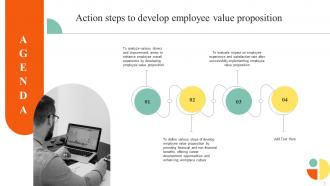
Slide 2: This slide depicts the Agenda of the presentation.
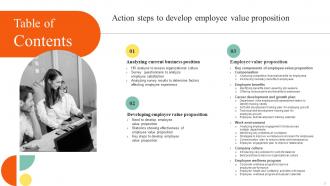
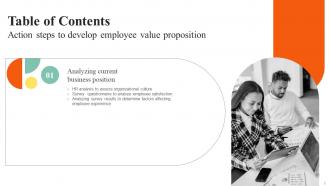
Slide 3: This slide includes the Table Of Contents.
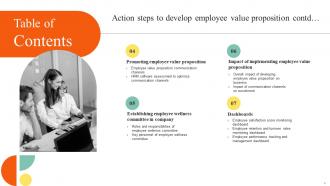
Slide 4: This slide continues the Table of Contents.
Slide 5: This slide highlights the Title for the Topics to be covered further.
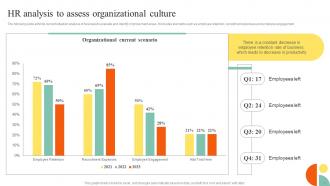
Slide 6: The following slide exhibits current situation analysis of business to evaluate and identify improvement areas.
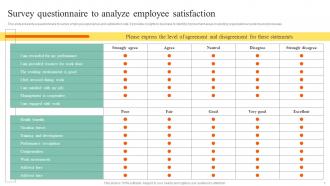
Slide 7: This slide illustrates the Survey questionnaire to analyze employee satisfaction.
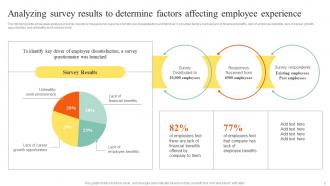
Slide 8: This slide focuses on Analyzing survey results to determine factors affecting employee experience.
Slide 9: This slide mentions about the Heading for the Contents to be discussed next.
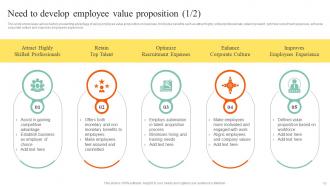
Slide 10: This slide exhibits the Need to develop employee value proposition.
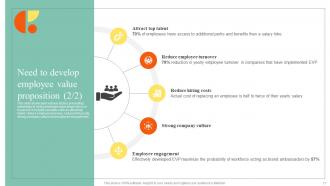
Slide 11: This slide continues the Need to develop employee value proposition.
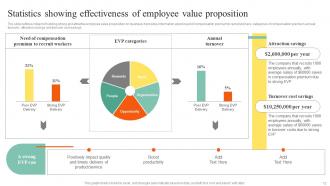
Slide 12: The slide outlines impact of building strong and attractive employee value proposition on business.
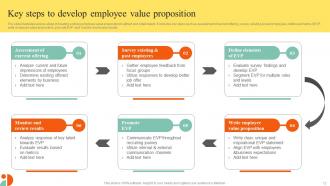
Slide 13: This slide states the Key steps to develop employee value proposition.
Slide 14: This slide indicates the Title for the Ideas to be covered further.
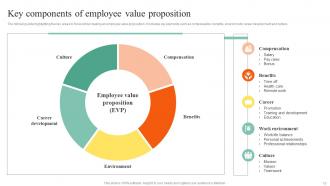
Slide 15: The following slide highlighting five key areas to focus while creating an employee value proposition.
Slide 16: This sldie depicts the Heading for the Ideas to be discussed in the upcoming template.
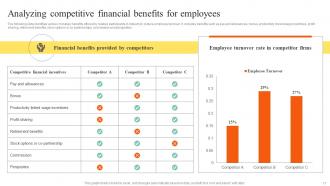
Slide 17: This slide deals with Analyzing competitive financial benefits for employees.
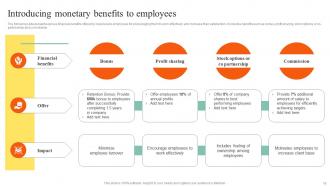
Slide 18: This slide presents various financial benefits offered by business to employees.
Slide 19: This slide shows the Title for the Contents to be covered in the following template.
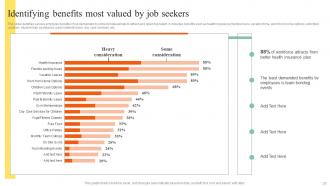
Slide 20: This slide focuses on Identifying benefits most valued by job seekers.
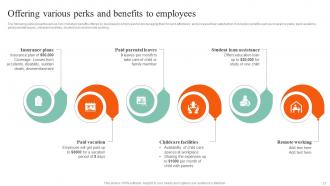
Slide 21: This slide talks about Offering various perks and benefits to employees.
Slide 22: This slide displays the Heading for the Topics to be discussed further.
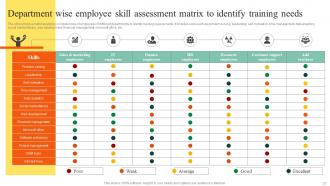
Slide 23: The slide shows a matrix analyzing competencies of employees of different departments to identify training requirements.
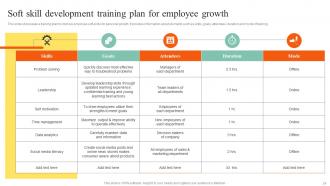
Slide 24: This sldie reveals the Soft skill development training plan for employee growth.
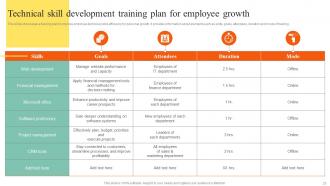
Slide 25: This slide depicts the Technical skill development training plan for employee growth.
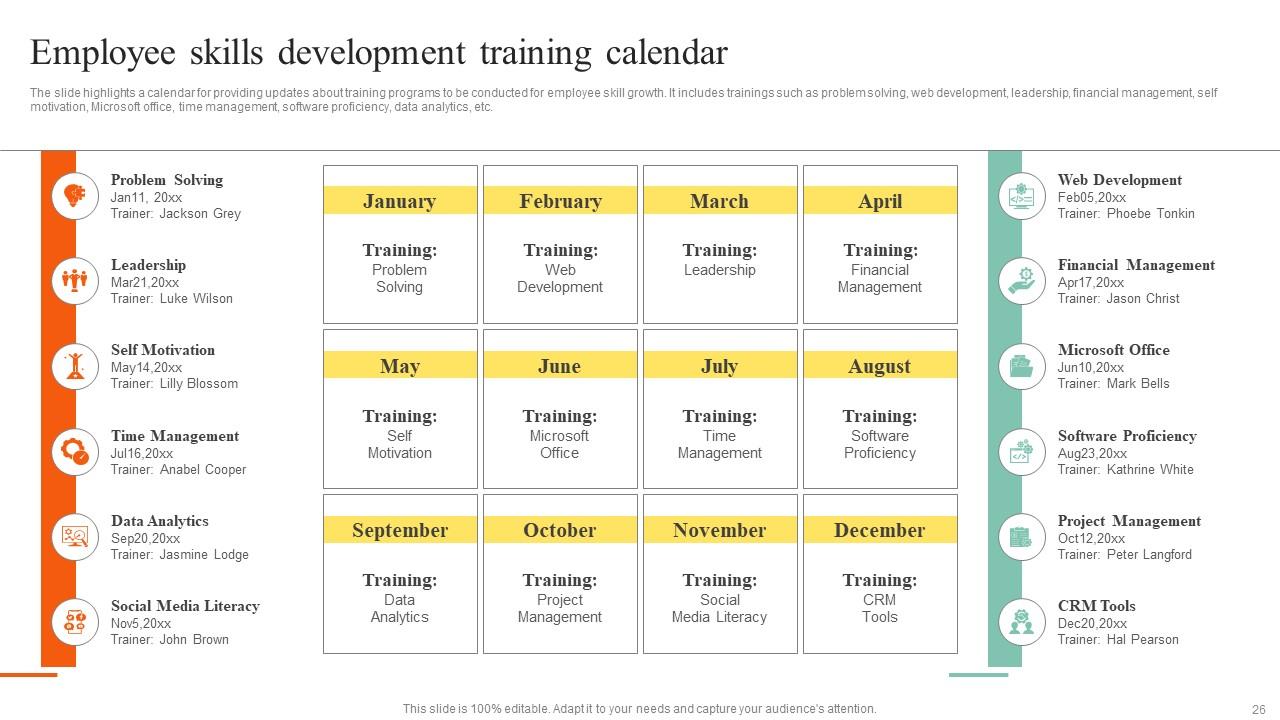
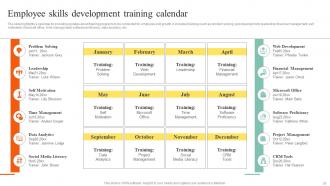
Slide 26: The slide highlights a calendar for providing updates about training programs to be conducted for employee skill growth.
Slide 27: This slide indicates the Title for the Topics to be covered next.
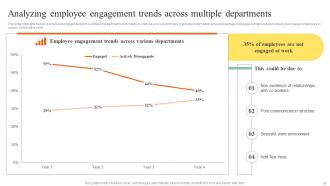
Slide 28: This slide portrays Analyzing employee engagement trends across multiple departments.
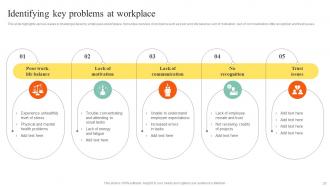
Slide 29: This slide focuses on Identifying key problems at workplace.
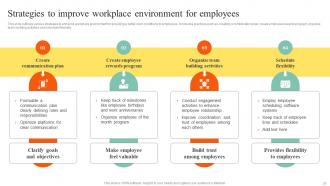
Slide 30: This slide outlines various strategies to enhance workplace environment for providing a better work conditions to employees.
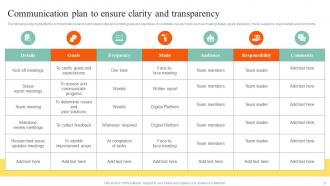
Slide 31: This slide highlights the Communication plan to ensure clarity and transparency.
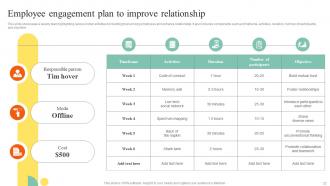
Slide 32: This slide shows the Employee engagement plan to improve relationship.
Slide 33: This slide includes the Heading for the Contents to be discussed further.
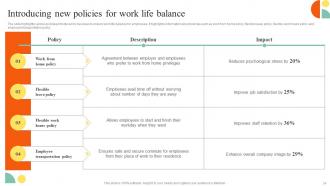
Slide 34: The slide highlights various policies introduced by business to ensure work life balance for employees.
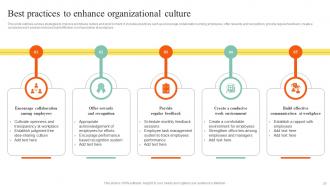
Slide 35: This slide outlines various strategies to improve workplace culture and environment.
Slide 36: This slide depicts the Title for the Ideas to be covered in the following template.
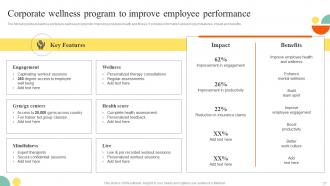
Slide 37: The following slide presents a workplace wellness program for improving employee health and fitness.
Slide 38: This slide highlights various initiatives taken by business to promote health and fitness among employees.
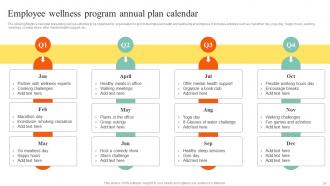
Slide 39: This slide shows Employee wellness program annual plan calendar.
Slide 40: This slide reveals the Title for the Ideas to be covered in the following template.
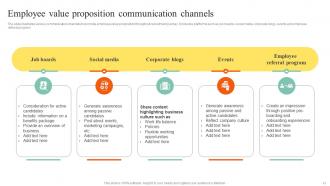
Slide 41: The slide illustrates various communication channels to promote employee value proposition throughout recruitment journey.
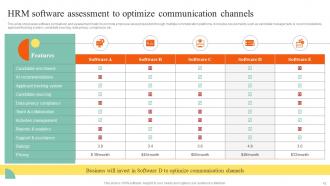
Slide 42: This slide displays the HRM software assessment to optimize communication channels.
Slide 43: This slide contains the Heading for the Ideas to be discussed next.
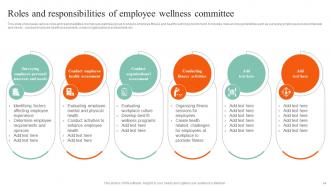
Slide 44: This slide exhibits the Roles and responsibilities of employee wellness committee.
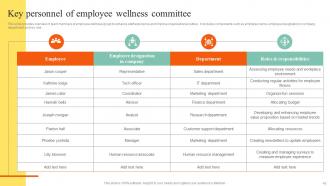
Slide 45: This slide provides overview of team members of employee wellness group to enhance staff experience and improve organizational culture.
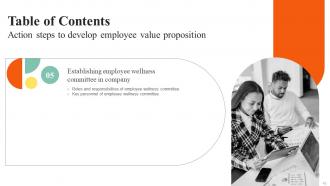
Slide 46: This slide covers the Title for the Contents to be further discussed.
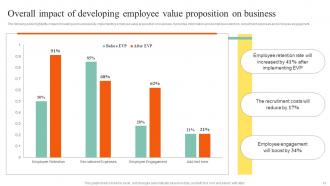
Slide 47: This slide displays the Overall impact of developing employee value proposition on business.
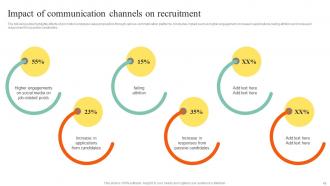
Slide 48: This slide indicates the Impact of communication channels on recruitment.
Slide 49: This slide represents the Heading for the Topics to be covered further.
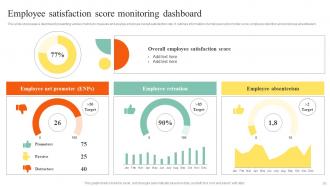
Slide 50: This slide showcases a dashboard presenting various metrics to measure and analyze employee overall satisfaction rate.
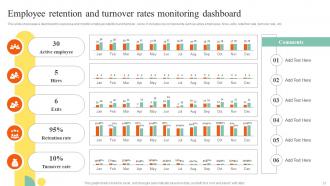
Slide 51: This slide displays the Employee retention and turnover rates monitoring dashboard.
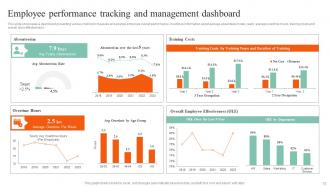
Slide 52: This slide reveals a dashboard presenting various metrics to measure and analyze employee overall performance.
Slide 53: This is the Icons Slide containing all the Icons used in the plan.
Slide 54: This slide is used for depicting some Additional information.
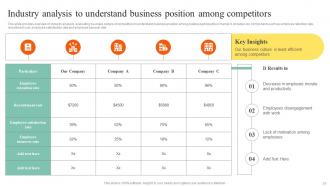
Slide 55: This slide shows the Industry analysis to understand business position among competitors.
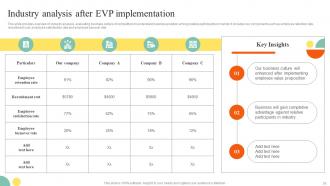
Slide 56: This slide incorporates the Industry analysis after EVP implementation.
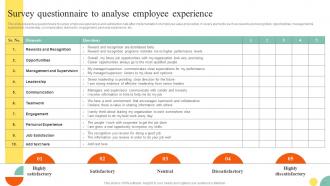
Slide 57: This slide highlights the Survey questionnaire to analyse employee experience.
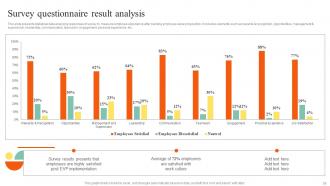
Slide 58: This slide displays the Survey questionnaire result analysis.
Slide 59: This is About us slide for stating the comapny-related information.
Slide 60: This slide displays the organization's vision, mission & goal.
Slide 61: This is Our team slide for stating the team-related information.
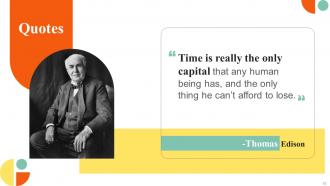
Slide 62: This is the Quotes slide for motivation.
Slide 63: This is the 30,60,90 days plan slide for effective planning.
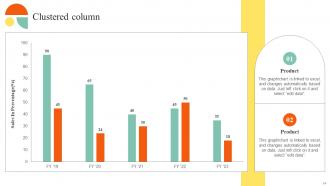
Slide 64: This slide represents the Clustered column.
Slide 65: This slide contains the Post it notes for reminders and deadlines.
Slide 66: This slide indicates the SWOT analysis.
Slide 67: This is our Target slide for stating the organization's targets.
Slide 68: This slide represents the Company's Roadmap.
Slide 69: This is the Venn diagram slide.
Slide 70: This slide incorporates the comapny's Timeline.
Slide 71: This is the Puzzle slide with related imagery.
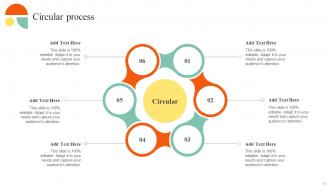
Slide 72: This slide illustrates the Circular process.
Slide 73: This is the Thank you slide for acknowledgement.
Action Steps To Develop Employee Value Proposition Powerpoint Presentation Slides with all 78 slides:
Use our Action Steps To Develop Employee Value Proposition Powerpoint Presentation Slides to effectively help you save your valuable time. They are readymade to fit into any presentation structure.
-
Great product with highly impressive and engaging designs.
-
The pricing page of this website is very sorted. I felt no pain while buying the PPTs.
