

Actionable Plan To Manage Underperforming Employees Ppt Template Improvement Plan CD





Try Before you Buy Download Free Sample Product
 Impress Your
Audience
 100%
Editable
 Save Hours
of Time


Transform your workplace using our professionally designed PPT Actionable Plan to Manage Underperforming Employees PowerPoint presentation. This PPT provides insights about key issues faced by organizations that lead to poor employee performance, such as lack of motivation, team conflicts, limited engagement, etc. To solve this issue, this PPT deck covers practical solutions and tactics to boost productivity and employee morale. Moreover, the Performance Review Tool PPT templates cover step-by-step solutions for determining performance gaps, executing targeted improvement plans, and offering consistent, constructive feedback. Furthermore, the Performance Management Plan PPT slides display how implementing these approaches significantly impacts employee efficiency and engagement. So, to enhance overall revenue, use our PowerPoint presentation to equip the workforce with modern tools and technology. Download Now.
People who downloaded this PowerPoint presentation also viewed the following :
Content of this Powerpoint Presentation
Slide 1: This slide introduces Actionable Plan to Manage Underperforming Employees. State your company name and begin.
Slide 2: This is an Agenda slide. State your agendas here.
Slide 3: This slide shows Table of Content for the presentation.
Slide 4: This slide shows title for topics that are to be covered next in the template.
Slide 5: Purpose of this slide is to determine and address common employee performance challenges impacting overall workplace productivity and engagement.
Slide 6: This slide showcases negative impact of pandemic and lockdown on employee performance leading business losses. It includes issues such as resistance, lack of interest, etc.
Slide 7: This slide showcases impact of performance challenges on organization effectiveness leading to poor employee productivity and customer engagement.
Slide 8: This slide shows title for topics that are to be covered next in the template.
Slide 9: This slide represents major alternatives that company should consider for solving company poor employee performance and enhance productivity.
Slide 10: This slide shows title for topics that are to be covered next in the template.
Slide 11: This slide showcases key steps to create and execute employee performance improvement plan to encourage accountability and operational efficiency.
Slide 12: This slide shows title for topics that are to be covered next in the template.
Slide 13: This slide represents employee feedback survey questions that help managers to understand issues faced by company staff for effective decision making.
Slide 14: This slide showcases survey results to determine major issues and assure timely implementation of mitigation solutions to achieve desired objectives.
Slide 15: This slide represents time consumption for completing business tasks by various departments along with key reasons such as limited skills set.
Slide 16: Purpose of this slide is to identify major improvement areas to enhance company performance. It covers key aspects such as communication, customer service, conflict resolution, etc.
Slide 17: This slide shows title for topics that are to be covered next in the template.
Slide 18: Purpose of this slide is to set measurable and relevant objectives for improving business performance. It includes aspects such as reasons, improvement areas etc.
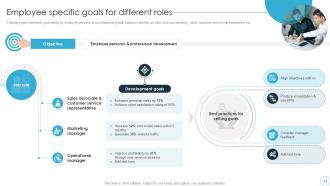
Slide 19: This slide represents goal setting for employee personal and professional growth based on specific job roles such as marketing , sales, customer service representatives, etc.
Slide 20: This slide shows title for topics that are to be covered next in the template.
Slide 21: This slide showcases various ways to implement upward communication method that helps to improve employee operational efficiency and assure inclusive work culture.
Slide 22: This slide represents various methods to communicate with employees to ensure positive and inclusive workplace culture. It includes methods such as kick off meetings, steering committee etc.
Slide 23: Purpose of this slide is to assess trainings and skills development requirements to ensure employee performance efficiency for achieving desired business goals.
Slide 24: This slide represents various methods to provide trainings for employee skill improvement. It includes techniques such as on job, simulation and knowledge based trainings.
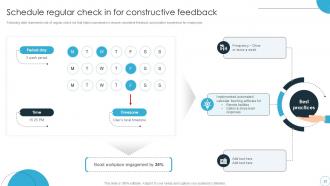
Slide 25: This slide presents role of regular check ins that helps businesses to ensure consistent feedback and positive experience for employees.
Slide 26: This slide shows title for topics that are to be covered next in the template.
Slide 27: This slide showcases development of action plan to structure and implement entire plan for improving employee performance for better growth.
Slide 28: This slide exhibit performance improvement plan used by managers to improve employee communication skills for improving operational efficiency.
Slide 29: This slide represents employee performance improvement plan to boost productivity. It covers elements such as goal, objectives, problems, plan, check ins, etc.
Slide 30: This slide shows title for topics that are to be covered next in the template.
Slide 31: Purpose of this slide is to track and evaluate employee performance highlighting potential to grab opportunities. It covers elements such as employee details, performance standards, etc.
Slide 32: This slide showcases 360 degree feedback review that helps to gather data about employee performance reducing attrition rate.
Slide 33: This slide depicts KPI dashboard essential to track employee attendance rate for getting operational tasks done effectively.
Slide 34: This slide shows title for topics that are to be covered next in the template.
Slide 35: This slide represents monthly timeline to implement and evaluate performance improvement to support employees towards organizational objectives.
Slide 36: This slide shows title for topics that are to be covered next in the template.
Slide 37: This slide exhibits latest trends that can be used by business for employee performance management software system. It includes aspects such as remote working, visual dashboards, etc.
Slide 38: This slide represents comparative analysis of various employee performance management software that helps to select suitable tool based on required features.
Slide 39: This slide shows title for topics that are to be covered next in the template.
Slide 40: This slide depicts financial requirements for developing and implementing for employee performance improvement. It includes aspects such as trainings, technology hiring, etc.
Slide 41: This slide shows title for topics that are to be covered next in the template.
Slide 42: This slide showcases impact of employee performance improvement plan on company performance such as employee productivity and customer engagement rate.
Slide 43: This slide depicts metrics to evaluate employee performance and work efficiency. It includes indicators such as customer satisfaction, team engagement rate, etc.
Slide 44: This slide showcases return on investment (ROI) assessment to measure financial impact of implemented training programs.
Slide 45: This slide shows title for topics that are to be covered next in the template.
Slide 46: This slide represents case study of company that improve employee job satisfaction and performance through trainings. It includes elements such as overview, challenges, strategy, etc.
Slide 47: This slide showcases use of reward and incentive system that helps to solve business problems and increase employee productivity.
Slide 48: This slide shows all the icons included in the presentation.
Slide 49: This slide is titled as Additional Slides for moving forward.
Slide 50: This slide highlight major metrics that helps to track and monitor progress towards company improvement goals. It covers metrics such as APR, employee engagement score, etc.
Slide 51: This slide shows SWOT analysis describing- Strength, Weakness, Opportunity, and Threat.
Slide 52: This is Our Goal slide. State your firm's goals here.
Slide 53: This slide presents Roadmap with additional textboxes. It can be used to present different series of events.
Slide 54: This is an Idea Generation slide to state a new idea or highlight information, specifications etc.
Slide 55: This slide displays Mind Map with related imagery.
Slide 56: This slide shows Post It Notes for reminders and deadlines. Post your important notes here.
Slide 57: This is a Thank You slide with address, contact numbers and email address along with socials.
Actionable Plan To Manage Underperforming Employees Ppt Template Improvement Plan CD with all 65 slides:
Use our Actionable Plan To Manage Underperforming Employees Ppt Template Improvement Plan CD to effectively help you save your valuable time. They are readymade to fit into any presentation structure.














FAQs for Actionable Plan To Manage Underperforming Employees Ppt Template
Key indicators of underperformance include declining productivity metrics, missed deadlines, increased absenteeism, poor quality output, and reduced collaboration with team members. These warning signs often manifest across departments, with managers in retail, healthcare, and financial services finding that early identification through consistent performance tracking, regular feedback sessions, and clear goal-setting ultimately enables targeted intervention strategies.
Managers can effectively communicate performance expectations through clear goal-setting meetings, documented performance standards, regular one-on-one discussions, and specific metrics with defined timelines. These approaches streamline accountability by establishing measurable objectives, providing consistent feedback channels, and creating transparent evaluation criteria, with many organizations finding that structured communication ultimately delivers improved productivity and enhanced employee engagement across teams.
Initial steps include documenting specific performance gaps, reviewing job expectations and metrics, conducting one-on-one conversations to understand underlying issues, and assessing whether problems stem from skill deficits, resource limitations, or motivational factors. These diagnostic approaches enable managers to create targeted improvement plans while identifying root causes, ultimately delivering more effective interventions and better employee outcomes.
Regular feedback accelerates employee improvement by providing clear performance expectations, identifying specific skill gaps, and creating structured development pathways through consistent coaching conversations. Through weekly check-ins and milestone reviews, managers can address issues early, reinforce positive behaviors, and build stronger working relationships, with many organizations finding that frequent feedback ultimately transforms underperformers into valuable contributors.
Setting SMART goals provides clear performance benchmarks, eliminates ambiguity about expectations, creates measurable accountability standards, and establishes specific timelines for improvement. Through this structured approach, managers can track progress systematically, provide targeted feedback, and demonstrate fairness in performance evaluations, while underperforming employees gain clarity and direction, ultimately enabling more objective performance discussions and sustainable improvement outcomes.
Performance appraisals support underperforming employees by establishing clear expectations, identifying specific skill gaps, creating targeted development plans, and providing regular feedback mechanisms. Through structured evaluation processes, managers can collaborate with employees to set measurable goals, offer relevant training opportunities, and track improvement progress, ultimately transforming appraisals from punitive assessments into strategic development tools that enhance both individual performance and organizational productivity.
**INPUT**: What strategies can be implemented to foster motivation in employees who are struggling? **OUTPUT**: Effective motivation strategies include personalized coaching, skill development programs, clear goal-setting frameworks, recognition systems, and regular feedback mechanisms. These approaches enhance performance by addressing individual challenges, building competencies, and creating accountability structures, with many organizations finding that strategic mentoring and transparent communication ultimately deliver improved engagement and measurable productivity gains.
Managers can create supportive environments by establishing clear expectations, providing regular constructive feedback, offering targeted training opportunities, and recognizing incremental progress. Through open communication channels and collaborative goal-setting, organizations enable struggling employees to identify skill gaps, access necessary resources, and build confidence, ultimately delivering improved performance and retention while fostering a culture of continuous development.
Employee training and development significantly addresses performance issues by identifying skill gaps, providing targeted learning opportunities, enhancing job-specific competencies, and building confidence in underperforming staff members. Through strategic development programs, organizations streamline employee capabilities, reduce turnover costs, and boost overall productivity, with many companies finding that comprehensive training ultimately transforms struggling employees into valuable contributors while strengthening team performance.
Differentiating between skill gaps and motivation issues requires analyzing performance patterns, observing engagement levels during training opportunities, and conducting direct conversations about challenges and career goals. While skill deficits often show consistent effort with poor results, motivation problems typically display declining engagement, missed deadlines, and reduced initiative, with many managers finding that targeted coaching conversations reveal the underlying cause.
Best practices include setting clear expectations, using specific performance examples, maintaining respectful dialogue, focusing on behaviors rather than personal traits, and collaboratively developing improvement plans. These approaches streamline difficult conversations by creating psychological safety, establishing accountability, and demonstrating genuine support, with many managers finding that structured, empathetic communication ultimately delivers stronger team relationships and measurable performance improvements.
A performance improvement plan should include clear performance expectations, specific measurable goals, defined timelines, regular check-in meetings, and documented progress assessments. Through structured weekly reviews and targeted skill development, managers can provide consistent feedback, identify improvement areas, and track behavioral changes, while employees receive the support and clarity needed to meet expectations, ultimately delivering enhanced team productivity and employee retention.
Emotional intelligence enables managers to recognize performance issues with empathy, communicate feedback constructively, and understand underlying causes like stress or skill gaps. Through self-awareness and social skills, leaders can navigate difficult conversations more effectively, build trust with struggling employees, and create supportive improvement plans, ultimately transforming underperformance into growth opportunities while maintaining team morale.
Peer feedback can be integrated through structured 360-degree reviews, regular team evaluations, collaborative project assessments, and cross-functional input sessions that provide comprehensive performance insights. This approach enables managers to identify skill gaps, communication issues, and collaboration challenges while fostering accountability, with many organizations finding that peer perspectives ultimately enhance employee development and team dynamics.
Failing to address underperformance creates cascading organizational damage, including decreased team morale, reduced productivity, increased turnover among high performers, and erosion of management credibility. These issues ultimately compromise competitive advantage, with many organizations finding that prolonged tolerance of underperformance leads to cultural deterioration, higher operational costs, and significant difficulties attracting top talent.
-
Making a presentation has never been this easy for me. Thank you SlideTeam for offering a splendid template library.
-
Nothing beats the well-formatted and professionally designed templates offered. Kudos to SlideTeam for their amazing collection of PPT slides.