Advantages And Disadvantages Of Organic Agriculture Techniques

Rating:
100%
Advantages And Disadvantages Of Organic Agriculture Techniques
Slide 1 of 6
Favourites Favourites

Try Before you Buy Download Free Sample Product

Audience Impress Your
Audience
Editable 100%
Editable
Time Save Hours
of Time
The Biggest Sale is ending soon in
0
0
:
0
0
:
0
0
Rating:
100%
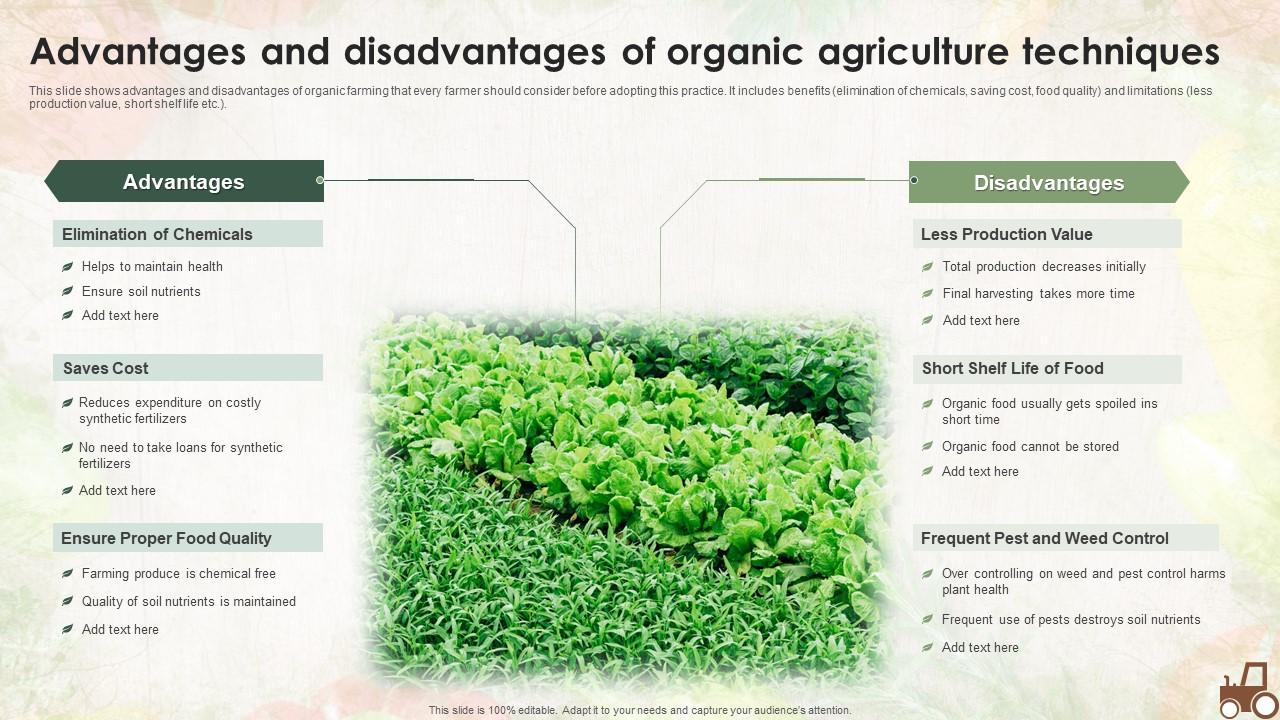
This slide shows advantages and disadvantages of organic farming that every farmer should consider before adopting this practice. It includes benefits elimination of chemicals, saving cost, food quality and limitations less production value, short shelf life etc. Introducing our Advantages And Disadvantages Of Organic Agriculture Techniques set of slides. The topics discussed in these slides are Elimination Of Chemicals, Less Production Value, Saves Cost. This is an immediately available PowerPoint presentation that can be conveniently customized. Download it and convince your audience.
FAQs for Advantages And Disadvantages Of

So organic farming is basically working with nature instead of against it. You avoid synthetic pesticides and fertilizers, plus no GMOs. Focus on building healthy soil through composting and crop rotation - honestly, the soil thing is huge. Conventional farming is all about max yield using chemicals, but organic thinks long-term sustainability. It's like... instead of forcing your garden to cooperate, you create conditions where it actually wants to thrive. Makes sense? If you're considering switching, definitely look up the certification requirements first. They're pretty strict about what qualifies.

So basically, organic farming is way better for soil and wildlife than regular farming. When you skip the synthetic chemicals, soil gets richer and holds water better. Plus there's like 30% more species living on organic farms - bees, birds, all those tiny soil creatures. Cover crops and crop rotation create these mini ecosystems instead of boring monocultures. The soil biology is honestly the coolest part - all these beneficial microbes just thrive when you're not nuking them with pesticides. My cousin switched to organic and can't shut up about how alive her dirt feels now (weird but true). Composting helps too.

So basically you're playing matchmaker with your plants and it works amazing. Rotate what you grow each season - breaks up pest cycles and lets soil recover nutrients naturally. Then pair plants that actually help each other out. Like basil keeps bugs off tomatoes, and beans add nitrogen that corn loves to eat up. My neighbor does this and swears by it. You'll cut way down on needing fertilizers or sprays. Honestly the whole thing feels like cheating but in a good way! Just start simple with maybe 2-3 combos and switch things up yearly.

Yeah so basically you can't just spray chemicals anymore which makes everything way harder. Crop rotation helps a lot, plus you'll need beneficial insects and cover crops. Way more labor though - I'm not gonna lie about that. Timing is crucial with organic treatments like neem oil. You have to plan everything out more carefully than conventional farming. The cool thing is your soil gets healthier over time and starts fighting pests naturally. Honestly I'd start small if you're thinking about it. Maybe find some local organic farmers to learn from first?

Yeah, organic certification definitely opens doors to premium markets - you're looking at 20-40% higher prices, which is sweet. Plus customers are way more loyal when they see that USDA seal. But dude, the paperwork is absolutely insane. And that 3-year transition period? You're basically doing all the organic work without getting paid organic prices yet, which honestly sucks. Don't forget about certification costs and those annual inspections either. My advice? Start small with expensive crops and find a consultant who actually knows this stuff. Trust me on that one.

Look, organic food's main benefit is avoiding pesticide residues - that's the real win here. Nutritionally? The differences are pretty small, maybe slightly more vitamin C or antioxidants but nothing crazy. I wouldn't expect miracles from switching. Honestly though, there's something to be said for peace of mind about what you're NOT eating. GMOs and synthetic chemicals just aren't my thing. If budget's tight, just buy organic for the "dirty dozen" - those fruits and veggies that usually have the most pesticide residue anyway.

Hey! So organic farming can actually be a solid economic boost for communities. Farmers get way better prices - like 20-40% more than regular produce. They save money too since they're not buying all those expensive chemicals and fertilizers. The direct sales thing is huge - farmers markets, CSAs, that whole scene. Some farms do agritourism stuff which seems pretty lucrative if you can pull it off. These operations need more workers than conventional farms, so that's more local jobs. I'd honestly check what organic products people actually want in your area first, and see if there are any processing facilities around.

Dude, the tech stuff for organic farming is actually getting pretty wild. GPS equipment can nail your planting and weeding spots perfectly. Soil sensors tell you exactly when to water without any synthetic crap. Drone monitoring sounds expensive but it's becoming more accessible - honestly wasn't expecting that. Apps now track weather patterns so you can jump on pest issues before they explode. There's even blockchain tracking for organic certification, which feels overkill but whatever. I'd start simple though - grab a soil testing app first, see how it goes. Baby steps, you know?

Yeah, organic farming is definitely better for soil health and water quality - way less chemical runoff and you get more biodiversity. The soil actually holds more carbon too, which is cool. But here's the thing - it takes more land to grow the same amount of food, so that's kinda problematic when we're trying to feed everyone. Honestly both methods have their issues. My advice? Just buy local and seasonal stuff when you can, doesn't even matter if it's organic or not. The shipping usually has a bigger environmental impact than how it was grown anyway.

Dude, organic farming is actually pretty solid for climate stuff. Those synthetic fertilizers? They take crazy amounts of energy to make and pump out nitrous oxide, which is way worse than regular CO2. Cover crops and composting pull carbon right out of the air and stuff it into the soil - honestly that's probably the biggest benefit. Less fossil fuel use too since you're not spraying chemicals constantly. Oh and crop rotation keeps things diverse. If you're picking suppliers, go for certified organic ones that do regenerative practices. My cousin switched to organic and says the soil quality difference is insane.

Honestly, the organic market is booming because people are just way more health-conscious now. Millennials and Gen Z don't mess around - they actually read labels and want to know where their food comes from. The whole clean eating trend isn't going anywhere either, it's basically mainstream at this point. Plus everyone's worried about the environment, so they're cool with paying extra for stuff without synthetic pesticides. Oh, and the sustainability angle is huge right now. If you're thinking about this space, definitely lean into the premium/eco-friendly messaging. That's where the money is.

Dude, you NEED proper training before switching to organic - seriously, I've watched people blow through thousands learning the hard way. Can't just swap out chemicals and expect things to work. Your whole approach changes: soil biology, pest control, even which crops you plant when. The certification stuff alone will make your head spin. Short sentences work. But honestly, finding a mentor who's already doing organic beats any book or course. Extension office might hook you up with someone local. Learning curve's brutal but totally worth it once you figure it out.

Money's the biggest killer here - certification costs are insane for small farmers. Most can't even get organic inputs or proper training. Then there's this brutal 2-3 year waiting period where you lose your normal yields but don't get organic benefits yet. It's honestly rough. Market access sucks too since organic premium buyers barely exist in rural areas. Meanwhile governments throw all their subsidies at conventional farming. If you're diving into this, I'd start with local supply chains for organic inputs and farmer education. Those usually move the needle most. Oh and building connections to buyers early - that transition period's way easier when you know where you're selling.

Organic farming is pretty solid for both sustainability and ethics. It protects soil health and cuts down on nasty chemical runoff. Plus you're usually supporting smaller farmers instead of massive industrial operations, which I'm always down for. The standards cover animal welfare too, though labor practices can still be sketchy - you'd need to research that separately. Look for extra certifications like Fair Trade or Regenerative Organic when you're vetting suppliers. Those give you way better coverage than just the basic organic label.

Dude, policy is everything in organic farming. Certification costs are brutal, but there's government cost-sharing programs that help. Research funding exists too. The transition period when farmers switch? Total nightmare for cash flow - takes years before you can even call your stuff organic. But that USDA label is gold for consumer trust. Schools and government offices buying organic creates steady demand, which farmers desperately need. Oh, and the farm bill gets renewed every five years - that's when all the major funding gets decided. Honestly worth tracking if you're serious about this.

Ratings and Reviews

100% of 100
Review Form
Write a review
Most Relevant Reviews
  1. 100%

    by Devin Daniels

    The website is jam-packed with fantastic and creative templates for a variety of business concepts. They are easy to use and customize.

  2. 100%

    by Cyril Gibson

    The website is jam-packed with fantastic and creative templates for a variety of business concepts. They are easy to use and customize.

2 Item(s)

per page: