

Agile managing plan traditional vs agile project management timeline




Try Before you Buy Download Free Sample Product
 Impress Your
 Audience
 100%
100% Editable
 Save Hours
 of Time


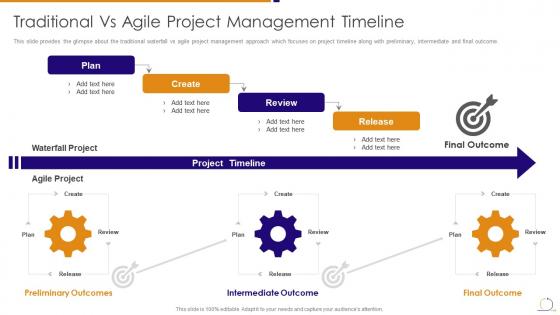
This slide provides the glimpse about the traditional waterfall vs agile project management approach which focuses on project timeline along with preliminary, intermediate and final outcome.
People who downloaded this PowerPoint presentation also viewed the following :
Agile managing plan traditional vs agile project management timeline with all 6 slides:
Use our Agile Managing Plan Traditional Vs Agile Project Management Timeline to effectively help you save your valuable time. They are readymade to fit into any presentation structure.




FAQs for Agile managing plan traditional vs agile
So basically, traditional project management is super rigid - you plan everything upfront and stick to it. Agile throws that out the window. Instead you work in these short 2-4 week chunks called sprints, then adjust based on what you learn. Way more flexible. Think of traditional like following a recipe exactly vs. Agile being more like... I dunno, experimenting in the kitchen? You taste as you go and pivot if needed. The whole philosophy prioritizes actual working stuff over tons of documentation, and honestly that makes way more sense to me. Try shortening your planning cycles first - that's probably the easiest place to start without overhauling everything.
So basically your Scrum Master clears out all the annoying roadblocks that slow you down. Daily standups, sprint planning, retrospectives - they run all that stuff. Plus they're like a shield between your team and all the corporate BS and politics (which honestly can be a lifesaver). They'll coach you on Agile practices and help sort out team drama when it pops up. Not your manager, but they definitely make everything run smoother. Oh, and they keep everyone following Scrum rules without being total nazis about it. If you don't have one, seriously fight for it.
Honestly, the biggest pain points are usually people freaking out about change. Your devs will probably lose their minds over not having everything planned out from day one - which is totally expected, btw. Leadership's another nightmare because they can't stop micromanaging everything. Companies also get super unrealistic about how fast things will improve. Oh, and here's the kicker - they'll claim they want "Agile" but keep all their old approval chains and control-freak processes. Start with just one team that's actually excited about it, get some wins, then slowly expand from there.
Honestly, Agile is a game-changer for team communication. Those daily standups? They stop people from disappearing into their own little worlds for weeks at a time. You'd be shocked how many tiny problems get squashed before they blow up. Sprint planning gets everyone on the same page about what actually matters, and retrospectives are where the magic happens - finally a meeting where you can say "this sucked" without drama. The whole iterative thing means you're constantly getting feedback too, which is clutch. Oh, and if you're just starting out, try weekly retros first. That one change will completely flip how your team talks to each other.
Track velocity first - story points your team knocks out each sprint. Burndown charts show if you're actually gonna hit your goals. But honestly? Customer satisfaction and defect rates matter way more than some random deadline your PM set. Lead time and cycle time help spot where things get stuck. Oh, and don't skip team happiness surveys - cranky developers write terrible code. I'd pick maybe 3-4 metrics tops that actually relate to what you're trying to accomplish. Otherwise you'll spend more time measuring than building.
So here's the thing with Agile - you're constantly reassessing every week or two instead of sticking to some massive upfront plan. Works way better honestly. You break everything into short sprints with daily check-ins, so problems get caught before they snowball. When requirements change (and they always do), you just reprioritize your backlog and keep moving. The whole point is expecting change rather than pretending it won't happen. Try splitting your next project into 2-week chunks - you'll be shocked how much more you can adapt to what stakeholders actually want.
Okay so Agile is way better at handling risk than traditional methods. Instead of trying to guess everything that'll go wrong upfront (which never works anyway), you're constantly catching issues during those short sprints. Traditional PM does all the risk analysis at the beginning, but honestly that misses the real problems that pop up later. Your daily standups and retrospectives naturally bring up issues before they explode. Since you're shipping working software every few weeks, users give you feedback that spots risks early. Try adding quick risk discussions to sprint planning - seriously makes a huge difference.
Dude, sprints are seriously a lifesaver. You work in these short 1-4 week chunks instead of drowning in endless planning sessions. Your team actually ships stuff consistently, which feels amazing honestly. Daily standups catch problems before they blow up, and you can pivot fast when priorities change (which they always do). Regular feedback from stakeholders keeps you on track too. I'd start with 2-week sprints - long enough to build real features but short enough that you won't go too far down the wrong path. The momentum you'll build is incredible.
So here's the thing - stakeholder engagement is crazy intense during sprint 0 and planning. Everyone wants their input (you know how that goes). Your product owner will be glued to you throughout, but other stakeholders mostly show up for sprint reviews and big milestones. Once you get rolling, it becomes way more structured around demos and feedback sessions. Front-load all that relationship building early - trust me on this. Set clear expectations about when they'll actually be involved. Oh, and don't wait for them to bug you about updates. Stay ahead of it with regular progress communication.
Jira's probably your safest bet - scales well and has everything you need for sprint planning and reporting. Trello works great if your team likes visual stuff and you're keeping things simple. Azure DevOps is solid if you're already using Microsoft tools anyway. Oh, and Linear's worth checking out too - way cleaner interface than Jira, honestly. I'd say just pick whatever your team will actually stick with. You can always switch later if you outgrow it, but getting people to use ANY system consistently is half the battle.
Yeah totally! Most teams just tweak sprint lengths and ceremonies based on what they're building. Software folks usually do 1-2 week sprints, but marketing campaigns work better with 3-4 weeks. Healthcare and finance need way more documentation between sprints - compliance stuff, you know? Construction's weird though, can't really iterate once you've poured concrete lol. I'd start with basic Scrum or Kanban, then change whatever's actually creating bottlenecks for your team. Just don't ditch the main stuff - collaboration, feedback, staying flexible. Those are non-negotiable.
So continuous feedback is like the pulse of Agile - keeps everything moving and responsive. Daily standups, sprint reviews, retrospectives... you're constantly hearing from stakeholders, customers, your whole team. It stops you from spending months building something totally wrong (been there, not fun). When priorities change or you find better solutions, those feedback loops let you pivot fast. Way better than the old school "build it all then cross your fingers" method. Just don't fall into the trap of collecting feedback but never actually doing anything with it - I've seen teams do that and it's pointless.
Honestly, you gotta bake quality checks right into your sprint process instead of bolting them on later. Set up automated tests that fire off with every commit. Your Definition of Done needs actual quality standards - not just "it works on my machine" lol. Code reviews are mandatory, no exceptions. I've watched teams skip this step and immediately hate themselves for it. Get users involved early with regular demos too, since they'll spot stuff you're blind to. Oh, and make quality everyone's problem, not something you dump on QA at the end.
Look into SAFe or LeSS for the framework stuff, but don't stress about all the acronyms right away. Get your teams synced up first - same sprint lengths, planning that actually aligns. Your Scrum Masters need to talk to each other regularly or things get messy fast. Here's the real deal though: leadership has to be all in because you're changing how people think, not just swapping processes. I'd start with maybe 2-3 teams as pilots, show some wins, then roll it out wider. Oh and definitely write down what actually works for you guys since every company's different. The textbook approach never survives contact with reality anyway.
Honestly, the biggest thing is you're not waiting months to find out you built the wrong thing. With agile, customers see working stuff every couple weeks through sprint demos - they can actually tell you "nope, that's not what I meant" before you waste more time. Way better than waterfall where you disappear for half a year and pray you got it right. Regular feedback sessions keep everyone on the same page. No more nasty surprises at the end! Set up those sprint reviews ASAP if you haven't - trust me, catching issues early beats scrambling later.
-
Excellent work done on template design and graphics.