

Agile Marketing Process Manifesto And Team Structure PowerPoint Presentation Slides




Try Before you Buy Download Free Sample Product
 Impress Your
 Audience
 100%
100% Editable
 Save Hours
 of Time


Agile marketing is a marketing technique that employs the ideas and practises of agile methodology. This involves self-organizing, cross-functional teams that operate in iterations with constant feedback. It necessitates a strategic vision, as well as marketing strategy for the short, medium, and long term. Agile marketing, like the original agile framework that developed out of the Agile Manifesto, has its own Agile Marketing Manifesto that acts as a reference and guide. It was founded in 2012 by a group of people who got together to exchange agile marketing ideas, achievements, and mistakes, as well as to consolidate the principles of previous marketing manifestos. Since then, the manifesto has aided in the direction of marketing teams seeking to become more agile. The SlideTeam team is passionate about helping you succeed with your next marketing presentation. We’ve put together an extensive set of agile technology PowerPoint templates to help you get started quickly and easily. Download our templates now and learn everything you need to know about the Agile Marketing Process Manifesto and team structure. With our help, you’ll be able to create a stunning, informative presentation that will wow your audience and drive results.
People who downloaded this PowerPoint presentation also viewed the following :
Content of this Powerpoint Presentation
Slide 1: This slide introduces Agile Marketing Process, Manifesto and Team Structure State Your Company Name and begin.
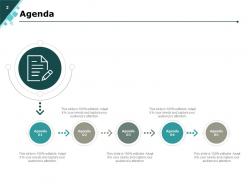
Slide 2: This is an Agenda slide. State your agendas here.
Slide 3: This slide shows Agile Marketing Outline describing- Agile Marketing – Value Proposition, Agile Marketing Manifesto, Agile Approach to Marketing, Agile Marketing Benefits, Key Pieces of an Agile Marketing Implementation, Agile Marketing Introduction, Agile Marketing Values, Role of Agile Marketing Team, How does Agile Marketing Work? Agile Marketing Process.
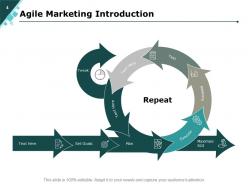
Slide 4: This slide presents Agile Marketing Introduction describing- Maximize ROI, Plan, Set Goals, Tweak, Measure, Execute, Test.
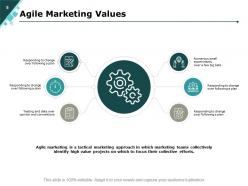
Slide 5: This slide displays Agile Marketing Values describing- Numerous small experiments over a few big bets, Responding to change over following a plan, Testing and data over opinion and conventions etc.
Slide 6: This slide represents Role of Agile Marketing Team which includes- Analyzes the data to identify the opportunities, Aligns with leadership and sets team expectations, Designs and prioritizes tests.
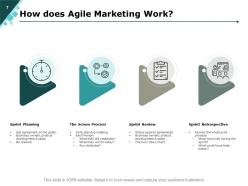
Slide 7: This slide showcases How does Agile Marketing Work describing- The Scrum Process, Sprint Planning, Sprint Review, Sprint Retrospective.
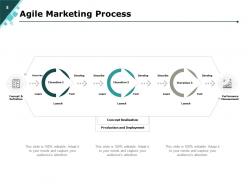
Slide 8: This slide shows Agile Marketing Process as- Describe, develop, test, launch and learn.
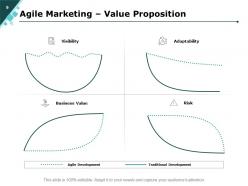
Slide 9: This slide presents Agile Marketing – Value Proposition describing- Adaptability, Visibility, Risk, Business Value.
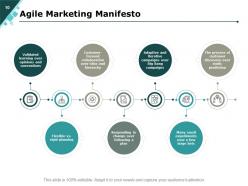
Slide 10: This slide displays Agile Marketing Manifesto describing- Validated learning over opinions and conventions, Flexible vs. rigid planning, Customer-focused collaboration over silos and hierarchy, Responding to change over following a plan, Adaptive and iterative campaigns over Big Bang campaigns, Many small experiments over a few large bets, The process of customer discovery over static prediction.
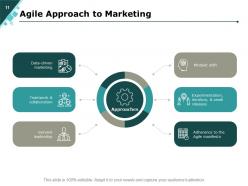
Slide 11: This slide represents Agile Approach to Marketing describing- Mindset shift, Experimentation, iteration, & small releases, Adherence to the Agile manifesto, Servant leadership, Teamwork & collaboration, Data-driven marketing.
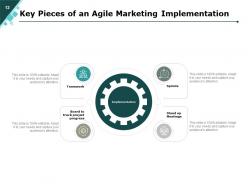
Slide 12: This slide showcases Key Pieces of an Agile Marketing Implementation describing- Sprints, Stand up Meetings, Board to track project progress, Teamwork.
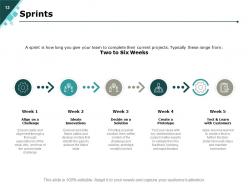
Slide 13: This slide shows Sprints describing- Align on a Challenge, Ideate Innovations, Decide on a Solution, Create a Prototype, Test & Learn with Customers.
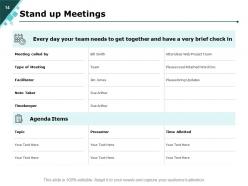
Slide 14: This slide presents Stand up Meetings in a table form with related text.
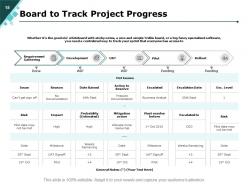
Slide 15: This slide displays Board to Track Project Progress describing- Requirement Gathering, Development, UAT, Pilot, Rollout.
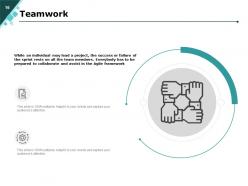
Slide 16: This slide shows Teamwork with imagery and text boxes to show information.
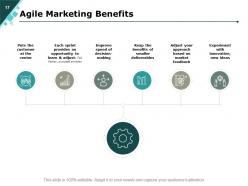
Slide 17: This slide presents Agile Marketing Benefits as- Puts the customer at the center, Each sprint provides an opportunity to learn & adjust, Improve speed of decision-making, Reap the benefits of smaller deliverables, Adjust your approach based on market feedback, Experiment with innovative, new ideas.
Slide 18: This slide shows Agile Marketing Process, Manifesto Icons.
Slide 19: This slide is titled as Additional Slides for moving forward.
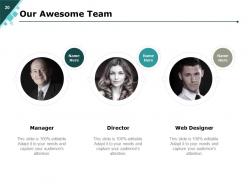
Slide 20: This is Our Awesome Team slide with names and designation.
Slide 21: This is Our Mission slide with imagery and text boxes.
Slide 22: This is About Us slide to state company specifications etc.
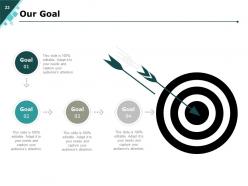
Slide 23: This is Our Goal slide. State your important goals here.
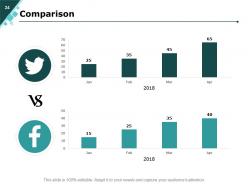
Slide 24: This is a Comparison slide to state comparison between commodities, entities etc.
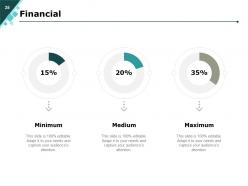
Slide 25: This is a Financial slide. Show finance related stuff here.
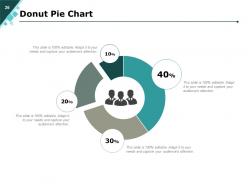
Slide 26: This slide shows Donut Pie Chart with data in percentage.
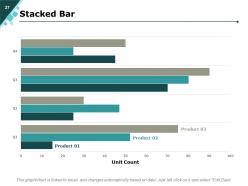
Slide 27: This slide presents Stacked Bar graph chart with three products comparison.
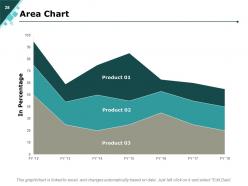
Slide 28: This slide displays Area Chart with three products comparison.
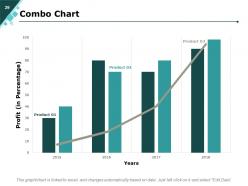
Slide 29: This slide represents Combo Chart of line and bar graph to compare products.
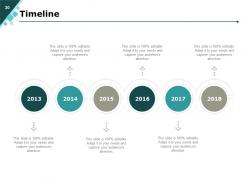
Slide 30: This is a Timeline slide. Show information related with time period here.
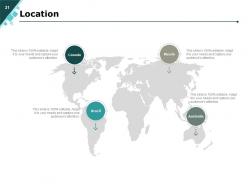
Slide 31: This is a Location slide with maps to show data related with location.
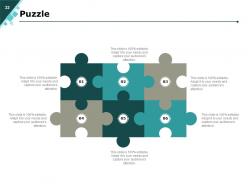
Slide 32: This slide shows Puzzle with text boxes to show information.
Slide 33: This is a Thank You slide with Address, contact numbers and email address.
Agile Marketing Process Manifesto And Team Structure PowerPoint Presentation Slides with all 33 slides:
Use our Agile Marketing Process Manifesto And Team Structure PowerPoint Presentation Slides to effectively help you save your valuable time. They are readymade to fit into any presentation structure.






FAQs for Agile Marketing Process Manifesto And Team Structure
Agile Marketing principles include iterative campaign development, cross-functional team collaboration, data-driven decision making, customer feedback integration, and rapid adaptation to market changes. These approaches streamline marketing operations by emphasizing flexibility over rigid planning, continuous testing over assumptions, and responsive execution over lengthy approval processes, ultimately delivering faster campaign launches and improved customer engagement in an increasingly dynamic marketplace.
Teams effectively implement Agile methodologies by establishing cross-functional squads, conducting regular sprint planning sessions, creating iterative campaign cycles, and maintaining continuous feedback loops with stakeholders. Through daily standups and retrospective meetings, marketing organizations streamline campaign development, accelerate time-to-market, and enhance customer responsiveness, ultimately delivering more targeted campaigns and improved ROI.
Customer feedback serves as the cornerstone of Agile Marketing, enabling real-time campaign optimization through continuous testing, rapid iteration, and data-driven adjustments that enhance targeting precision and message relevance. Through integrated feedback loops, organizations streamline campaign performance by incorporating customer insights directly into content creation, channel selection, and timing strategies, ultimately delivering more personalized experiences and improved conversion rates.
Data analytics supports Agile Marketing strategies by providing real-time performance insights, enabling rapid campaign adjustments, identifying customer behavior patterns, and measuring incremental improvements across short sprints. Through predictive analytics and A/B testing, marketing teams can make data-driven decisions quickly, optimize resource allocation, and deliver more targeted campaigns, ultimately enhancing customer engagement and ROI.
Organizations face challenges including cultural resistance to change, lack of cross-functional collaboration skills, difficulties with iterative planning processes, inadequate technology infrastructure, and insufficient training on agile methodologies. These transition hurdles often require significant organizational restructuring, with many marketing teams finding that overcoming initial resistance ultimately delivers faster campaign launches, improved customer responsiveness, and enhanced competitive positioning.
Cross-functional teams enhance Agile Marketing collaboration by breaking down silos, enabling real-time communication, and combining diverse expertise from marketing, sales, design, and analytics. These integrated teams streamline campaign development through shared accountability, faster decision-making, and continuous feedback loops, with many organizations finding that this approach delivers more cohesive strategies and accelerated time-to-market.
Essential Agile Marketing tools include project management platforms like Jira and Trello, marketing automation software, real-time analytics dashboards, collaboration tools such as Slack, and A/B testing technologies. These platforms streamline campaign iterations, enhance cross-functional communication, and enable rapid data-driven decisions, with many marketing teams finding that integrated toolsets ultimately deliver faster campaign launches and improved ROI.
Agile Marketing enhances responsiveness through iterative campaigns, real-time data analysis, rapid testing cycles, and cross-functional collaboration, enabling teams to pivot strategies quickly based on emerging insights. This approach allows organizations to launch targeted campaigns within days rather than months, adjust messaging based on immediate consumer feedback, and capitalize on trending topics, ultimately delivering more relevant customer experiences and competitive market positioning.
Agile Marketing success metrics include campaign velocity, customer acquisition cost, conversion rates, time-to-market for campaigns, and customer lifetime value. These measurements enable marketers to assess sprint effectiveness, optimize resource allocation, and demonstrate ROI, with many organizations finding that tracking iteration cycle times and A/B testing results ultimately delivers faster campaign optimization and improved marketing performance.
Storytelling enhances Agile Marketing by creating emotional connections, improving message consistency across iterations, and enabling faster audience feedback through compelling narratives. Through data-driven story adjustments, marketing teams can pivot messaging more effectively, test narrative elements in real-time, and deliver more personalized customer experiences, ultimately increasing engagement rates and campaign performance.
Agile marketing teams should conduct sprint reviews every 1-2 weeks and retrospectives monthly, though high-velocity teams may benefit from weekly retrospectives during campaign launches or market shifts. This cadence enables teams to quickly adapt messaging, reallocate resources, and optimize performance metrics, with many organizations finding that frequent touchpoints significantly improve campaign responsiveness and ultimately deliver faster time-to-market advantages.
Companies like Spotify use cross-functional squads for rapid campaign iteration, while ING Bank restructured their entire marketing organization into agile tribes and squads for faster product launches. Netflix leverages agile methodologies to test and optimize content recommendations across global markets, and Microsoft applies sprint-based approaches to coordinate product marketing campaigns. These implementations enable faster time-to-market, improved customer responsiveness, and enhanced competitive positioning.
Agile principles foster marketing innovation by encouraging experimentation, embracing iterative learning, promoting cross-functional collaboration, and reducing fear of failure through rapid testing cycles. These methodologies enable teams to quickly pivot based on market feedback, test bold creative concepts with minimal risk, and streamline approval processes, ultimately delivering breakthrough campaigns and competitive advantages in increasingly dynamic markets.
Marketers can ensure alignment through regular stakeholder check-ins, collaborative goal-setting sessions, transparent communication channels, cross-functional team integration, and consistent vision reinforcement in sprint planning. These practices enable teams to maintain strategic direction while adapting quickly to market changes, with many organizations finding that structured flexibility delivers both brand consistency and responsive campaign optimization, ultimately enhancing competitive advantage.
Encouraging team members to embrace change within Agile Marketing requires transparent communication about benefits, involving them in decision-making processes, providing adequate training and support, and celebrating quick wins from iterative improvements. Through regular retrospectives and feedback loops, marketing teams can adapt strategies based on real-time data and customer insights, ultimately delivering more responsive campaigns and enhanced competitive advantage.
-
Excellent template with unique design.
-
Really like the color and design of the presentation.
-
Graphics are very appealing to eyes.
-
Top Quality presentations that are easily editable.
-
Great experience, I would definitely use your services further.