


Agricultural IoT Wireless Sensor Networks




Try Before you Buy Download Free Sample Product
 Impress Your
 Audience
 100%
100% Editable
 Save Hours
 of Time


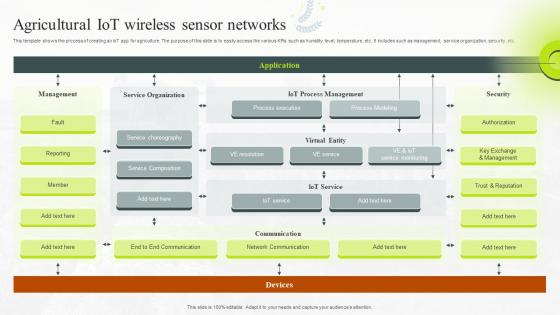
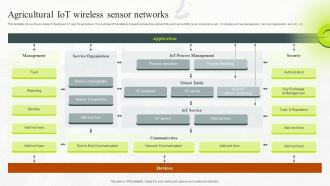
This template shows the process of creating an IoT app for agriculture. The purpose of this slide is to easily access the various KPIs such as humidity level, temperature, etc. It includes such as management, service organization, security, etc.
People who downloaded this PowerPoint presentation also viewed the following :
Agricultural IoT Wireless Sensor Networks with all 9 slides:
Use our Agricultural IoT Wireless Sensor Networks to effectively help you save your valuable time. They are readymade to fit into any presentation structure.








FAQs for Agricultural IoT
You'll want soil moisture sensors for sure, plus temp and pH monitoring. WiFi or cellular gets your data to the cloud for storage and number crunching. Solar panels are clutch for powering everything in remote spots - way better than running cables everywhere. Don't skip the actuators either, those handle your irrigation valves automatically. A mobile app or web dashboard lets you check in and control stuff remotely. Honestly, I'd test one small section first. Figure out which sensors actually help before you go crazy and wire up your entire operation.
Man, IoT sensors are game-changers for farming. They give you live updates on soil moisture, temperature, pH, all that good stuff. No more walking around wondering if your plants are thirsty - the system just waters them automatically when needed. Weather tracking helps too, and honestly, the pest monitoring feature saved my neighbor's tomatoes last season. Drones can fly over bigger fields and catch problems early. Temperature sensors pick up nutrient levels as well. I'd start with just soil moisture sensors in one area first though. See how it goes before you go all-in.
Honestly, sensors are game-changers for precision ag. They're monitoring soil moisture, temp, pH, nutrients - all that stuff 24/7. No guesswork anymore. Your IoT system gets fed this real-time data and boom - you know exactly where to water, fertilize, or deal with pests. Way better than the old days of just walking around and hoping for the best, you know? The trick is placing them right so you actually get useful readings. Different zones need different treatment anyway. It's pretty wild how much your yields improve when you're not just throwing resources everywhere and crossing your fingers.
So basically you scatter these sensors around your fields and they're constantly measuring soil stuff - moisture, pH, temperature, nutrients. Weather stations track rainfall and wind too. All that data gets beamed straight to your phone through cellular or WiFi networks. The cloud platforms make it super visual so you can actually understand what's happening. Game changer honestly - instead of walking fields and finding problems way too late, you'll catch irrigation issues or disease risks right as they start developing. My neighbor swears by his setup, says it's saved him tons of headaches.
Honestly, the connectivity issues will drive you crazy - rural internet is still garbage in a lot of places. Farmers can be pretty set in their ways too, so getting buy-in takes forever. You'll probably spend a fortune upfront on sensors and equipment. Weather's brutal on hardware, and don't even get me started on trying to make different IoT systems talk to each other. The data thing is weird though - you'll have mountains of info but no clue what to do with it. I'd start with something small first, maybe just one field or whatever, see if it actually pays off before going all in.
Honestly, IoT sensors are game-changers - they turn all that guesswork into actual data you can trust. No more wondering if your crops need water or if pests are creeping in. You'll get real-time info on soil moisture, weather, crop health, all that stuff. Problems get caught before they wreck your yields. Plus you can dial in irrigation timing and predict harvests way better. My buddy started with just soil monitoring (smart move tbh) then added more sensors once he saw his costs drop. The automation part is pretty sweet too - systems adjust themselves when conditions change.
Dude, IoT sensors are pretty cool for this stuff. They track soil moisture and weather in real-time, then automatically kick on your irrigation when things get too dry. No more eyeballing it and probably overwatering half the time. The sensors also catch leaks and monitor water quality - saves you from nasty surprises later. Most farmers I've heard about see like 20-30% less water usage but crops stay just as good, sometimes better. Oh, and definitely test it on a small section first before going all-in. That's just smart business.
Dude, IoT is actually pretty game-changing for farming. You get real-time data on soil moisture, weather patterns, all that stuff - so you're not just guessing when to water or fertilize anymore. Only use what you need, where you need it. I've seen farms cut their water usage by 30% this way, plus way less chemical runoff polluting everything downstream. You can even monitor your livestock remotely and catch health problems before they get expensive. Honestly, just start with soil sensors in one field - you'll see the difference in your water bills pretty quick.
Dude, your biggest worries are gonna be hackers getting into your farm systems and stealing all that data. Those sensors and drones? Total entry points if you don't lock them down. Someone could mess with your crop data or even hijack equipment - which sounds like a nightmare honestly. Strong passwords are obviously key, but you also need to keep everything updated and maybe segment your network. Oh, and definitely check what devices you've got connected right now. Each one should have encryption turned on. It's wild how much these systems actually know about your operation.
Honestly, farmers are super divided on this IoT stuff. Some jump right in, others think it's way too expensive and complicated. The main worry? Nobody knows if they'll actually make their money back, plus will this tech even survive out in the mud and rain? There's definitely a learning curve that freaks people out too. But once they see their neighbor's results - like actual proof it works - adoption shoots up fast. My advice? Pick one small thing to try first instead of going crazy with sensors everywhere.
Yeah, there's definitely solid proof this stuff works. John Deere's tractors have all these sensors now that help with planting and harvesting - they're seeing 10-15% better yields. Netafim does smart irrigation that watches soil moisture constantly, cuts water use by 30%. Pretty crazy how much difference that makes. Oh, and Blue River Technology (John Deere bought them) made these robots that literally only spray the weeds, not everything else. Herbicide use drops 90% - honestly didn't think that was even possible when I first heard about it. Check out their case studies if you need real numbers for your project.
Most IoT stuff just bolts onto your existing equipment - sensors, plug-in modules, that kind of thing. Thank god because replacing a whole tractor costs more than my house. You can retrofit older machines pretty easily. The sensors talk to your phone through cellular or WiFi, tracking fuel, soil conditions, when stuff needs maintenance. Newer equipment sometimes comes with this built in already. I'd start with whatever's giving you the biggest headache right now and work from there. LoRaWAN is another option if you're in a dead zone.
Honestly, I think it's looking pretty solid. Costs are dropping fast and mobile networks keep expanding everywhere. Developing countries are basically doing what they did with phones - skipping the old-school farming stuff and jumping straight to smart tech. Kenya and India are already crushing it with basic soil sensors and weather apps. Growing populations need more food, so there's real urgency driving this. Oh, and satellite internet is making things way more accessible now. I'd focus on stuff that works with regular smartphones though, since wifi can be sketchy in rural areas. Keep it simple and offline-capable.
So basically you throw sensors on everything - trucks, warehouses, the whole chain. Temperature, humidity, location data, all that stuff gets tracked in real time. Super helpful for catching problems early. Like if a fridge truck dies or produce is sitting around too long somewhere, you get pinged right away. Then you can reroute or drop prices before everything spoils. Way better than the old days of just hoping nothing went wrong. Put sensors at your main checkpoints and you'll catch bottlenecks so much faster than doing it manually.
So basically, ML takes all that crazy sensor data from your farm and actually makes sense of it. You know how you're getting flooded with soil moisture readings, weather stats, drone photos? The algorithms find patterns you'd never catch - like spotting disease early or knowing exactly when to water. Honestly, the amount of data is insane these days. Your system can pick up on tiny changes in plant health that look totally normal to us. The real game-changer though? Set up automatic alerts so you're not glued to screens all day checking dashboards.
-
Every time I ask for something out-of-the-box from them and they never fail in delivering that. No words for their excellence!
-
Excellent template with unique design.