

Aligning it and business strategy powerpoint presentation slides





Try Before you Buy Download Free Sample Product
 Impress Your
 Audience
 100%
100% Editable
 Save Hours
 of Time


Enhance workflow and improve productivity with our content ready Aligning IT and Business Strategy PowerPoint Presentation Slides. The business-IT alignment PowerPoint complete deck contains high-quality twenty-one PPT slides. This IT infrastructure strategy PowerPoint presentation includes a collection of icons, vectors & images to depict process terms & establish visual style. Business and IT alignment are important for market impact and business growth. Make use of this IT strategy presentation deck to understand the connection between IT risk spectrum and business goals. Showcase the steps of information technology alignment process like acknowledging the culture, know the IT estate, discover the value chains, interpret the context, etc. using strategic alignment model PPT visuals. Furthermore, you can position your business and IT alignment strategies with the help of a business alignment PowerPoint template. Thus, download the professionally designed strategic alignment PPT presentation to ensure that your employees are working towards your company’s overreaching goals. Guide folks on choosing good destinations with our Aligning It And Business Strategy Powerpoint Presentation Slides. Identify facilities that enthrall you.
People who downloaded this PowerPoint presentation also viewed the following :
Content of this Powerpoint Presentation
Slide 1: This slide introduces Aligning IT & Business Strategy. State Your Company Name and begin.
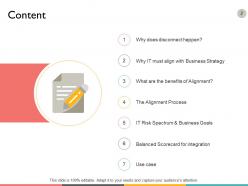
Slide 2: This slide shows Content of the presentation.
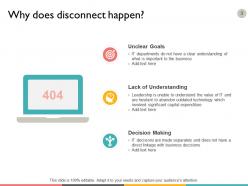
Slide 3: This slide presents Why does disconnect happen? describing- Lack of Understanding, Unclear Goals, Decision Making.
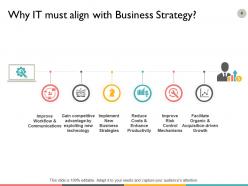
Slide 4: This slide displays Why IT must align with Business Strategy?
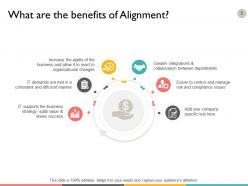
Slide 5: This slide represents What are the benefits of Alignment?
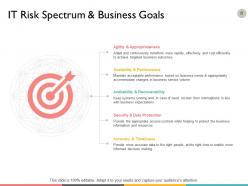
Slide 6: This slide showcases IT Risk Spectrum & Business Goals describing- Agility & Appropriateness, Scalability & Performance, Availability & Recoverability, Security & Data Protection, Accuracy & Timeliness.
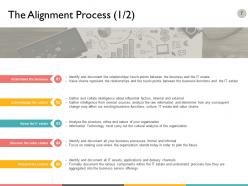
Slide 7: This slide shows The Alignment Process as- Understand the business, Acknowledge the culture, Know the IT estate, Discover the value chains, Interpret the context.
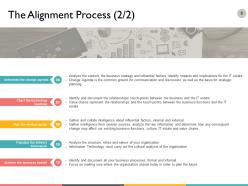
Slide 8: This is another slide presenting The Alignment Process.
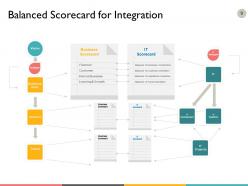
Slide 9: This slide displays Balanced Scorecard for Integration.
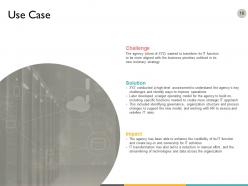
Slide 10: This slide represents Use Case describing- Challenge, Solution, and Impact.
Slide 11: This slide displays Business Decision Management Icons.
Slide 12: This slide is titled as Additional Slides for moving forward.
Slide 13: This is Meet our Team slide with names and designation.
Slide 14: This is Our Mission slide with related imagery and text.
Slide 15: This is About Us slide to show company specifications etc.
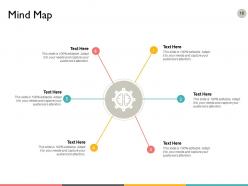
Slide 16: This slide shows Mind Map for representing entities.
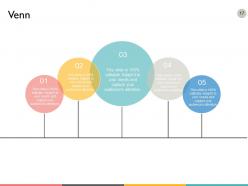
Slide 17: This is a Venn slide with text boxes.
Slide 18: This is a Target slide. State your targets here.
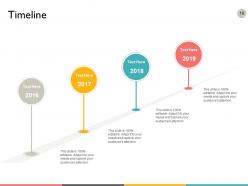
Slide 19: This is a Timeline slide to show information related with time period.
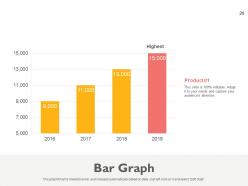
Slide 20: This slide shows Bar Graph with yearly comparison.
Slide 21: This is a Thank You slide with address, contact numbers and email address.
Aligning it and business strategy powerpoint presentation slides with all 21 slides:
Use our Aligning It And Business Strategy Powerpoint Presentation Slides to effectively help you save your valuable time. They are readymade to fit into any presentation structure.



FAQs for Aligning it and business strategy
So here's the deal - your IT strategy has to actually support what the business is trying to do. Sounds obvious but you'd be shocked how often that doesn't happen. Regular communication between IT and business teams is huge, plus you need both sides making decisions together instead of IT just doing their own thing in a corner somewhere. Oh, and measure success by business results, not just whether the servers are running smoothly. When IT isn't aligned with business goals, you're basically throwing money away and creating bottlenecks that'll drive everyone crazy. Start by figuring out which IT investments actually connect to business objectives and work from there.
Honestly, start with quarterly scorecards - they keep everyone from BS'ing about progress. Survey your business folks about IT responsiveness (their complaints are pure gold). Check if projects actually hit business deadlines vs just random IT timelines. Revenue impact is huge too - are IT initiatives moving the needle on growth or cost cuts? Watch how teams collaborate. Are they genuinely working together or having those painful meetings where nobody understands each other? Oh, and track how fast IT pivots when business priorities shift. That's when you really see if alignment exists or if it's just PowerPoint theater.
Leadership makes or breaks this stuff, honestly. Your execs can't just talk about IT-business collaboration - they actually have to make it happen. Set up shared goals, get people talking across departments, make sure everyone gets what the other side is dealing with. I've watched so many companies mess this up because leadership didn't follow through. You need leaders who'll sit in those meetings, build real relationships between teams, and call people out when they're not playing nice. Oh, and they have to model it themselves first - can't expect your teams to collaborate if the C-suite doesn't.
Look, first thing - if you can't connect an IT project to an actual business goal, just don't do it. Period. Monthly meetings between IT and business teams are a lifesaver for staying aligned. I've watched too many places where IT just does their own thing in a corner somewhere, and honestly? It's a disaster waiting to happen. Your metrics need to track business results, not just whether the servers are humming along nicely. Oh, and get your IT folks into those strategy meetings from day one. They can't make good calls if they don't understand what you're actually trying to accomplish.
Honestly, the worst part is when business and IT are basically speaking different languages. Business wants results and customer wins, while IT's talking timelines and technical roadblocks. Plus nobody ever knows who actually makes the final call when things get messy - the governance is usually trash. And don't get me started on resources... business acts like IT can just magically make everything happen overnight when they're already swamped. You really need those regular cross-team meetings though. Set up clear escalation paths too so people aren't just arguing in circles when priorities clash.
Look, communication stops IT and business teams from turning into those departments that can't stand each other. You need regular check-ins about priorities and what's actually possible - not just crisis meetings when stuff breaks. Business starts getting why tech decisions take forever or cost so much. IT figures out which features actually move the needle. Without this? You get beautifully coded solutions nobody uses, or sales promising things that'll never work. Honestly, most companies are terrible at this. Set up recurring touchpoints where you can talk through what's coming next before problems hit.
Honestly, COBIT's your best bet for governance stuff - most companies use it. TOGAF works well too if you're dealing with enterprise architecture. Balanced Scorecard is solid because it actually connects IT metrics to business results, but man, the initial setup is kind of a nightmare. ITIL's more about service management but it does help close that gap between what IT thinks they're delivering and what business people actually want. My advice? Just pick whatever your company already knows a bit about. Better to stick with one framework consistently than chase the "perfect" solution.
Start by connecting every tech purchase to your actual business goals. I'd create a simple scoring system that ranks each investment against what matters most - growing revenue, cutting costs, better customer experience, whatever. Most companies totally skip this part and then complain their tech budget is all over the place. Get your business people involved in picking priorities too, not just the IT folks. They should honestly be calling the shots here. Focus on stuff that'll show real results within 12-18 months. Oh, and audit what you're already spending this quarter - you might be surprised what you find.
Dude, culture is literally everything when it comes to IT-business alignment. If your teams are stuck in silos and nobody trusts each other, you're screwed from the start. People need to feel safe speaking up about what's actually working (or not working) with the tech stuff. Leadership can't just give lip service to collaboration either - they've got to show it. Honestly, I've watched so many companies try to force alignment when their culture was completely toxic. It never works. You'll save yourself tons of headache if you figure out where your culture stands before diving into any major initiatives. Otherwise you're just throwing money at a problem that runs way deeper.
Agile basically forces your IT and business people to talk constantly - like daily standups and sprint check-ins every couple weeks. When markets flip fast, you can actually pivot instead of wasting months building the wrong thing. Executives eat this stuff up because they see working software regularly, not just boring status updates. Your product owner better actually know what the business wants though, otherwise you're screwed. Oh and the feedback loops happen so fast you'll catch problems early. Honestly, just try it on one project first. Way easier to prove it works than explain it.
Honestly, digital transformation makes IT and business teams basically merge together - you can't keep them separate anymore. Your tech people suddenly need to understand customer stuff and business goals. Meanwhile, your business folks have to figure out what's actually doable tech-wise (versus what sales reps promise, lol). That old-school approach where business writes requirements and IT just builds it? Yeah, that's dead. You're constantly tweaking things based on data and feedback. Here's what worked for us though - get your IT people into strategy meetings right from the start, not just when it's time to build.
So for project stuff, Jira and Azure DevOps are solid choices - they'll get everyone on the same page visibility-wise. Business process tools like Appian or Nintex help map out workflows in plain English (well, mostly). ServiceNow's pretty clutch for handling service requests between teams. Honestly the dashboard thing is huge - I can't tell you how many projects I've seen go sideways just because people were looking at different data. Communication-wise, Slack integrations with your dev tools are a game changer. LeanIX is decent for the architecture visualization stuff too. I'd probably start with whatever gets your teams seeing the same project status first.
When IT and business teams aren't aligned, you get expensive disasters. Money gets thrown at projects nobody actually wants or uses. Users hate their systems because they don't solve real problems. Meanwhile, you're missing chances where tech could actually help the business grow. Here's what works: get IT people sitting with business teams regularly so they understand the daily grind. Have joint planning sessions before big projects start. Track metrics that actually connect IT success to business results. Honestly, most companies skip this step and wonder why everything feels broken. Communication has to be constant, not just quarterly check-ins.
Honestly, continuous feedback saves you from that nightmare where you spend months building something nobody actually wants. Weekly check-ins during projects work great - business people can tell you straight up if you're solving their actual problems or just making things worse. It's like adjusting your route instead of driving three hours in the wrong direction, you know? For ongoing stuff, I'd do quarterly reviews too. The trick is making it structured enough that people will actually be honest with you (which is harder than it sounds). Just start with one feedback loop and add more as you figure out what works.
Honestly, you've gotta get people actually working together instead of just talking about it. Mix up your project teams - throw IT and business people on the same initiatives so they're forced to figure it out together. Those monthly meetings where everyone explains their problems in normal human language? Game changer. Business explains what's broken, IT explains why certain fixes are impossible without all the tech speak. Here's the kicker though - tie everyone's bonuses to the same goals. When both teams sink or swim together, suddenly collaboration isn't optional anymore. Makes the whole "not my department" thing disappear pretty fast.
-
Very unique, user-friendly presentation interface.
-
Attractive design and informative presentation.
-
Great designs, really helpful.
-
Innovative and attractive designs.
-
Wonderful templates design to use in business meetings.