


Amazon Growth Initiative As Global Leader Powerpoint Presentation Slides Strategy CD V





Try Before you Buy Download Free Sample Product
 Impress Your
 Audience
 100%
100% Editable
 Save Hours
 of Time


Amazons approach to business is centered around delivering exceptional customer experiences by catering to each individuals needs. Check out our professionally curated Amazon growth initiative as a global leader template. Amazons comprehensive business strategy includes partnerships, initiatives, marketing, and branding efforts to maintain its position as a market leader. Our Amazon business strategy deck emphasizes its marketing strategy, progress and success over the years, and how they manage competition, including its IPO investment and performance. Additionally, the module evaluates the companys strengths, weaknesses, opportunities, and threats, as well as its BCG matrix and VRIO analysis. Further, our Amazon organizational strategy PowerPoint presentation exhibits the method of Amazons improved customer outreach through marketing mix assessments and advertising strategies. These will help enhance revenue and market share by understanding their business model. Lastly, it includes information about the selling process, financial review, future predictions, and key executives. Access this valuable template now.
People who downloaded this PowerPoint presentation also viewed the following :
Content of this Powerpoint Presentation
Slide 1: This slide introduces Amazon Growth Initiative as Global Leader. Commence by stating Your Company Name.
Slide 2: This slide depicts the Agenda of the presentation.
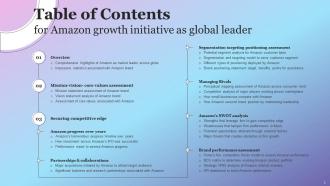
Slide 3: This slide incorporates the Table of Contents.
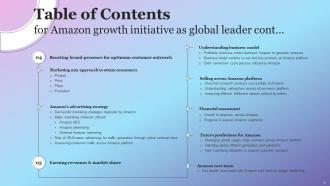
Slide 4: This is yet another slide continuing the Table of Contents.
Slide 5: This slide highlights the Title for the Topics to be discussed further.
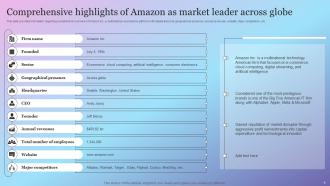
Slide 6: This slide provides information regarding overall brand overview of Amazon Inc. as market leader.
Slide 7: This slide caters details about key statistics associated with Amazon.
Slide 8: This slide presents the Heading for the Contents to be covered in the next template.
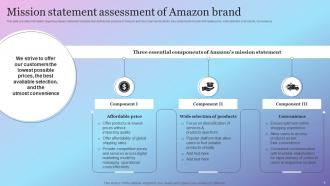
Slide 9: This slide showcases the mission statement analysis that defines the purpose of Amazon.
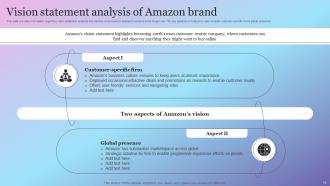
Slide 10: This slide portrays the Vision statement analysis of Amazon brand.
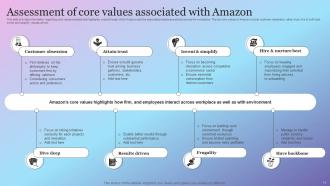
Slide 11: This slide reveals the Assessment of core values associated with Amazon.
Slide 12: This slide exhibits the Title for the Ideas to be discussed next.
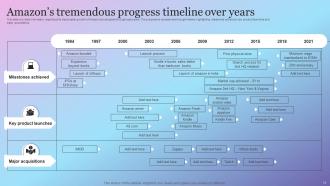
Slide 13: This slide provides information regarding the impeccable growth of Amazon across globe through past years.
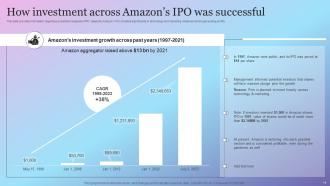
Slide 14: This slide shows information regarding investment analysis of IPO raised by Amazon.
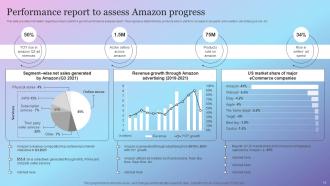
Slide 15: This slide illustrates the Performance report to assess Amazon progress.
Slide 16: This slide includes the Heading for the Ideas to be covered in the following template.
Slide 17: This slide reveals information about potential businesses acquired by Amazon in past years.
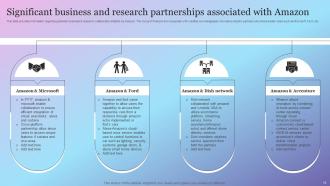
Slide 18: This slide talks about the Significant business and research partnerships associated with Amazon.
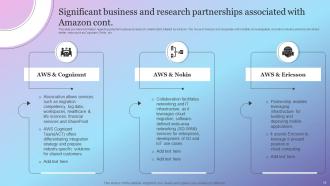
Slide 19: This slide highlights the potential business & research collaboration initiated by Amazon.
Slide 20: This slide incorporates the Title for the Contents to be discussed further.
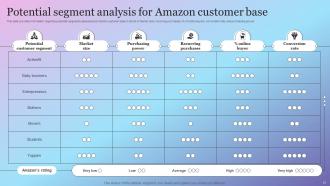
Slide 21: This slide provides information regarding potential segments assessed across the customer base.
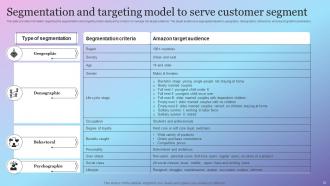
Slide 22: This slide depicts the Segmentation and targeting model to serve customer segment.
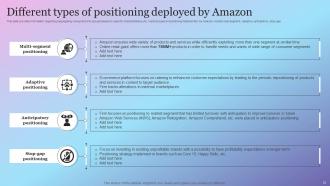
Slide 23: This slide states the Different types of positioning deployed by Amazon.
Slide 24: This slide shows brand positioning that portrays how Amazon functions, the target audience, benefits, etc.
Slide 25: This slide contains the Title for the Contents to be covered in the following template.
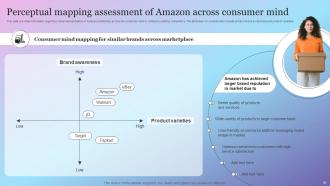
Slide 26: This slide displays the Perceptual mapping assessment of Amazon across consumer mind.
Slide 27: This slide represents the Competitive analysis of major players existing across marketplace.
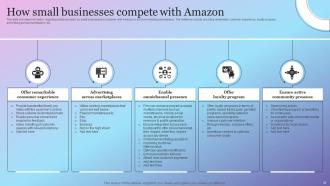
Slide 28: This slide portrays How small businesses compete with Amazon.
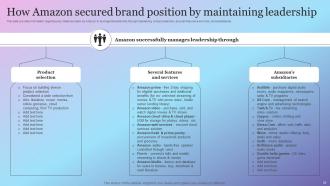
Slide 29: This slide reveals How Amazon secured brand position by maintaining leadership.
Slide 30: This slide presents the Heading for the Topics to be discussed in the next template.
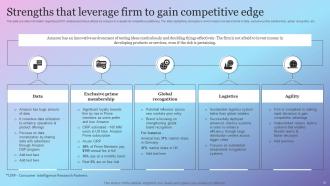
Slide 31: This slide focuses on the Strengths that leverage firm to gain competitive edge.
Slide 32: This slide provides information regarding SWOT analysis technique utilized by Amazon.
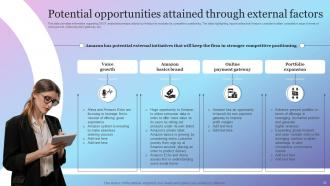
Slide 33: This slide exhibits the Potential opportunities attained through external factors.
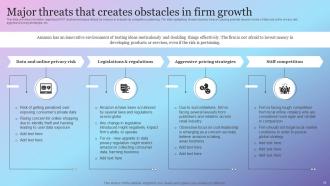
Slide 34: This slide states the Major threats that creates obstacles in firm growth.
Slide 35: This slide includes the Title for the Ideas to be covered in the following template.
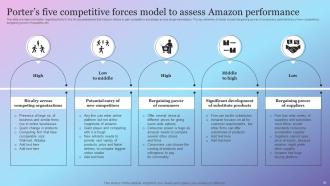
Slide 36: This slide showcases the Porter’s five competitive forces model to assess Amazon performance.
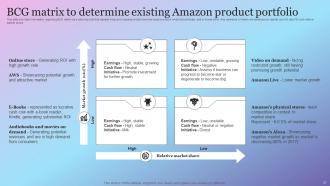
Slide 37: This slide displays the BCG matrix to determine existing Amazon product portfolio.
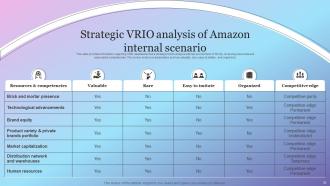
Slide 38: This slide highlights the Strategic VRIO analysis of Amazon internal scenario.
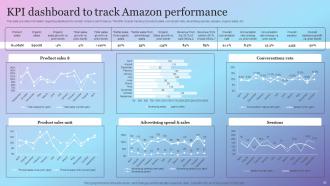
Slide 39: This slide showcases the KPI dashboard to track Amazon performance.
Slide 40: This slide reveals the Heading for the Ideas to be discussed further.
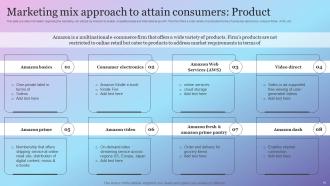
Slide 41: This slide presents the marketing mix utilized by Amazon to enable competitiveness and international growth.
Slide 42: This slide illustrates the marketing mix utilized by Amazon to enable competitiveness and international growth.
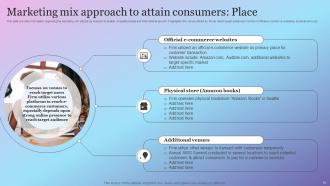
Slide 43: This slide displays the marketing mix of place utilized by Amazon to enable competitiveness and international growth.
Slide 44: This slide shows the Amazon's place marketing mix to enable competitiveness and international growth.
Slide 45: This slide depicts the Title for the Contents to be covered in the next template.
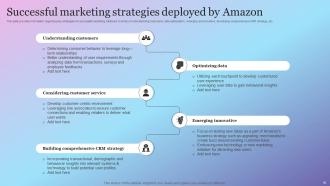
Slide 46: This slide provides information regarding key strategies for successful marketing initiatives.
Slide 47: This slide includes the Heading for the Topics to be discussed further.
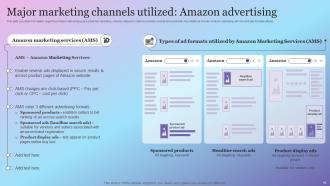
Slide 48: This slide exhibits Amazon advertising as a potential marketing channel utilized.
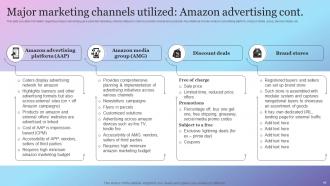
Slide 49: This slide continues Amazon advertising as a potential marketing channel utilized.
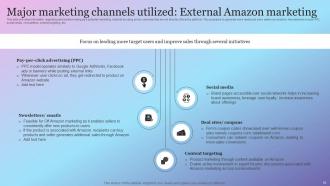
Slide 50: This slide provides information regarding external advertising as a potential marketing channel.
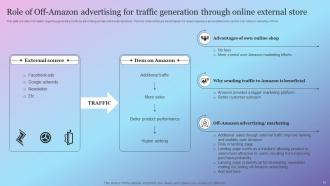
Slide 51: This slide shows the Role of Off-Amazon advertising for traffic generation through online external store.
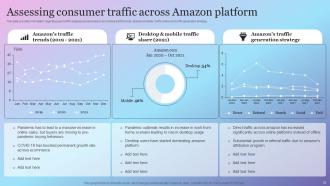
Slide 52: This slide deals with Assessing consumer traffic across Amazon platform.
Slide 53: This slide presents the Title for the Topics to be covered in the next template.
Slide 54: This slide caters details about Amazon’s business model.
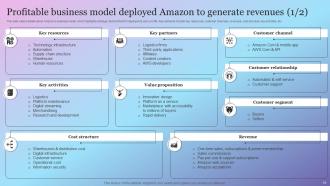
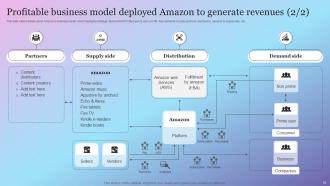
Slide 55: This slide continues the Profitable business model deployed Amazon to generate revenues.
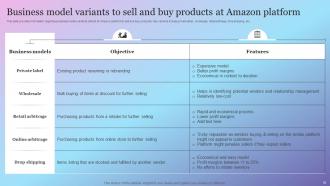
Slide 56: This slide talks about the Business model variants to sell and buy products at Amazon platform.
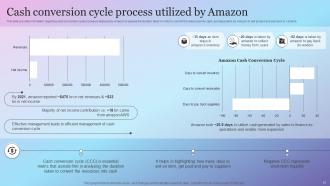
Slide 57: This slide represents the Cash conversion cycle process utilized by Amazon.
Slide 58: This slide displays the Heading for the Contents to be discussed further.
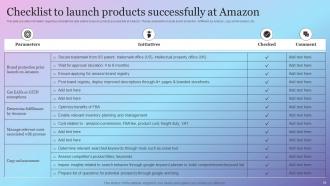
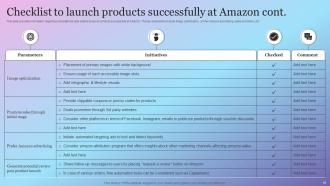
Slide 59: This slide depicts the Checklist to launch products successfully at Amazon.
Slide 60: This is yet another slide continuing the Checklist to launch products successfully at Amazon.
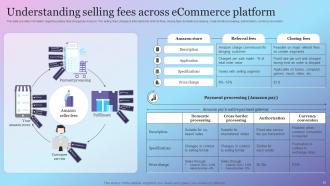
Slide 61: Thi slide focuses on Understanding selling fees across eCommerce platform.
Slide 62: This slide provides information regarding the assessment of fulfillment options utilized by sellers.
Slide 63: This slide includes the Title for the Ideas to be covered in the following template.
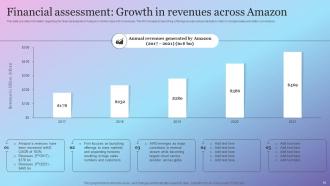
Slide 64: This slide exhibits the financial analysis of Amazon in terms of growth in revenues.
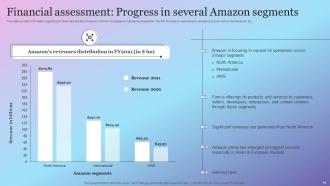
Slide 65: This slide highlights the financial analysis of Amazon in terms of progress across several segments.
Slide 66: This slide portrays the Heading for the Ideas to be discussed in the upcoming template.
Slide 67: This slide emphasizes on Managing global supply chain scenario across Amazon platform.
Slide 68: This slide deals with Handling global inflation generated post pandemic.
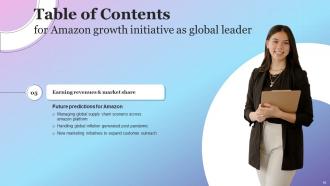
Slide 69: This slide represents the New marketing initiatives to expand customer outreach.
Slide 70: This slide incorporates the Title for the Contents to be covered next.
Slide 71: This slide provides information regarding key executives associated with core team of Amazon.
Slide 72: This is the Icons slide containing all the Icons used in the plan.
Slide 73: This slide is used for showcasing some Additional information.
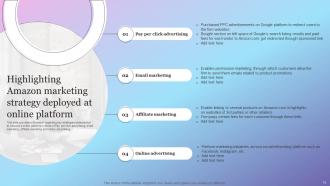
Slide 74: This slide provides information regarding key strategies implemented at Amazon’s online platform.
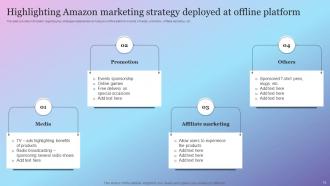
Slide 75: This slide Highlights the Amazon marketing strategy deployed at offline platform.
Slide 76: This is the Clustered bar slide.
Slide 77: This is the 30 60 90 days plan slide for effective planning.
Slide 78: This slide reveals the company's Vision, Mission, and Goal.
Slide 79: This is the Idea generation slide for encouraging fresh ideas.
Slide 80: This slide displays the firm's Timeline.
Slide 81: This slide elucidates the organization's Roadmap.
Slide 82: This is the Puzzle slide with related imagery.
Slide 83: This slide displays information related to the Financial topic.
Slide 84: This is the Thank You slide for acknowledgement.
Amazon Growth Initiative As Global Leader Powerpoint Presentation Slides Strategy CD V with all 89 slides:
Use our Amazon Growth Initiative As Global Leader Powerpoint Presentation Slides Strategy CD to effectively help you save your valuable time. They are readymade to fit into any presentation structure.








































FAQs for Amazon Growth Initiative As Global Leader Powerpoint Presentation Slides
Amazon's Growth Initiative strategy includes marketplace expansion, AWS cloud services diversification, Prime membership ecosystem enhancement, logistics infrastructure investment, and artificial intelligence integration. These components work synergistically by expanding global reach, diversifying revenue streams, and strengthening customer loyalty, with many retailers finding that Amazon's integrated approach delivers operational efficiency and competitive advantage in an increasingly digital marketplace.
Amazon leverages artificial intelligence, machine learning, cloud computing, automation, and data analytics to drive growth initiatives across multiple sectors. Through AWS infrastructure, predictive algorithms, and robotic fulfillment systems, the company streamlines operations, personalizes customer experiences, and enables rapid market expansion, while continuously optimizing logistics, inventory management, and service delivery for competitive advantage.
Amazon's customer-centric approach drives growth through personalized recommendations, streamlined logistics, competitive pricing, and continuous service innovation. This philosophy enables expansion into new markets like healthcare and cloud services, with many retail and technology companies finding that prioritizing customer experience ultimately delivers higher retention rates, increased market share, and sustainable competitive advantage.
Partnerships and collaborations enable Amazon to expand market reach, enhance service offerings, and accelerate innovation by leveraging external expertise, distribution networks, and technological capabilities. Through strategic alliances with retailers, cloud providers, logistics companies, and content creators, Amazon streamlines operations, reduces infrastructure costs, and delivers comprehensive customer experiences, ultimately strengthening its competitive advantage across multiple sectors.
Amazon's logistics and fulfillment capabilities serve as fundamental growth accelerators by enabling faster delivery speeds, expanding marketplace reach, and reducing operational costs across global markets. These strategic investments allow Amazon to capture larger market shares, attract more third-party sellers, and deliver superior customer experiences, ultimately creating competitive moats that sustain long-term growth momentum.
Amazon leverages data analytics across customer behavior analysis, demand forecasting, inventory optimization, personalized recommendations, and market expansion strategies. Through machine learning algorithms and predictive modeling, they streamline supply chain operations, enhance customer experiences, and identify new market opportunities, ultimately delivering faster services, reduced operational costs, and sustained competitive advantage in an increasingly data-driven marketplace.
Innovation serves as Amazon's primary engine for market expansion through continuous technology development, customer experience enhancement, strategic acquisitions, and new service category creation. By pioneering solutions like AWS cloud services, Prime membership programs, and AI-driven logistics, Amazon consistently delivers faster services, lower costs, and superior customer experiences, ultimately establishing competitive advantages that enable sustained market dominance across increasingly diverse sectors.
Amazon's sustainability initiatives strategically align with growth through renewable energy investments, carbon-neutral delivery systems, sustainable packaging innovations, and circular economy programs. These environmental commitments enable cost reductions through operational efficiency, attract environmentally conscious consumers, and strengthen competitive positioning, with many organizations finding that sustainability-driven growth initiatives ultimately deliver both environmental impact and enhanced market share.
Amazon adapts its growth strategies through localized product offerings, region-specific payment methods, strategic partnerships with local businesses, culturally relevant marketing campaigns, and tailored logistics networks. These approaches enable market penetration by addressing unique consumer preferences, regulatory requirements, and competitive landscapes, with many international operations finding that localized strategies deliver enhanced customer experiences and sustainable market share growth.
Amazon faces regulatory scrutiny over market dominance, intense competition from Google, Microsoft, and emerging platforms, supply chain complexities, and talent acquisition costs in expanding markets. These challenges present both operational hurdles and strategic opportunities, with many analysts finding that Amazon's diversification into cloud services, advertising, and international markets helps mitigate risks while maintaining competitive advantage.
Amazon balances short-term growth with long-term sustainability by investing heavily in renewable energy, carbon-neutral delivery systems, and sustainable packaging innovations while maintaining aggressive expansion targets. Through initiatives like The Climate Pledge and automated fulfillment centers, the company streamlines operations, reduces environmental impact, and delivers cost efficiencies, ultimately creating competitive advantage in an increasingly sustainability-focused market.
Companies can learn to prioritize customer obsession over short-term profits, invest heavily in technology infrastructure, and embrace long-term strategic thinking from Amazon's approach. Through continuous innovation, data-driven decision making, and willingness to experiment with new markets, organizations across retail, logistics, and technology sectors can streamline operations, enhance customer experiences, and ultimately deliver sustained competitive advantage in increasingly dynamic business environments.
Amazon's expansion into new product categories aligns with its growth goals by diversifying revenue streams, leveraging existing infrastructure, and capturing larger market share across multiple sectors. Through strategic moves into healthcare, groceries, cloud services, and advertising, Amazon maximizes its logistics network efficiency, reduces dependency on traditional retail, and creates cross-selling opportunities, ultimately delivering sustained growth and competitive advantage in an increasingly digital marketplace.
Amazon measures growth initiative success through revenue growth rates, customer acquisition costs, market share expansion, operational efficiency metrics, and customer lifetime value. These comprehensive analytics enable the company to evaluate scalability across diverse sectors like cloud services, logistics, and retail, while optimizing resource allocation and maintaining competitive advantage in an increasingly dynamic marketplace.
Consumer trends like mobile-first shopping, sustainability preferences, voice commerce, and personalized experiences are driving Amazon's strategic expansion into cloud services, logistics innovation, and AI-powered recommendations. These evolving behaviors enable Amazon to diversify revenue streams, enhance operational efficiency, and strengthen customer loyalty, with many retail analysts finding that trend-responsive adaptation ultimately delivers sustained competitive advantage in increasingly dynamic markets.
-
Great product, helpful indeed!
-
Crisp and neat slides. Makes it fun and easier to curate presentations.