

Amazon Marketing Strategy Amazon PPC Campaign Structure Overview




Try Before you Buy Download Free Sample Product
 Impress Your
 Audience
 100%
100% Editable
 Save Hours
 of Time


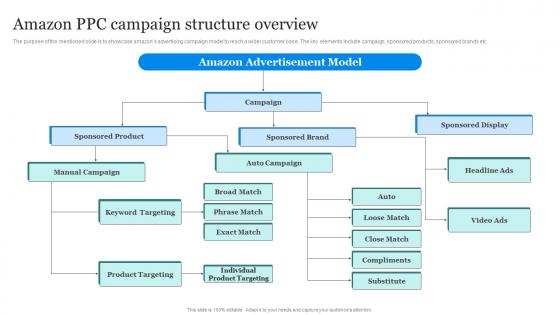
The purpose of the mentioned slide is to showcase amazons advertising campaign model to reach a wider customer base. The key elements include campaign, sponsored products, sponsored brands etc
People who downloaded this PowerPoint presentation also viewed the following :
Amazon Marketing Strategy Amazon PPC Campaign Structure Overview with all 6 slides:
Use our Amazon Marketing Strategy Amazon PPC Campaign Structure Overview to effectively help you save your valuable time. They are readymade to fit into any presentation structure.





FAQs for Amazon Marketing Strategy Amazon PPC
Honestly, Amazon PPC comes down to three things that actually matter. Run auto campaigns to find new stuff, exact match for keywords you know work, then broad/phrase to grab the weird variations people search for. Don't make my mistake of dumping everything into one giant campaign - group keywords by product or theme instead. Bid high on stuff that converts well, go easy on the experimental keywords. Oh, and base your tweaks on what the search term reports actually show you, not whatever sounds good in your head. That foundation will get you going.
Dude, group your ad groups by product type - don't just dump everything together like I did with my first disaster of a campaign. Keep it to maybe 5-10 similar products per group so you can actually see what's working. Price points matter too since cheaper stuff converts differently than premium items, obviously. Related ASINs with similar keywords should go together - makes bidding way easier later. Oh and you'll thank yourself when you need to pause the duds without messing up your good performers. Trust me on this one.
Keyword research is honestly where everything starts with PPC. Group related keywords super tight so your ads actually match what people type in. I always go overboard on this step - probably spend like 3x longer than I should lol. But your CTR will be way better! Start broad, then get specific with clusters. The research helps you catch negative keywords early too, which saves money later. Plus you'll see opportunities for different campaign setups. Trust me, doing this right upfront makes everything else so much easier. Your conversion rates depend on nailing this part.
I'd go with 60-70% on Sponsored Products - they're your bread and butter for actual sales. Then maybe 20-30% for Sponsored Brands to get people noticing your stuff higher up in search results. The leftover 10-15% can go toward Sponsored Display for hitting people who already checked you out or are buying from competitors. Don't stress about getting these numbers perfect right away though. You can totally shift things around once you see what's working. I always tell people to just watch your ACoS for each type and move money toward whatever's converting better. Start here, then let the numbers do the talking after a couple weeks.
Alright so here's what's worked for me - harvest those search terms religiously and bump the good ones into manual campaigns with better bids. Auto campaigns are total budget vampires if you don't add negative keywords constantly. They'll blow money on the weirdest irrelevant searches, I swear. Start with low bids though, then raise them once you see which ASINs actually make money. Oh and definitely split your campaigns by match type - way easier to manage budgets that way. Honestly, think of auto campaigns as your research team, not your moneymakers. Mine them for intel, then do the real optimization work in manual campaigns.
Definitely add negative keywords at both campaign and ad group levels. Campaign level first - block obvious stuff like "free," "cheap," competitor names. Ad group negatives should be way more specific to your actual products. I'm terrible at this but try to check search term reports weekly - that's where you'll find the weirdest stuff people search for. Don't wait for bad clicks to eat your budget, just be aggressive upfront. Oh and create a shared negative list for similar campaigns. Saves you from adding the same junk keywords over and over.
Look, you really need to watch five main numbers. ACoS is huge - that's your ad spend divided by sales, and it'll tell you if you're actually making money or just burning cash. CTR shows if people click your ads. Conversion rate tells you if they buy after clicking. Then there's CPC and total sales. Honestly, most people obsess over the wrong metrics at first. Pull these weekly and compare to whatever ACoS target you set. Short sentences help you spot problems early. The full picture matters more than any single number though.
Here's what I'd do - keep product targeting totally separate from your keyword campaigns. Go after your competitors' ASINs and stuff your customers are already buying. Auto campaigns first, let Amazon do the heavy lifting to find what works. Then build manual ones from that data (honestly the auto data is where the magic happens). Set these up with their own budgets since bidding works completely different than keywords. I always start conservative with bids then pump up what's working. You'd be surprised how many random products convert well that you'd never think to target manually.
So Sponsored Products just push your individual items in search results - pretty straightforward. Sponsored Brands is more of a showcase thing where you get your logo, a headline, and can feature multiple products at the top of searches. Way more visibility but also pricier. Products work for anyone and they're honestly easier to figure out when you're starting. Brands need Brand Registry first (bit of a hassle) and the clicks cost more. But if you've got a decent product range, Brands can really help people recognize your stuff. I'd definitely go with Products first. Get the hang of how Amazon ads work, then maybe add Brands later once you're not fumbling around with keywords and budgets.
Break your campaigns into different audience buckets first - like budget shoppers vs people who want premium stuff. Then write totally different ad copy for each group. Budget folks need to see value and savings, while premium buyers want quality and status. I learned this the hard way after wasting money on generic ads that nobody clicked. Your images matter too - lifestyle shots work great for aspirational types, but practical buyers just want clear product photos. Start with maybe 2-3 segments and test what actually converts. It's wild how much better targeted messaging performs.
Check your Amazon PPC stuff weekly - adjust bids, toss in negative keywords, pause the junk that's not working. That's the regular maintenance you gotta do. Major restructuring though? Wait like 4-6 weeks minimum. I'm talking about moving keywords around between campaigns or totally rebuilding ad groups. Did this mistake myself and basically nuked all my performance data by restructuring way too early. You need actual clicks and conversion data first, otherwise you're just guessing. Trust me, those big structural changes can wait - weekly tweaks are what really matter.
You basically have to rebuild everything around when people actually buy stuff. Black Friday? Separate campaigns with way bigger budgets for gift keywords. My first holiday season was a total mess because I didn't plan ahead. Create new ad groups just for seasonal terms and turn off the regular campaigns that'll just burn money. Honestly, the timing matters more than people think - start restructuring like 6-8 weeks before major seasons hit. Set some reminders now so you're not scrambling later when everyone else is competing for the same eyeballs.
The biggest screwup I see? Jamming every keyword into one giant campaign. You'll hate yourself when trying to manage budgets. Separate your match types too - mixing them in one ad group is pure chaos. Search term reports are your best friend, check them weekly and add negative keywords or you'll blow money on random junk. Oh, and don't just slap the same bid on everything - some keywords are way more competitive than others. Build tight ad groups around specific themes first. Honestly, taking 10 minutes to set this up right saves hours of headaches later.
Here's how I set up A/B tests - duplicate your campaigns or ad groups but only change one variable. Could be different keywords, bid strategies, whatever you're testing. Everything else stays exactly the same, otherwise you won't know what actually moved the needle. Run them for at least 2-3 weeks (longer if your traffic's low). Honestly, testing one thing at a time is kinda boring but it's the only way that works. Start with your biggest keywords or top products first - those'll give you the clearest signal before you mess with smaller stuff.
Look, your landing page is make-or-break for PPC campaigns. Someone searches "wireless earbuds" and clicks your ad? They better land on a page that actually matches what you promised. Otherwise you're just burning money. Amazon's Quality Score depends on this stuff - better relevance means lower costs and more visibility. Honestly, I've seen campaigns go from total disasters to profitable just by fixing the landing page. Your conversion rate shoots up when everything aligns. Quick win: make sure your main keyword shows up in the product title and bullet points. It's not rocket science but so many people mess this up.
-
SlideTeam just saved my project! Thank you so much. The variety of templates helped me showcase multiple perspectives easily.
-
One-stop solution for all presentation needs. Great products with easy customization.