

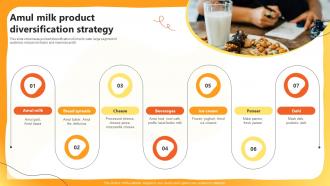
Amul Milk Product Diversification Strategy





Try Before you Buy Download Free Sample Product
 Impress Your
Audience
 100%
Editable
 Save Hours
of Time


This slide showcases product diversification of Amul to cater large segment of audience, reduce risk factor and maximize profit.
People who downloaded this PowerPoint presentation also viewed the following :
Amul Milk Product Diversification Strategy with all 9 slides:
Use our Amul Milk Product Diversification Strategy to effectively help you save your valuable time. They are readymade to fit into any presentation structure.








FAQs for Amul Milk
So Amul basically had three big reasons for branching out. First off, milk production is super seasonal - they'd have all this extra capacity sitting around during peak times. Smart move was creating products like ice cream and cheese to use that surplus. Their cooperative model meant they had to find ways to get farmers better money too. Plus, people already trusted the Amul name, so consumers were game to try their chocolates and other stuff beyond just regular milk. Oh, and here's the thing - they didn't go crazy jumping into random markets. They stuck to what made sense with what they already had. That's probably the biggest takeaway if you're thinking about expansion.
So Amul basically just copied their dairy setup for everything else. They already had millions of farmers supplying milk, right? Same farmers now grow fruits for their juices, vegetables for processed stuff, even organic crops. Pretty smart move honestly - they didn't have to build new relationships from scratch. The infrastructure was already there, plus the trust factor. Farmers love it because they're making money from different crops throughout the year instead of just milk. And Amul gets reliable suppliers without the headache of starting over. That's probably why their expansion worked so well.
Oh totally, Amul's super smart about this stuff. They don't just randomly launch products everywhere - there's actual research behind it. Take their ice cream expansion - they spent forever figuring out which flavors people wanted in different states. Smart move honestly. They also dig into competitor pricing and figure out distribution headaches before jumping in. The whole point is finding those gaps where their cooperative thing can actually work. It's pretty obvious when you look at their expansion timeline - you can see exactly how the data shaped each new product launch.
Amul's really smart about this - they never stray from their farmer cooperative story and that quality dairy promise. Their "Utterly Butterly Delicious" vibe stays consistent whether you're buying regular butter or their newer stuff like Greek yogurt. The packaging always feels authentically Amul too, which I think is harder than it looks. They test everything in smaller markets first before rolling out nationally - probably saves them from expensive mistakes. What's cool is they don't chase random food trends that would feel weird with their brand. Like, could you imagine Amul energy drinks? That distinctive taste profile carries through pretty much everything they make.
So Amul's main headaches have been supply chain chaos - imagine coordinating milk, chocolates, AND frozen foods all at once. Quality control gets messy too when you're spread that thin. They've had to fight established brands like Häagen-Dazs in ice cream, which honestly seems brutal. The trickiest part? Getting people to try their non-dairy stuff without confusing the brand message. Oh, and consumer education is always a pain when you're expanding. My advice - actually, scratch that - THE advice for your project: test small batches first. Don't go crazy launching everything simultaneously.
Amul's tech game is honestly pretty solid - their cold chain and automated processing let them branch out into ice creams, chocolates, all that stuff without screwing up quality. They can track products from the farm all the way to stores, which is wild when you think about the scale. E-commerce gave them totally new ways to reach customers too. Here's the thing though - and this matters for your project - they built their tech backbone first, then diversified. Don't try expanding into new categories until your operations are bulletproof. I've seen companies mess this up by rushing it.
Amul's whole thing is they don't just do milk - they've got cheese, ice cream, butter, the works. Farmers aren't screwed if milk prices tank because there's income from all these other products. Their butter ads are actually genius btw. The co-op structure means farmers get a cut of profits from the fancy stuff, not just basic milk payouts. Way smarter than putting all your eggs in one basket. If you're helping farming communities, definitely look for partners who'll process multiple products. Single-product deals are risky as hell.
So basically Amul tests everything right at the milk collection centers - they check fat content, protein, all that stuff before even accepting it from farmers. Each facility follows the same protocols whether they're making ice cream or cheese (honestly wild they manage 200+ products consistently). Regular audits keep everyone in line too. But here's the smart part - since farmers actually own shares in the cooperative, they're motivated to keep quality high because it affects their own profits. It's not just some distant corporate thing, you know? Quality control becomes everyone's problem, which actually makes it work better.
Look, Amul's basically spread their bets across tons of products - milk, cheese, ice cream, chocolates, even drinks now. So when one thing tanks, the others keep money coming in. Pretty genius if you ask me. Like when ice cream sales die in winter, people still buy milk and cheese constantly. Their brand name helps too since customers already trust them across different stuff. I mean, dairy prices go crazy sometimes, but having all these different revenue streams means they're not screwed when that happens. It's honestly just smart business - don't put all your eggs in one basket, you know?
So Amul's whole thing is watching what people actually want, then jumping into those markets. Smart, right? They started with just milk but now they're doing ice creams, chocolates, even those quick meal packets since everyone's crazy busy these days. What I find interesting is how they tweak products for different states - like they actually pay attention to regional tastes. It's this weird mix of staying true to their roots while still innovating. Bottom line: if you're not constantly listening to what customers need, you're missing out on growth opportunities.
Amul's smart move was sticking to what they knew best - dairy. They crushed it going from milk to cheese to ice cream, but totally bombed when they tried textiles (like, why?). Build on your existing supply chains and customer base instead of starting over. Their co-op thing worked great for them, though that won't work everywhere - but getting your community invested is still solid advice. Don't jump into random sectors. Start with stuff that's close to what you're already doing. You'll use your current strengths and relationships that way.
Amul's pretty clever about this - they don't just throw money at random new products. Instead, they build on what they already have. Organic stuff makes sense since they've got the dairy network down. Their facilities now do renewable energy too, which cuts costs while being green. Smart move honestly. They're also getting into plant-based alternatives (kinda funny for a dairy company) and better packaging. The whole thing isn't just about checking boxes - sustainability actually drives where they put their money next. It's like they figured out how to make doing good profitable.
Partnerships are Amul's secret weapon for product development - they speed everything up massively. Tech companies help with processing equipment, international brands share flavor know-how, startups bring packaging innovations. Way smarter than doing it all themselves, right? They get specialized knowledge they don't have, especially for new stuff like ready-to-eat meals or premium dairy. Here's what's clever though - they choose partners who actually fit with their cooperative model instead of trying to take over. It's honestly pretty strategic when you think about it.
Amul's expansion totally makes sense though. They're not just randomly branching out - everything ties back to helping their dairy farmers make more money. Ice cream, cheese, chocolates, frozen stuff... it's all still food/dairy related so they know what they're doing. Smart move honestly, since they can use the same distribution channels they already have. More product lines means more revenue for the co-op network. I mean, why stick to just milk when you've got the infrastructure to do way more? Each new category builds on what they're already good at.
So Amul's jumping hard into the health trend - organic stuff, plant-based options, probiotics, the whole thing. They're also pushing premium dairy and ready-to-eat foods since city people want convenience. Ice cream and chocolate are huge for them too (honestly, who doesn't love kulfi?). The genius part? They already have all those cold storage facilities, so rolling out new products is way easier. I'd watch how they test things in big cities first - if it works in Mumbai and Delhi, they'll probably go nationwide pretty quick.
-
Excellent work done on template design and graphics.
-
I want to express my gratitude to SlideTeam’s presentation design services team for helping me create the best presentation of my life!