


Analysis Cyclic Voltammetry PPT Summary ACP





Try Before you Buy Download Free Sample Product
 Impress Your
Audience
 100%
Editable
 Save Hours
of Time


Unlock the power of electrochemical analysis with our professional PowerPoint presentation on Cyclic Voltammetry. This comprehensive deck summarizes key concepts, methodologies, and applications, providing insights into data interpretation and experimental design. Perfect for researchers and students seeking to enhance their understanding of this essential analytical technique.
People who downloaded this PowerPoint presentation also viewed the following :
Analysis Cyclic Voltammetry PPT Summary ACP with all 41 slides:
Use our Analysis Cyclic Voltammetry PPT Summary ACP to effectively help you save your valuable time. They are readymade to fit into any presentation structure.




































FAQs for Analysis Cyclic Voltammetry
Cyclic voltammetry operates on fundamental principles of controlled potential scanning, current measurement, and electrochemical reversibility assessment, enabling researchers to analyze electron transfer kinetics, reaction mechanisms, and species concentrations. These principles find applications across pharmaceutical development, battery research, and corrosion studies, with laboratories increasingly leveraging this technique to streamline electrochemical characterization, accelerate material optimization, and deliver more reliable data for commercial applications.
The cyclic voltammogram's shape reveals redox mechanisms through peak separation, current ratios, and peak shapes, indicating whether reactions are reversible, quasi-reversible, or irreversible. These electrochemical signatures enable researchers in pharmaceutical development, battery technology, and materials science to optimize electrode designs, enhance energy storage systems, and develop more efficient catalysts, ultimately delivering improved performance and competitive advantages in emerging technologies.
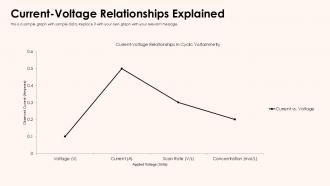
**INPUT**: What factors can influence the peak current and peak potential observed in cyclic voltammetric experiments? **OUTPUT**: Peak current and peak potential in cyclic voltammetry are influenced by scan rate, analyte concentration, electrode surface area, temperature, and solution pH. These parameters enable researchers to optimize electrochemical analysis by controlling diffusion rates, surface interactions, and thermodynamic conditions, with pharmaceutical and environmental laboratories finding that systematic parameter adjustment ultimately delivers enhanced sensitivity and reproducibility.
Cyclic voltammetry investigates electron transfer kinetics through peak separation analysis, scan rate variation studies, and peak current measurements that reveal reaction reversibility and transfer coefficients. These electrochemical techniques enable researchers in pharmaceutical development, battery technology, and corrosion science to optimize electrode materials, enhance reaction efficiency, and accelerate product development, ultimately delivering faster analytical results and improved electrochemical system performance.
Scan rate significantly affects cyclic voltammetry by altering peak current magnitude, peak separation, and response reversibility, with faster rates increasing currents while potentially broadening peaks. Through systematic scan rate variation, researchers can distinguish between diffusion-controlled and surface-bound processes, determine electron transfer kinetics, and assess electrochemical reversibility, ultimately enabling more accurate mechanistic interpretations and optimized analytical conditions.
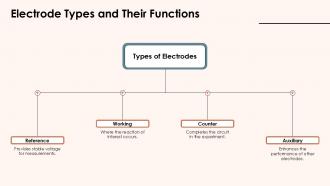
Different electrode materials in cyclic voltammetry offer distinct advantages including enhanced sensitivity, improved selectivity, extended potential windows, reduced background currents, and specialized surface chemistries for targeted analyses. These materials enable researchers and analytical laboratories to optimize detection limits, minimize interference effects, and achieve more accurate electrochemical measurements, with many pharmaceutical and environmental testing facilities finding that strategic electrode selection ultimately delivers faster analysis times and more reliable data for critical applications.
Cyclic voltammetry enables neurotransmitter detection by measuring electrochemical responses at specific oxidation potentials, allowing researchers to identify dopamine, serotonin, and norepinephrine in real-time biological environments. This technique streamlines neurochemical analysis by providing selective detection, rapid response times, and minimal tissue damage, with neuroscience laboratories finding that it delivers enhanced understanding of synaptic function and neurological disorders.
The supporting electrolyte maintains ionic conductivity, minimizes solution resistance, and prevents migration effects during cyclic voltammetry analysis. It enables clear, reproducible voltammograms by providing a stable ionic background, reducing ohmic drop, and ensuring that measured currents reflect only faradaic processes, ultimately delivering more accurate electrochemical measurements and reliable analytical results.
Cyclic voltammetry enables corrosion analysis by measuring current responses as potential sweeps across metal surfaces, revealing oxidation-reduction behaviors, passivation characteristics, and breakdown potentials in various electrolytes. Through systematic potential cycling, researchers can identify corrosion mechanisms in marine environments, industrial chemicals, and atmospheric conditions, while determining protective coating effectiveness, ultimately delivering enhanced material selection and corrosion prevention strategies for infrastructure longevity.
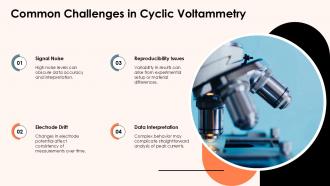
Common pitfalls include improper baseline correction, ignoring solution resistance effects, misidentifying reversible versus irreversible processes, overlooking electrolyte interference, and inadequate scan rate analysis. Researchers in pharmaceutical development and materials science often struggle with complex multi-electron transfers and surface adsorption effects, ultimately requiring systematic parameter optimization and control experiments to ensure reliable electrochemical characterization and accurate kinetic interpretations.
Cyclic voltammetry adapts to nanomaterial studies through modified electrode configurations, specialized electrolytes, controlled scan rates, and enhanced sensitivity detection systems. These adaptations enable researchers to characterize nanoparticle redox behavior, surface properties, and charge transfer kinetics in pharmaceutical development, energy storage applications, and sensor technologies, ultimately delivering precise electrochemical insights for advanced material optimization.
Coupling cyclic voltammetry with spectroscopy techniques like UV-Vis, IR, or mass spectrometry enables real-time monitoring of electrochemical reactions, providing simultaneous structural and electronic information about intermediates and products. These combined approaches enhance pharmaceutical research, battery development, and corrosion studies by delivering comprehensive mechanistic insights, accelerated optimization processes, and deeper understanding of electrode-solution interfaces, ultimately streamlining product development cycles.
Scan direction in cyclic voltammetry reveals crucial information about electrode reactions, with forward scans typically showing oxidation processes and reverse scans demonstrating reduction reactions occurring at different potentials. This bidirectional approach enables researchers in pharmaceutical development, battery manufacturing, and environmental monitoring to analyze reaction reversibility, identify intermediate compounds, and optimize electrochemical processes, ultimately delivering enhanced product performance and more efficient analytical methods.
Machine learning and data analytics have revolutionized cyclic voltammetry by automating peak identification, enhancing signal processing, and enabling predictive modeling of electrochemical behaviors. These technologies streamline complex data interpretation, accelerate material discovery in battery research, and improve diagnostic accuracy in pharmaceutical development, with many research institutions finding that automated analysis delivers faster insights and more reliable electrochemical characterizations.
Cyclic voltammetry's future in energy storage and conversion includes advanced battery materials characterization, real-time monitoring systems, solid-state electrolyte analysis, and integration with artificial intelligence for predictive modeling. These developments enable faster prototype testing, enhanced safety monitoring, and optimized energy device performance, with many research institutions and manufacturers finding that automated CV systems significantly accelerate development cycles while reducing costs.
-
You guys are life-saver when it comes to presentations. Honestly I cannot do much without your services. Thank you!!!
-
One word for SlideTeam–Versatile!