


Analytics Roadmap Developing Management Platform Automation Framework Technological Business




Try Before you Buy Download Free Sample Product
 Impress Your
 Audience
 100%
100% Editable
 Save Hours
 of Time


Our Analytics Roadmap Developing Management Platform Automation Framework Technological Business are topically designed to provide an attractive backdrop to any subject. Use them to look like a presentation pro.
People who downloaded this PowerPoint presentation also viewed the following :
Analytics Roadmap Developing Management Platform Automation Framework Technological Business with all 12 slides:
Use our Analytics Roadmap Developing Management Platform Automation Framework Technological Business to effectively help you save your valuable time. They are readymade to fit into any presentation structure.
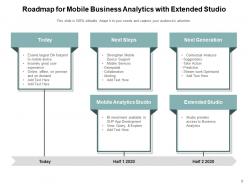
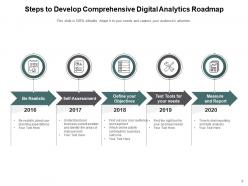

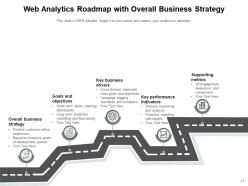

FAQs for Analytics Roadmap Developing Management Platform Automation
Key components include data governance frameworks, infrastructure architecture, technology stack selection, talent acquisition strategies, and performance measurement systems. These elements work together by establishing clear data quality standards, scalable processing capabilities, and strategic resource allocation, with many organizations finding that comprehensive roadmaps ultimately deliver enhanced decision-making speed and competitive advantage across operations.
Prioritizing analytics initiatives involves assessing business impact, data readiness, resource requirements, and implementation complexity across potential projects. Organizations typically focus on high-impact, low-complexity initiatives first, such as customer segmentation in retail or operational dashboards in manufacturing, while building foundational data infrastructure that enables more sophisticated predictive analytics and machine learning capabilities later.
Stakeholder buy-in ensures analytics roadmap alignment with business priorities, secures necessary funding and resources, and facilitates cross-departmental collaboration essential for implementation success. With executive support and departmental engagement, organizations streamline data integration processes, accelerate project timelines, and ultimately deliver measurable ROI, with many companies finding that early stakeholder involvement prevents costly misalignments later.
Key metrics include ROI on analytics investments, data quality scores, time-to-insight delivery, user adoption rates, and business decision impact measurements. These indicators help organizations assess progress by tracking cost reductions, faster reporting cycles, and improved strategic outcomes, with many companies finding that regular measurement enables continuous optimization and demonstrates tangible value to stakeholders.
Machine learning integrates into analytics roadmaps through predictive modeling, automated pattern recognition, real-time data processing, and intelligent forecasting capabilities. These technologies enhance decision-making by identifying hidden trends, automating routine analyses, and delivering actionable insights, with many organizations finding that ML-powered analytics accelerate strategic responses and improve operational efficiency.
Common challenges include data quality issues, resource constraints, stakeholder alignment difficulties, technical integration complexities, and skill gaps across teams. These obstacles can be mitigated through phased implementation approaches, cross-functional governance structures, and strategic training programs, with many organizations finding that early wins and clear communication ultimately deliver sustained buy-in and measurable business outcomes.
An analytics roadmap should be reviewed quarterly and updated annually, with major revisions triggered by significant business changes, new technology implementations, or strategic shifts. Organizations typically find that quarterly assessments help identify emerging data needs, changing priorities, and performance gaps, while annual updates ensure alignment with evolving business objectives, ultimately maintaining competitive advantage in increasingly data-driven markets.
Essential tools include cloud platforms like AWS and Azure, visualization software such as Tableau and Power BI, programming languages like Python and R, database systems, and machine learning frameworks. These technologies streamline data collection, processing, and analysis while enabling scalable infrastructure, with many organizations finding that strategic combination of these tools accelerates insights delivery and enhances competitive advantage.
Organizations align their analytics roadmap with business objectives by establishing clear KPIs, prioritizing use cases that directly impact revenue and efficiency, and ensuring cross-departmental collaboration between IT, finance, and operations teams. This strategic alignment enables companies to focus resources on high-impact initiatives like customer retention analytics or operational optimization, ultimately delivering measurable ROI and competitive advantage.
Data governance significantly impacts analytics roadmap success by ensuring data quality, establishing clear ownership protocols, maintaining regulatory compliance, and creating standardized access frameworks across organizational systems. Through robust governance structures, organizations streamline data integration processes, minimize security risks, and accelerate decision-making capabilities, with many enterprises finding that strong governance ultimately delivers more reliable insights and competitive advantage.
Best practices for communicating analytics roadmaps to non-technical stakeholders include using visual storytelling, focusing on business outcomes rather than technical details, creating phased timelines with clear milestones, and translating data concepts into revenue impact. These approaches enhance stakeholder buy-in by connecting analytics initiatives to strategic objectives, competitive advantages, and measurable ROI, with many organizations finding that simplified dashboards and regular progress updates maintain engagement throughout implementation.
Agile methodologies enhance analytics roadmap development through iterative sprints, continuous stakeholder feedback, and adaptive planning that responds to evolving business needs. By implementing short development cycles, cross-functional teams can rapidly prototype dashboards, test analytical models, and refine data insights, with many organizations finding that this approach delivers faster time-to-value and more relevant business intelligence solutions.
Employee training serves as the critical bridge between analytics infrastructure and business outcomes, ensuring teams can effectively interpret data, apply insights to decision-making, and adapt to evolving analytical tools and methodologies. Through comprehensive upskilling programs, organizations enable faster adoption, reduce implementation bottlenecks, and maximize return on analytics investments, with many companies finding that well-trained teams deliver significantly better business results.
Organizations leverage external partnerships in analytics roadmap planning by collaborating with technology vendors, consulting firms, data providers, and industry specialists to access specialized expertise and advanced capabilities. These strategic partnerships enable companies to accelerate implementation timelines, reduce development costs, and gain access to cutting-edge analytics tools, with many finding that external collaborations deliver faster insights and competitive advantages.
Future trends to consider include artificial intelligence integration, real-time streaming analytics, edge computing capabilities, automated machine learning, and enhanced data privacy frameworks. These technologies streamline decision-making by accelerating insights, reducing manual processes, and enabling predictive capabilities, with many organizations finding that early adoption delivers significant competitive advantages in increasingly data-driven markets.
-
Great product with highly impressive and engaging designs.
-
Great designs, really helpful.
-
Great product with effective design. Helped a lot in our corporate presentations. Easy to edit and stunning visuals.
-
Enough space for editing and adding your own content.
-
Really like the color and design of the presentation.
-
Easy to edit slides with easy to understand instructions.