

Android mobile app development proposal powerpoint presentation slides




Try Before you Buy Download Free Sample Product
 Impress Your
 Audience
 100%
100% Editable
 Save Hours
 of Time


Highlight your excellence in building a cellphone app by utilizing Android Mobile App Development Proposal PowerPoint Presentation Slides. Give details of your services and impress your client by making use of our extensively useful mobile application agreement PPT complete deck. With the aid of our web application development contract PowerPoint theme, you can persuade your client and get hired by them. You can list out the issues faced by consumers and the solutions suggested by your firm. By incorporating this professionally designed mobile application agreement PPT visuals, you can state the objectives you take care of such as effective user interface and attractive design that align with consumer’s brand image. Also, offerings like real-time testing of the application on various platforms and enhancing app visibility among the audience can be explained to the consumers efficiently. The topics covered in this mobile app sample proposal PowerPoint slideshow include deliverables like project goals, objectives, capabilities, process, timeframe, investment, client testimonials, company overview, etc. You can list the app development options, features and limitations to make your prospects aware of the significance of the services your enterprise offers. Employ our content ready android app building proposal PowerPoint template to showcase the development roadmap with steps like discovery, features & architecture, design, development, quality assurance, launch & marketing, etc. You can mention the timeframe of different stages process and investment estimation to your consumers in this application development bid PPT theme. Download our mobile app development proposal ppt and attract more customers to opt for your technical expertise.
People who downloaded this PowerPoint presentation also viewed the following :
Content of this Powerpoint Presentation
Slide 1: This slide introduces Android Mobile App Development Proposal. Mention proposal name, client name, submission date.
Slide 2: This slide displays Cover Letter.
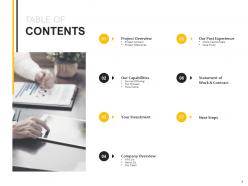
Slide 3: This slide displays Table of contents of the presentation.
Slide 4: This slide depicts Project Overview.
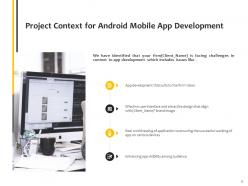
Slide 5: This slide displays Project Context for Android Mobile App Development.
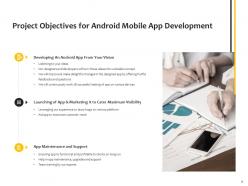
Slide 6: This slide showcases Project Objectives.
Slide 7: This slide depicts Our Capabilities.
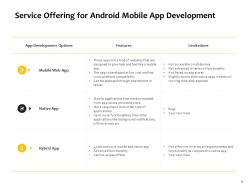
Slide 8: This slide showcases Service Offering for Android Mobile App Development.
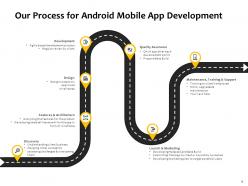
Slide 9: This slide displays Our Process for Android Mobile App Development.
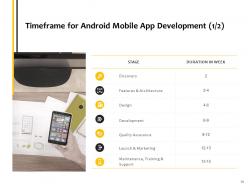
Slide 10: This slide showcases Timeframe for Android Mobile App Development.
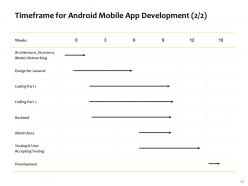
Slide 11: This slide presents Timeframe for Android Mobile App Development.
Slide 12: This is Your Investment slide with related information.
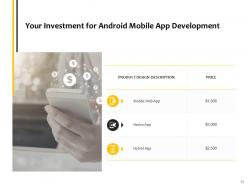
Slide 13: This slide showcases Your Investment for Android Mobile App Development.
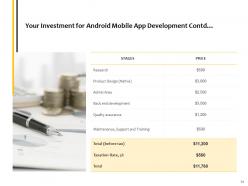
Slide 14: This slide is continued with Your Investment for Android Mobile App Development.
Slide 15: This slide depicts Company Overview with- Why Us, About Us, Our Team.
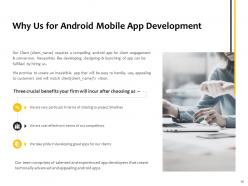
Slide 16: This slide describes Why Us for Android Mobile App Development.
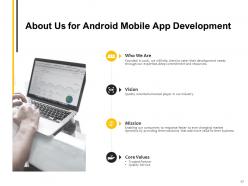
Slide 17: This is About Us slide to showcase company specifications.
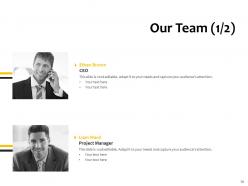
Slide 18: This is Our Team slide with names and designations.
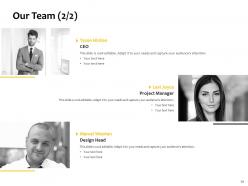
Slide 19: This is Our Team slide with names and designations.
Slide 20: This slide displays Client Testimonials with case study and our past experience
Slide 21: This slide showcases Client Testimonials with names and designations.
Slide 22: This slide displays Client Testimonials with company name and designations.
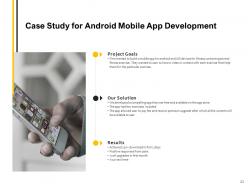
Slide 23: This slide showcases Case Study.
Slide 24: This slide describes Statement Of Work Contract.
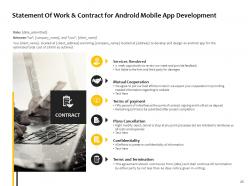
Slide 25: This slide describes Statement Of Work & Contract.
Slide 26: This slide showcases Next Steps.
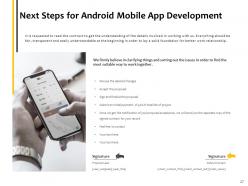
Slide 27: This slide showcases Next Steps for Android Mobile App Development.
Slide 28: This is Contact Us slide with address, email address and contact number.
Slide 29: This slide is titled as Additional Slides for moving forward.
Slide 30: This is About Us slide with company specifications.
Slide 31: This is Our Mission slide with Mission, Goal and Vision.
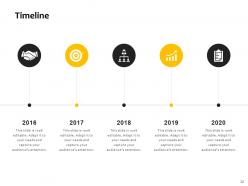
Slide 32: This slide displays the Timeline.
Slide 33: This is 30 60 90 Days Plan slide.
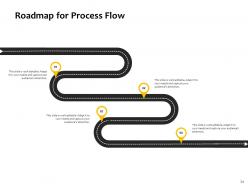
Slide 34: This slide depicts Roadmap for Process Flow.
Android mobile app development proposal powerpoint presentation slides with all 34 slides:
Use our Android Mobile App Development Proposal Powerpoint Presentation Slides to effectively help you save your valuable time. They are readymade to fit into any presentation structure.
FAQs for Android mobile app development proposal
An Android mobile app development proposal should include technical specifications, development timeline, cost breakdown, UI/UX design mockups, and post-launch support details. These components streamline client decision-making by providing comprehensive project scope, resource allocation, and deliverable expectations, with many development teams finding that detailed proposals enhance client trust, minimize scope creep, and ultimately accelerate project approval processes.
Determining target audience involves analyzing demographics, user behavior patterns, market research data, competitor analysis, and specific pain points your app addresses. Through user personas, surveys, focus groups, and analytics tools, businesses identify key characteristics like age, income, technology preferences, and usage habits, ultimately enabling more targeted development decisions and marketing strategies that enhance user adoption and engagement.
The estimated timeline varies significantly based on project complexity, features, and team size, typically ranging from 3-8 months for complete development cycles. Most proposals outline discovery and planning (2-4 weeks), design and prototyping (4-6 weeks), development and testing (8-16 weeks), and deployment phases (1-2 weeks), with many organizations finding that agile methodologies enable faster iterations and reduced time-to-market.
The proposal addresses budget considerations through detailed cost breakdowns covering development phases, resource allocation, timeline estimates, and contingency planning. Through transparent pricing models, businesses can evaluate development costs against projected ROI, feature complexity, and maintenance requirements, while many organizations find that structured budget frameworks ultimately deliver predictable expenses and strategic cost management throughout the app lifecycle.
Android app development typically utilizes Java, Kotlin, React Native, Flutter, and Android Studio as core technologies. These frameworks streamline development by enabling cross-platform compatibility, native performance optimization, and rapid prototyping, with many enterprises finding that strategic technology selection ultimately delivers faster deployment timelines and enhanced user experiences across diverse mobile environments.
UX and UI design approaches in Android mobile app development proposals typically include user research, wireframing, prototyping, iterative testing, and accessibility compliance to ensure intuitive navigation and engagement. These design methodologies streamline development cycles by identifying user pain points early, reducing revision costs, and ultimately delivering seamless experiences that enhance user retention and competitive advantage.
Testing methods include automated unit testing, integration testing, user acceptance testing, performance monitoring, and device compatibility checks across multiple Android versions. These approaches streamline quality assurance by identifying bugs early, ensuring seamless functionality, and validating user experiences, with many development teams finding that comprehensive testing ultimately delivers faster deployment and enhanced app reliability.
User feedback will be incorporated through iterative testing phases, including alpha and beta testing programs, focus groups, user interviews, and prototype demonstrations with target demographics. These feedback loops enable developers to refine features, enhance user experience, and validate functionality throughout development, ultimately delivering a market-ready app that meets user expectations and competitive standards.
Post-launch maintenance strategies include regular security patches, performance optimization, bug fixes, feature enhancements, and operating system compatibility updates. These approaches streamline app longevity by implementing automated monitoring systems, user feedback integration, and scheduled release cycles, with many development teams finding that proactive maintenance ultimately delivers improved user retention and competitive advantage.
The proposal addresses compatibility through responsive design frameworks, extensive device testing across multiple screen sizes, and backward compatibility implementation for various Android versions. These approaches streamline development by ensuring consistent user experiences, minimizing fragmentation issues, and maximizing market reach, with many organizations finding that comprehensive compatibility testing ultimately delivers broader user adoption and reduced post-launch support costs.
**INPUT**: What are the marketing and promotion strategies suggested for the app upon its release? **OUTPUT**: Effective app marketing strategies include app store optimization, social media campaigns, influencer partnerships, content marketing, and targeted digital advertising across multiple platforms. These approaches work together by maximizing visibility, building user engagement, and driving downloads, with many successful apps finding that combining organic reach with paid promotion delivers sustained growth and competitive market positioning. [Word count: 54 words]
Data security and user privacy will be managed through encrypted data transmission, secure authentication protocols, compliance with GDPR and relevant privacy regulations, regular security audits, and user consent mechanisms. These comprehensive measures streamline protection by implementing multi-layered security frameworks, anonymizing sensitive information, and providing transparent privacy controls, ultimately delivering enhanced user trust and regulatory compliance across diverse mobile environments.
**INPUT**: What monetization strategies are proposed for the app (e.g., ads, subscriptions, one-time purchase)? **OUTPUT**: Effective app monetization strategies include subscription models, in-app purchases, freemium tiers, targeted advertising, and one-time premium purchases. These approaches enable developers to capture diverse revenue streams by offering flexible pricing options, enhanced features, and user-specific content, with many successful apps combining multiple strategies to maximize profitability while maintaining user engagement.
The proposal outlines API integration through secure authentication protocols, RESTful service connections, SDK implementations, and robust data synchronization frameworks. These integrations enable enhanced functionality like payment processing, social media connectivity, and cloud storage capabilities, while ensuring seamless user experiences and maintaining app performance standards across different service providers.
**INPUT**: What milestones and deliverables are set to track the progress of the project? **OUTPUT**: Android development milestones typically include project initiation, UI/UX design completion, core functionality development, testing phases, and deployment readiness. These structured checkpoints enable development teams to maintain timeline accountability, ensure quality standards, and provide stakeholders with transparent progress visibility, ultimately delivering predictable project outcomes and minimizing scope creep risks.
-
Wonderful templates design to use in business meetings.
-
Colors used are bright and distinctive.
-
Designs have enough space to add content.
-
Very unique and reliable designs.
-
Awesome presentation, really professional and easy to edit.
-
Innovative and Colorful designs.
-
Very well designed and informative templates.
-
Use of different colors is good. It's simple and attractive.
-
Enough space for editing and adding your own content.
-
Really like the color and design of the presentation.