

Annual Operating Plan In Business Powerpoint Presentation Slides




Try Before you Buy Download Free Sample Product
 Impress Your
 Audience
 100%
100% Editable
 Save Hours
 of Time


Introducing Annual Operating Plan In Business PowerPoint Presentation Slides. Give general information about the company by showcasing mission, vision statement, strategic goals, products, services, operational highlights, and financial summary using this PPT complete deck. Also, demonstrate the annual operational plan by discussing branch finance, delivery management services, human resources management services, planning, and support. Depict the strategic goals of the company, such as the improvement of employees’ skills with this PowerPoint slide deck. Discuss the annual branch operations plan with these attention-grabbing PowerPoint templates. Depict the service delivery management services in tabular format by taking the assistance of our easy-to-use annual budget plan PPT infographics. Also, discuss human resource and administrative services by using this operational planning PPT slide deck. Make full use of high-grade icons and images present in the slide to make your presentation meaningful and attention-grabbing. So, manage your business efficiently by using this annual business plan powerpoint presentation slide.
People who downloaded this PowerPoint presentation also viewed the following :
Content of this Powerpoint Presentation
Slide 1: This title slide introduces the Annual Operating Plan in Business. Add the name of your company here.
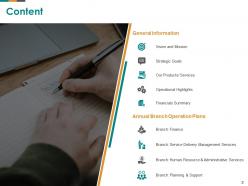
Slide 2: This slide presents the Content. It includes - General Information and Annual Branch Operation Plans.
Slide 3: This is a table of content slide showing General Information. It includes - Vision and Mission, Strategic Goals, Our Products/ Services, and Operational Highlights.
Slide 4: This slide presents the Vision and Mission of the company.
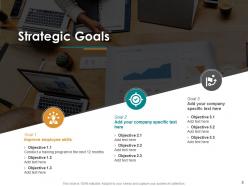
Slide 5: This slide presents the Strategic Goals. It includes - Improve employee skills and more.
Slide 6: This slide presents the Our Products/ Services.
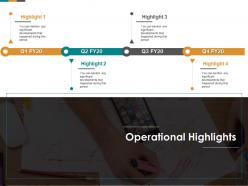
Slide 7: This slide presents the Operational Highlights. You can mention any significant developments that happened during this period.
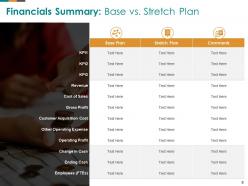
Slide 8: This slide presents the Financials Summary: Base vs. Stretch Plan.
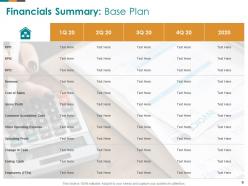
Slide 9: This slide presents the Financials Summary: Base Plan.
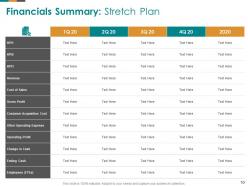
Slide 10: This slide presents the Financials Summary: Stretch Plan.
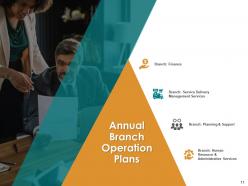
Slide 11: This is a table of content slide showing Annual Branch Operation Plans. It includes - Branch: Finance, Branch: Service Delivery Management Services, Branch: Planning & Support, and Branch: Human Resource & Administrative Services.
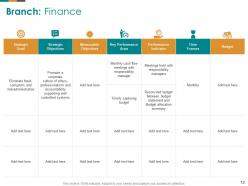
Slide 12: This slide presents the Branch: Finance.
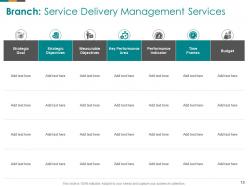
Slide 13: This slide presents the Branch: Service Delivery Management Services.
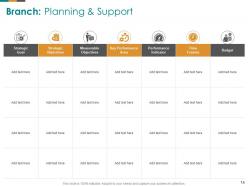
Slide 14: This slide presents the Branch: Planning & Support.
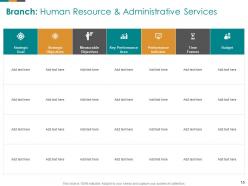
Slide 15: This slide presents the Branch: Human Resource & Administrative Services.
Slide 16: This is the Annual Operating Plan in Business Icons Slide.
Slide 17: This slide introduces the Additional Slides.
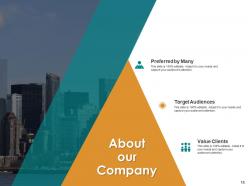
Slide 18: This slide contains the information about the company aka the ‘About Us’ section. This includes the Value Clients, the Target Audience, and Preferred by Many.
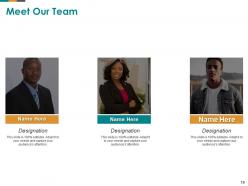
Slide 19: This is the Meet Our Team slide. It shows the members of the company team with their name, designation, and photo.
Slide 20: This slide is a Roadmap template to showcase the stages of a project, for example.
Slide 21: This slide presents the overall Target of the company as well as smaller targets within that main Target.
Slide 22: This slide contains Important Notes that can be used to express any brief thoughts or ideas.
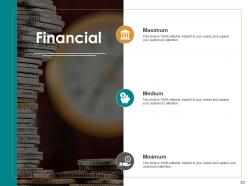
Slide 23: This slide presents the Financial with a data’s numbers at minimum, medium, and maximum percentage.
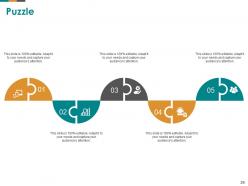
Slide 24: This is the Puzzle slide to showcases the parts that complete your project.
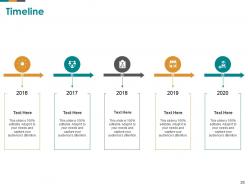
Slide 25: This slide is a Timeline template to showcase the progress of the steps of a project with time.
Slide 26: This is a Thank You slide where details such as the address, contact number, email address are added.
Annual Operating Plan In Business Powerpoint Presentation Slides with all 26 slides:
Use our Annual Operating Plan In Business Powerpoint Presentation Slides to effectively help you save your valuable time. They are readymade to fit into any presentation structure.




FAQs for Annual Operating Plan In Business
Look, you need five things for an AOP that doesn't suck: realistic financial forecasts, strategic goals tied to company objectives, resource planning (headcount + budget), monthly metrics to track, and risk plans. Most people totally bomb the metrics piece - honestly drives me crazy. You want leading indicators so you can fix things before they break, not just look backwards at what already happened. Oh and start with your financials first, then layer everything else on top. That way your team can actually follow through instead of just having another useless document sitting around.
Break your big strategic goals into actual doable stuff you can finish this year. Each AOP goal should tie back to something strategic - if it doesn't, toss it. Honestly, most AOPs I've seen are just fantasy lists with zero real planning behind them. Make your budget match what actually matters and put someone's name on every initiative. You can't chase everything at once, so be brutal about what makes the cut. Set quarterly check-ins to see how you're doing and pivot when things go sideways.
Your Annual Operating Plan is basically worthless without decent forecasting - it's like trying to navigate blindfolded. You need those predictions for revenue, expenses, and market shifts to build realistic budgets and set actual targets. Sales volumes, staffing, capital needs - forecasting drives all of it. Honestly, most people rush this part and regret it later. Start with your historical data and market trends, then do some scenario planning. Best case, worst case, the usual drill. Better forecasting = way more accurate planning overall.
Honestly, you need actual data backing your AOP instead of just throwing numbers at a wall. Look at your conversion rates, acquisition costs, stuff like production efficiency from last year. I've seen way too many AOPs that were pure fantasy. Mix leading indicators (pipeline health) with lagging ones (revenue trends) - that's where the magic happens. Pick maybe 3-5 metrics that actually move the needle for your business. Build around those patterns and you'll avoid looking like an idiot when Q2 rolls around and nothing matches reality.
Honestly, the biggest trap is being way too optimistic about revenue while totally lowballing your costs. I've seen this so many times - people basically just write down what they want to happen instead of reality. Don't make your plan super rigid either because things will change (trust me on this). Also, bring in your key people early or you'll be fighting for buy-in later when it actually matters. Oh, and don't get lost in all the spreadsheet madness - sometimes you miss the forest for the trees, you know? Build in some cushion for when stuff inevitably goes sideways.
Honestly, start with a big kickoff meeting where everyone maps out what they need from each other. Finance wants revenue numbers, ops needs headcount stuff - get it all out there early. Don't let teams work separately and then try smashing everything together later (trust me, that's a nightmare). Set up working sessions so departments can actually talk to each other about priorities. Pick someone from finance or ops to be the point person who keeps track of everything. Regular check-ins are clutch too. The whole thing falls apart when people work in silos.
For your AOP presentation, focus on three main areas: strategic priorities, financial projections, and risks with your mitigation plans. Big picture strategy first, then dive into the numbers - people need context before data hits them. Tailor detail to your audience though. Executives want themes, department heads want granular stuff. Someone WILL ask about a 10% revenue drop scenario, so prep for that one. Actually, they ask it every single time. Clear visuals work better than cramming text everywhere. Each section should end with next steps and who's responsible so it doesn't just die in meeting purgatory.
Look at what assumptions got wrecked first and figure out which parts of your AOP took the biggest hit. Protect your main revenue streams - that's non-negotiable. Don't do what everyone does and panic-change everything at once, it's a disaster every time. Quick wins should be your priority right now. Adjust resources and timelines for the next few quarters instead of torching the whole plan. Update forecasts with whatever real data you have. Your stakeholders need clear communication about what's changing. Oh and build in way more flexibility this time - we clearly didn't see this coming. Be decisive but don't just react to everything.
Honestly, if you're dealing with multiple departments, Excel's gonna become a nightmare pretty quick. I'd check out Anaplan or Adaptive Insights - they're actually built for this complex modeling stuff. For the visual side, Power BI and Tableau make dashboards that don't look like garbage (executives love that). Oh, and don't sleep on project management tools like Monday.com to keep track of milestones. My advice? Figure out what's driving you crazy about your current process first. That'll point you toward the right tool way faster than just shopping around randomly.
First thing - do a real autopsy on last year's plan. What actually worked vs. what flopped? Get feedback from everyone who had to execute it, not just the executives (they sometimes live in a different reality). I get that you probably want to dive right into the new planning, but seriously, spend time on this part. Dig into your variance reports and missed targets. Also look at the surprise wins - those tell you something too. Once you spot the patterns, build those lessons directly into your new AOP. Tweak your forecasting, shift resources around, maybe change how you measure success. Document why you're changing things so people don't think you're just being random.
Monthly check-ins are your best friend here - don't wait until Q3 to realize you're screwed. Get some dashboards set up that actually track your key metrics against those AOP targets. Honestly, I've watched too many teams just file their plan away after January and pretend it doesn't exist. Make sure someone owns each goal and they're actually reporting back regularly. Your AOP should be alive, not gathering dust. Do quarterly deep dives where you can shift priorities around if things aren't working. The whole point is catching problems early before they snowball on you.
Compliance stuff eats up a massive chunk of your AOP budget before you even get started - like, it's kind of depressing how much. You're looking at mandatory audits, system upgrades, training programs, plus hiring more people just to keep up with regulations. Super boring but you can't skip it or you're screwed later. My advice? Figure out all those requirements first thing in your planning cycle. Block out those costs right away, then work on your actual growth plans with whatever's left over. Otherwise compliance will just steamroll everything else you wanted to do.
Look, scenario planning basically saves your ass when things go sideways – which they always do. Instead of betting everything on one forecast, you think through 3-4 different situations that could actually happen to your business. Maybe the economy tanks, maybe your main competitor drops prices, whatever keeps you up at night. Then you figure out how you'd handle each one beforehand. It's honestly pretty smart because when stuff hits the fan, you're not panicking trying to figure out next moves. You've already got responses mapped out. Makes your whole annual plan way less fragile.
Dude, communication is everything with AOP development. You absolutely need buy-in from all departments or your plan's basically dead in the water. I've watched so many AOPs crash and burn because executives locked themselves in a room, made all the decisions, then just dumped it on everyone else. Super predictable disaster. Get your team leads involved from day one. Walk them through your reasoning. Set up ways for people to actually voice concerns before things go sideways. The whole thing should feel like you're all building it together, not like you're handing down commandments from on high. Way better results that way.
Honestly, if your team doesn't care about the AOP, you're screwed. I've watched solid plans completely tank because people felt left out of the process - it's brutal. But when everyone actually gets it and feels like they own a piece? That's where the real results happen. They'll catch issues before they blow up, throw out better ideas, and actually fight for those targets. Short sentences work better sometimes. The whole "just follow orders" approach is dead - people need to feel genuinely pumped about what you're building together. Worth spending extra time upfront to get that buy-in right.
-
I discovered this website through a google search, the services matched my needs perfectly and the pricing was very reasonable. I was thrilled with the product and the customer service. I will definitely use their slides again for my presentations and recommend them to other colleagues.
-
Very unique and reliable designs.
-
Great quality slides in rapid time.
-
Appreciate the research and its presentable format.