

Apicomplexa Protozoa PPT Example ACP





Try Before you Buy Download Free Sample Product
 Impress Your
Audience
 100%
Editable
 Save Hours
of Time


Explore the fascinating world of Apicomplexa protozoa with our professional PowerPoint presentation deck. This comprehensive resource features detailed insights, stunning visuals, and engaging content, ideal for educators, researchers, and students. Enhance your understanding of these unique organisms and their significance in various ecosystems. Perfect for academic and professional use.
People who downloaded this PowerPoint presentation also viewed the following :
Apicomplexa Protozoa PPT Example ACP with all 42 slides:
Use our Apicomplexa Protozoa PPT Example ACP to effectively help you save your valuable time. They are readymade to fit into any presentation structure.

















FAQs for Apicomplexa Protozoa
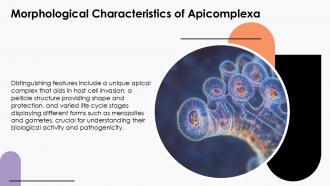
So the big thing to look for is the apical complex - it's this specialized structure that helps them break into host cells. That's literally where they get their name from. They're all parasites that can't survive outside host cells, which honestly makes them pretty fascinating but also terrifying. Most have this weird gliding movement instead of flagella like other protists do. Their life cycles are crazy complex too - they'll switch between sexual and asexual reproduction phases. Oh and they have pellicles instead of cell walls. But yeah, if you're trying to ID one, that apical complex is your dead giveaway.
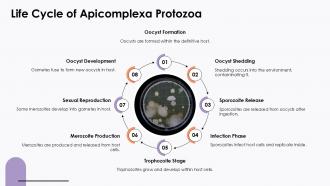
So basically these parasites have this crazy complex reproduction cycle with both sexual and asexual parts. The asexual bit is called schizogony - they just multiply like crazy inside host cells. Then there's the sexual stage where male and female gametes actually fuse together. They go through all these different forms too - sporozoites, merozoites, oocysts - each one does something different like invading cells or spreading to new hosts. Most need multiple hosts to complete their whole cycle, which honestly makes them pretty fascinating from a biology standpoint. If you're focusing on specific ones like malaria or toxoplasma, definitely look at their timing since that's what matters clinically.
So Apicomplexa are actually huge population controllers in ecosystems. They kill off hosts through disease, which stops any one species from taking over completely - like how malaria historically kept human populations down. Pretty intense evolutionary pressure too, since hosts have to keep adapting their immune systems to survive. Some of these parasites even help their hosts sometimes, which is kinda wild. Oh, and they're not just mooching off everyone - they're literally reshaping how entire communities function through all these complex host-parasite interactions. Nature's weird like that.
Dude, these Apicomplexa parasites are seriously sneaky. They hide inside host cells where antibodies can't even touch them. Plus they're constantly switching up their surface proteins - like changing disguises to fool the immune system. Plasmodium actually screws with how antigens get presented too, which is wild. The host tries fighting back with innate and adaptive responses, but honestly? These parasites usually stay ahead of the game. They'll mess with cytokine production and basically make the host more immunosuppressed. Focus on antigenic variation if you're studying this stuff - that's where the real evolutionary battle happens.
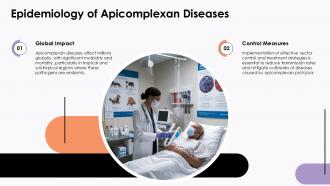
So the big nasty ones are malaria (Plasmodium species), toxoplasmosis from T. gondii, and cryptosporidiosis. Malaria's still killing hundreds of thousands yearly - it's the real nightmare. Most people get toxo and barely notice, but pregnancy or compromised immune systems? Different story entirely. Babesiosis is basically malaria's annoying cousin that ticks spread around. Oh and there's coccidiosis too, which farmers hate because it destroys their livestock operations. These things are ridiculously good at hijacking host cells, which is honestly pretty terrifying when you think about it. Just make sure you're following proper safety protocols if you're handling samples of any of these.
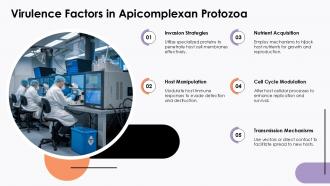
So the apical complex is basically the parasite's break-in kit. The conoid drills through, rhoptries shoot proteins to make entry holes, and micronemes handle the initial grab and movement. Pretty crazy setup tbh. During invasion, they attach first, then the conoid pokes through the cell membrane while rhoptries dump stuff to mess with the host cell and build that little bubble they live in. Oh and here's the key thing - don't study each piece alone, look at how all three work together. That's where you'll actually understand what's happening.
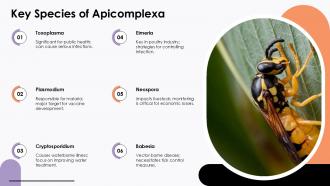
So the big three you'll run into are *Plasmodium* (malaria), *Toxoplasma gondii*, and *Cryptosporidium*. Malaria's the real killer - over 600k deaths yearly, which is just insane. *Toxoplasma* infects like a third of all humans but mostly causes problems for pregnant women and people with weak immune systems. Then there's *Cryptosporidium* - that's your classic "pool gets shut down because someone had an accident" parasite. Honestly, if you're doing research, stick with these three since there's tons of literature already out there and the experimental models are pretty well established.
Honestly, genetic studies are a game-changer for tackling these parasites. They show you exactly how drug resistance develops, so you can spot trouble before it spreads everywhere. The cool part? You get this detailed map of which genes they absolutely need to survive - basically their weak spots. Comparing genomes across different species helps find targets that work against multiple parasites at once. I'd start with recent genomic databases for whatever pathogen you're dealing with. Oh, and definitely map out resistance genes in your local area first - that's super important for planning treatments that'll actually work.
Ugh, diagnosing these things is such a pain. Symptoms are super vague - just fever, fatigue, stomach stuff that could literally be anything. Microscopy needs someone who really knows what they're doing, and you can easily miss it if parasite levels are low. Fresh samples are a must which isn't always doable. PCR is way better for catching infections but it's pricey and good luck finding it in places that actually need it most. Oh, and parasite counts go up and down throughout the day so timing matters. Your best shot? Use multiple tests if you can swing it.
Temperature and humidity are huge for these parasites - warmer weather speeds up development in mosquitoes and other vectors. Rainfall patterns basically control when outbreaks happen, especially with water-loving ones like Cryptosporidium. The tricky part is climate change is making everything less predictable than it used to be. Local weather data will seriously boost your ability to predict transmission timing in whatever areas you're studying. Oh, and don't forget humidity affects how long vectors actually survive too. Short answer: weather matters way more than most people realize.
So there's actually been some cool progress lately with treating these parasitic diseases. Artemisinin combos have cut malaria deaths way down, which is huge. Toxoplasmosis treatment got better too - they're using smarter drug combinations now, especially for people with compromised immune systems. The tricky part? Drug resistance keeps popping up everywhere. But honestly that's pushing researchers toward hitting multiple targets at once, which makes sense. Oh, and they're going after this thing called the apicoplast organelle - sounds nerdy but it's promising. Worth checking out the Phase II/III trials if you're really into this stuff.
So basically these parasites get drug resistance through mutations that mess with their target proteins or how they transport drugs. Super annoying, but makes sense evolutionarily. When you hit them with antimalarials, the ones with mutations in genes like *pfcrt* or *pfmdr1* survive while the others die off. Those survivors multiply and spread the resistance through mosquito reproduction or direct transmission. Combination therapies work better than single drugs - kind of like hitting them from multiple angles so they can't adapt as easily. Also rotating between different drug classes helps prevent any one resistance mechanism from completely taking over.
CRISPR's finally working well with these parasites - total game changer for knockouts since the old methods were awful. Super-resolution microscopy is letting people see organelle stuff in crazy detail now. Single-cell RNA-seq is pretty sweet for tracking how they develop through different stages. There's some cool optogenetics work where you can literally control the parasites with light, though honestly that's still pretty experimental. Oh and proteomics is getting big for mapping protein interactions during invasion. If you're doing experiments, check out the newer fluorescent tags - they don't fall apart at parasite temps like the old ones.
So climate change is basically making these parasite infections spread way further than before. Mosquitoes and ticks are thriving in the warmer weather - their breeding seasons are getting longer too. Malaria's moving into mountain areas and northern regions where it never could survive. Same thing with babesiosis from ticks. What's really wild is transmission seasons that used to last maybe 4 months are now going 6-7 months. If you're working in public health, you'll need to start watching places that were always considered "safe" from these bugs. Honestly, nowhere's really off-limits anymore.
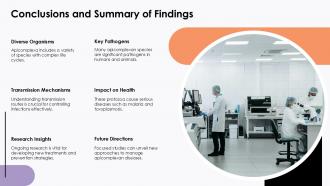
Honestly, Apicomplexa are like the ultimate parasite study group. These guys have mastered basically every trick in the book - complex lifecycles jumping between hosts, crazy invasion tactics, living inside AND outside cells. Perfect for studying how parasites mess with host machinery and dodge immune systems. The cool part? Major human pathogens like malaria and Toxoplasma belong to this group, so your work actually matters medically. Just pick whichever species fits your research question best. With how diverse they are, there's probably one that's exactly what you need. Pretty convenient, right?
-
You guys are life-saver when it comes to presentations. Honestly I cannot do much without your services. Thank you!!!
-
I downloaded some of the presentations for work. They were simple to modify and saved me a lot of time and effort.