

Application of warehouse management systems to improve integrated logistics efficiency complete deck





Try Before you Buy Download Free Sample Product
 Impress Your
Audience
 100%
Editable
 Save Hours
of Time


Integrated logistics is a specific business process that regulates the movement of products, information, and goods from the point of origin to the end of arrival. All management activities are interconnected and interdependent. At present, the company wants to improve the integration of logistics management, study the practices and strategies for increasing the integrated logistics management efficiency, etc. Here is an efficiently designed template on the Application of Warehouse Management Systems that provides the details on current logistics supervision efficiency status, the system needs, etc. Additionally, it provides integrated logistics management strategies of the company, automated software technologies to enhance management efficiency, and benefits of warehouse management systems. It also covers other sections such as management architecture, essential components of integrated logistics, challenges and solutions in management, improving operational efficiency in integrated logistics, reducing transportation costs, etc. After analyzing all the Management Strategies and their implementation costs, the company will choose the strategy that will yield maximum results with minimum costs. Customize this 100 percent editable template based on needs. Get access now.
People who downloaded this PowerPoint presentation also viewed the following :
Content of this Powerpoint Presentation
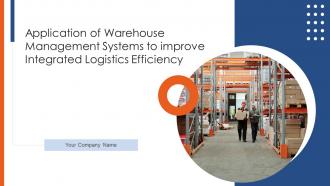
Slide 1: This slide introduces Application of Warehouse Management Systems to improve Integrated Logistics Efficiency.
Slide 2: This slide shows Agenda for Application of Warehouse Management Systems to improve Integrated Logistics Efficiency.
Slide 3: This slide presents Table of Contents Application of Warehouse Management Systems to improve Integrated Logistics Efficiency.
Slide 4: This slide displays Table of Contents for Application of Warehouse Management Systems to improve Integrated Logistics Efficiency.
Slide 5: This slide represents the need of efficient Integrated Logistics Management System in the company.
Slide 6: This slide showcases the various consequences that any logistics company must face in case of poor integrated logistics management system.
Slide 7: This slide shows Current Integrated Logistics Management Efficiency Status in the Company.
Slide 8: This slide presents the current Order Accuracy Status in the company in terms of accurate and inaccurate percentages.
Slide 9: This slide displays the current Integrated Logistics Management System Efficiency Indicators of the company that are compared for 3 years.
Slide 10: This slide represents the some of the key Integrated Logistics Management Statistics on a Global Scale.
Slide 11: This slide showcases Table of Contents for Application of Warehouse Management Systems to improve Integrated Logistics Efficiency.
Slide 12: This slide shows some integrated logistics management strategies that can be used by the company.
Slide 13: This slide presents the strategies that can be used by the company in order to enhance vendor management efficiency.
Slide 14: This slide displays various automated software technologies that can be used by the company.
Slide 15: This slide represents Warehouse Management Systems to enhance Integrated Logistics Management Efficiency.
Slide 16: This slide showcases various benefits of implementing Warehouse Management Systems.
Slide 17: This slide shows Table of Contents for Application of Warehouse Management Systems to improve Integrated Logistics Efficiency.
Slide 18: This slide presents architectural structure of integrated logistics management system in the company.
Slide 19: This slide displays Essential Components of an Integrated Logistics Management System.
Slide 20: This slide represents Table of Contents for Application of Warehouse Management Systems to improve Integrated Logistics Efficiency.
Slide 21: This slide showcases Challenges and Solutions in Integrated Logistics Management.
Slide 22: This slide shows the ways through which the company can enhance operational efficiency.
Slide 23: This slide presents Ways to Reduce Transportation Costs in Integrated Logistics Management.
Slide 24: This slide displays Table of Contents for Application of Warehouse Management Systems to improve Integrated Logistics Efficiency.
Slide 25: This slide represents Benefits of an Automated Integrated Logistics Management Software.
Slide 26: This slide showcases some of the best practices that must be followed by every company in order to enhance integrated logistics efficiency.
Slide 27: This slide shows some of the top digital trends in Integrated Logistics Management.
Slide 28: This slide presents Most Widely used Digital Trend in Integrated Logistics Management.
Slide 29: This slide displays the various Integrated Logistics management tools that can be used by the company.
Slide 30: This slide represents Table of Contents for Application of Warehouse Management Systems to improve Integrated Logistics Efficiency.
Slide 31: This slide showcases Estimated Integrated Logistics Management Efficiency Status in the Company.
Slide 32: This slide shows the future estimated Order Accuracy Status in the company.
Slide 33: This slide presents Future Integrated Logistics Management Efficiency Indicators in the Company.
Slide 34: This slide displays Table of Contents ofApplication of Warehouse Management Systems to improve Integrated Logistics Efficiency.
Slide 35: This slide represents Integrated Logistics Efficiency Status with related icons and text.
Slide 36: This slide showcases Integrated Logistics Management Dashboard with Perfect Order Rate and Warehouse Operating Costs.
Slide 37: This slide shows Icons for Application of Warehouse Management Systems to improve Integrated Logistics Efficiency.
Slide 38: This slide is titled as Additional Slides for moving forward.
Slide 39: This slide shows 30 60 90 Days Plan with text boxes.
Slide 40: This is Our Target slide. State your targets here.
Slide 41: This slide shows Puzzle with related icons and text.
Slide 42: This slide presents Venn diagram with text boxes.
Slide 43: This slide displays Post It Notes. Post your important notes here.
Slide 44: This slide represents Roadmap with additional textboxes.
Slide 45: This slide showcases Magnifying Glass to highlight information, specifications etc
Slide 46: This is a Location slide with maps to show data related with different locations.
Slide 47: This is a Thank You slide with address, contact numbers and email address.
Application of warehouse management systems to improve integrated logistics efficiency complete deck with all 55 slides:
Use our Application Of Warehouse Management Systems To Improve Integrated Logistics Efficiency Complete Deck to effectively help you save your valuable time. They are readymade to fit into any presentation structure.










FAQs for Application of warehouse management systems to improve integrated logistics
Key WMS features include real-time inventory tracking, automated order processing, labor management tools, integration capabilities, and advanced analytics dashboards. These systems streamline warehouse operations by optimizing pick paths, reducing fulfillment errors, and enhancing resource allocation, with many distribution centers finding that comprehensive WMS solutions ultimately deliver faster order processing and improved customer satisfaction.
A WMS improves inventory accuracy by automating data capture through barcode scanning, implementing real-time tracking, conducting systematic cycle counts, and providing centralized inventory visibility across all warehouse locations. Through automated processes, warehouses reduce human error by up to 99%, streamline stock reconciliation, and enable immediate discrepancy identification, ultimately delivering precise inventory control and enhanced operational efficiency.
Automation enhances modern Warehouse Management Systems by streamlining inventory tracking, optimizing order fulfillment, and reducing manual errors through robotics, AI-driven analytics, and automated sorting systems. These technologies enable warehouses to accelerate processing times, minimize labor costs, and improve accuracy, with many logistics companies finding that strategic automation delivers significant competitive advantages and operational efficiency.
Real-time data analytics enhance warehouse operations by providing instant visibility into inventory levels, order status, equipment performance, and workforce productivity, enabling immediate decision-making and rapid issue resolution. Through predictive analytics and automated alerts, warehouses streamline picking routes, optimize storage allocation, and minimize downtime, with many distribution centers finding that these insights reduce operational costs while significantly improving order accuracy and delivery speeds.
Integrating WMS with supply chain management tools delivers enhanced visibility, streamlined operations, reduced inventory costs, improved order accuracy, and faster fulfillment cycles. Through real-time data synchronization, organizations achieve seamless coordination between warehousing, transportation, and procurement systems, with many retailers and manufacturers finding that integrated approaches ultimately minimize operational silos while maximizing efficiency.
A WMS dramatically enhances order fulfillment by automating picking routes, optimizing inventory placement, and providing real-time stock visibility throughout warehouse operations. Through advanced algorithms and barcode scanning, retailers and manufacturers achieve 30-40% faster picking times, reduce order errors significantly, and streamline shipping processes, ultimately delivering improved customer satisfaction and competitive advantage.
Common WMS implementation challenges include data migration complexities, staff training requirements, system integration difficulties, workflow disruption, and budget overruns. While these obstacles can temporarily impact operations, many organizations find that thorough planning, phased rollouts, and comprehensive employee support ultimately streamline warehouse efficiency, reduce errors, and deliver significant competitive advantages in inventory management.
Cloud-based WMS solutions deliver enhanced scalability, reduced IT infrastructure costs, automatic software updates, and improved accessibility compared to on-premise systems. Companies across retail and manufacturing sectors experience faster implementation, lower maintenance overhead, and seamless remote access capabilities, while eliminating hardware investments and enabling real-time collaboration across multiple warehouse locations.
Warehouse Management Systems contribute to sustainability through optimized inventory management, reduced energy consumption, minimized waste generation, efficient route planning, and automated resource allocation. These systems enable organizations to streamline operations by decreasing unnecessary transportation, reducing packaging waste, and optimizing storage space utilization, ultimately delivering lower carbon footprints and enhanced operational efficiency across supply chain networks.
Different industries customize WMS functionalities through specialized modules, compliance features, integration capabilities, and workflow configurations tailored to their operational requirements. Pharmaceutical companies prioritize lot tracking and temperature monitoring, retail focuses on omnichannel fulfillment and seasonal demand planning, while automotive emphasizes just-in-time inventory and supplier integration, ultimately delivering industry-specific efficiency and regulatory compliance.
**INPUT**: What are the latest trends in Warehouse Management Systems for 2024? **OUTPUT**: Latest WMS trends include AI-powered inventory optimization, autonomous mobile robots, real-time analytics dashboards, cloud-based integrations, and IoT sensor networks for enhanced tracking. These technologies streamline operations by reducing manual errors, accelerating order fulfillment, and improving inventory accuracy, with many logistics companies finding that strategic automation ultimately delivers faster customer service and significant cost reductions. **Word count: 56 words**
Small businesses can leverage WMS solutions to compete with larger companies by automating inventory management, optimizing storage space, and reducing operational costs through streamlined processes. These systems enable faster order fulfillment, improved accuracy, and enhanced customer service, with many small retailers and distributors finding that WMS delivers enterprise-level efficiency at scalable costs, ultimately leveling the competitive playing field.
**INPUT**: What metrics should companies track to evaluate WMS performance? **OUTPUT**: Companies should track inventory accuracy, order fulfillment speed, labor productivity, warehouse space utilization, and picking error rates to evaluate WMS performance comprehensively. These metrics enable organizations to identify bottlenecks, optimize workflows, and enhance operational efficiency, with many logistics providers finding that consistent monitoring ultimately delivers faster order processing and improved customer satisfaction.
Mobile technologies integrate with Warehouse Management Systems through real-time data synchronization, barcode scanning capabilities, GPS tracking, voice-directed picking, and cloud connectivity. These integrations streamline warehouse operations by enabling instant inventory updates, reducing manual errors, and enhancing worker productivity, with many logistics companies finding that mobile-enabled WMS delivers faster order fulfillment and improved operational efficiency.
Staff require comprehensive system training covering navigation, inventory processes, barcode scanning, reporting functions, and troubleshooting procedures. Organizations typically find success through vendor-provided training programs, hands-on practice sessions, user manuals, and ongoing support resources, with many warehouses implementing phased rollouts and designated super-users to ensure smooth adoption and operational efficiency.
-
Very unique and reliable designs.