

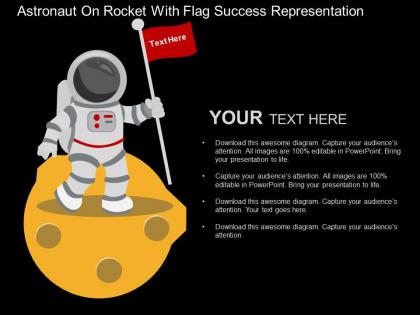
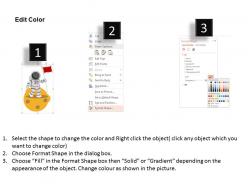
Astronaut on rocket with flag success representation flat powerpoint design




Try Before you Buy Download Free Sample Product
 Impress Your
 Audience
 100%
100% Editable
 Save Hours
 of Time


Achieve desired expansion with our Astronaut On Rocket With Flag Success Representation Flat Powerpoint Design. Fuel the drive for building capacity.
People who downloaded this PowerPoint presentation also viewed the following :
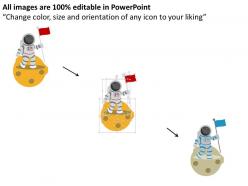
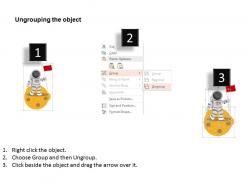
Astronaut on rocket with flag success representation flat powerpoint design with all 4 slides:
Accept and adapt to fresh calls with our Astronaut On Rocket With Flag Success Representation Flat Powerpoint Design. They help cater to changing demands.
FAQs for Astronaut on rocket with flag success representation
Key personal attributes for astronaut mission success include exceptional problem-solving abilities, emotional resilience under extreme stress, strong communication skills, adaptability to rapidly changing conditions, and meticulous attention to detail. These qualities enable astronauts to manage complex technical challenges, maintain team cohesion in confined spaces, and execute critical procedures flawlessly, ultimately ensuring mission safety and operational success.
Astronaut training has evolved from basic flight simulations to comprehensive programs incorporating advanced virtual reality, extended isolation exercises, underwater spacewalk training, and psychological resilience building. Modern programs emphasize international collaboration, long-duration mission preparation, and emergency response scenarios, with space agencies finding that these enhanced methodologies significantly improve mission success rates and crew adaptability in increasingly complex space environments.
Teamwork serves as the foundation for astronaut mission success through coordinated operations, shared expertise, crisis management, and seamless communication protocols. In space missions, astronauts rely on diverse specialized skills, real-time collaboration during complex procedures, and collective problem-solving capabilities, ultimately delivering mission objectives while ensuring crew safety and operational efficiency.
Astronauts manage mental health through structured psychological support systems, regular communication with Earth-based counselors, recreational activities, exercise regimens, and peer support networks. These comprehensive approaches streamline stress management by maintaining social connections, providing mental stimulation, and establishing routine normalcy, with space agencies increasingly finding that integrated wellness programs enhance mission performance and crew resilience.
Astronaut achievements have enabled breakthroughs in microgravity research, protein crystallization, tissue engineering, pharmaceutical development, and Earth observation technologies. Through experiments aboard the International Space Station, astronauts have advanced cancer treatments, developed stronger materials, and enhanced climate monitoring systems, with many discoveries ultimately delivering improved medical therapies and environmental insights that benefit life on Earth.
Physical fitness significantly impacts astronauts' performance by enhancing cardiovascular endurance, bone density maintenance, and muscle strength retention in microgravity environments. Through rigorous pre-flight conditioning and in-flight exercise protocols, astronauts maintain operational capabilities, reduce medical risks, and sustain mission effectiveness, with space agencies finding that comprehensive fitness programs ultimately deliver safer missions and improved crew performance.
Astronauts face significant physiological and psychological challenges including bone density loss, muscle atrophy, cardiovascular deconditioning, spatial disorientation, and fluid redistribution throughout their bodies. These adaptations require comprehensive pre-flight training, in-flight countermeasures, and post-mission rehabilitation protocols, with space agencies increasingly developing advanced exercise equipment and medical monitoring systems to minimize long-term health impacts and ensure mission success.
Prior education and experience are crucial for astronaut success, with most requiring advanced degrees in STEM fields, military aviation backgrounds, or specialized technical expertise in areas like medicine or engineering. This foundation enables astronauts to master complex spacecraft systems, conduct scientific research, and handle emergency situations effectively, with space agencies finding that diverse educational backgrounds ultimately enhance mission adaptability and crew performance.
Recent innovations enhancing astronaut success include advanced life support systems, AI-powered mission planning software, improved spacesuits with enhanced mobility, real-time health monitoring devices, and sophisticated communication technologies. These advancements streamline operations by reducing manual workload, enhancing safety protocols, and enabling faster decision-making, with space agencies finding that integrated systems ultimately deliver more efficient missions and better crew performance.
Astronauts communicate with ground control through multiple radio frequencies, satellite networks, digital data links, and video conferencing systems, enabling real-time coordination throughout missions. These communication channels streamline mission operations by facilitating continuous monitoring, immediate problem-solving assistance, and strategic decision-making, with space agencies finding that seamless ground-crew collaboration ultimately delivers enhanced safety protocols and mission success rates.
Past astronaut experiences teach critical lessons about rigorous preparation, team collaboration, adaptability under extreme pressure, and systematic problem-solving approaches. These principles translate directly to business leadership, with many organizations finding that astronaut-tested methodologies for crisis management, precision execution, and maintaining performance under stress ultimately deliver enhanced operational efficiency and competitive advantage.
Diverse backgrounds in astronaut selection enhance mission outcomes by bringing varied problem-solving approaches, complementary skill sets, and broader perspectives to complex space operations. Teams combining engineers, pilots, physicians, scientists, and international crew members demonstrate improved adaptability, innovation, and collaborative decision-making during critical mission phases, ultimately delivering more robust solutions and mission success rates.
Astronaut missions provide critical data on human physiology, psychological resilience, equipment performance, life support systems, and long-duration spaceflight challenges that directly inform future exploration strategies. These missions enable space agencies to develop enhanced spacecraft designs, sustainable habitation technologies, and operational protocols, with organizations like NASA and SpaceX leveraging these insights to advance Mars colonization timelines and establish viable off-world settlements.
Research missions prioritize scientific data collection, sample quality, and experimental accuracy, while exploration missions emphasize distance traveled, terrain mapped, and survival in unknown environments. Commercial missions focus on payload delivery success, cost efficiency, customer satisfaction, and operational profitability, with many aerospace companies finding that standardized safety protocols across mission types ultimately streamline operations and enhance competitive advantage.
Space agencies foster astronaut success through rigorous selection processes, intensive multi-year training programs, continuous psychological support, and collaborative team-building exercises that simulate high-stress mission scenarios. These comprehensive approaches enhance crew cohesion, technical proficiency, and mental resilience, with agencies like NASA and ESA finding that structured mentorship and cross-cultural collaboration ultimately deliver safer missions and stronger team performance.
-
Great designs, really helpful.
-
Excellent Designs.