Automotive Technology Powerpoint Ppt Template Bundles
Try Before you Buy Download Free Sample Product
Audience
Editable
of Time
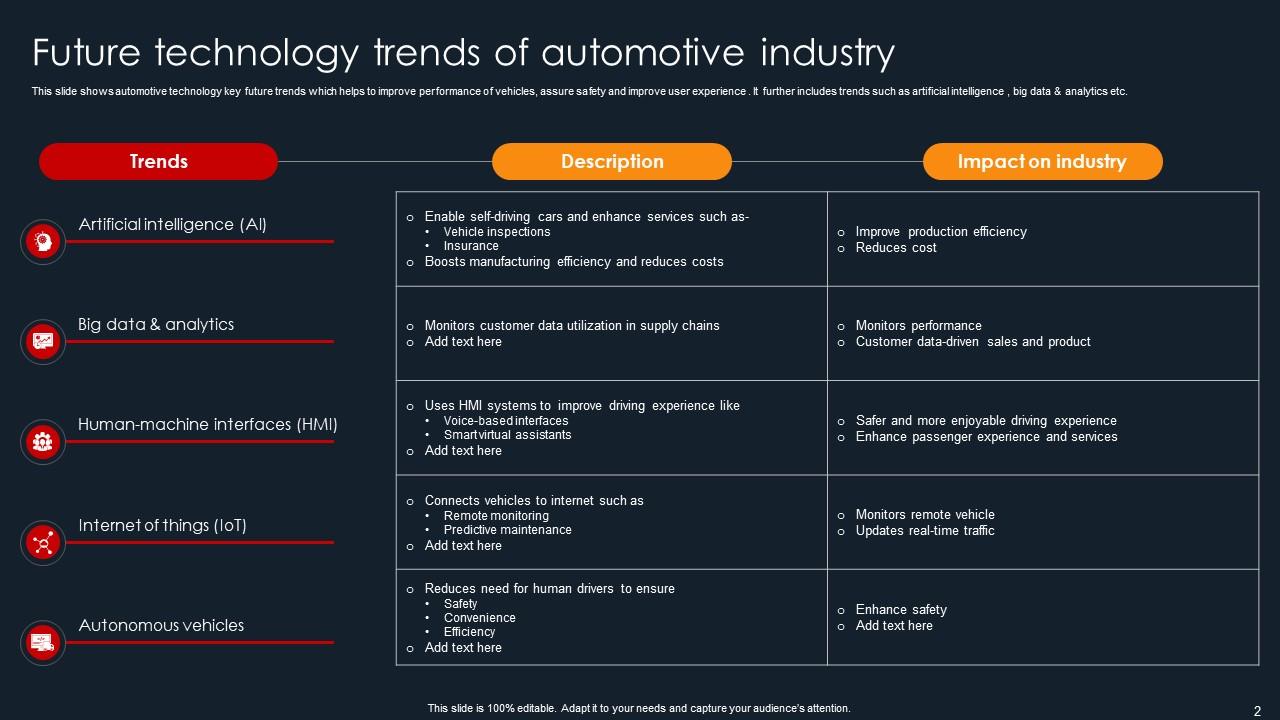
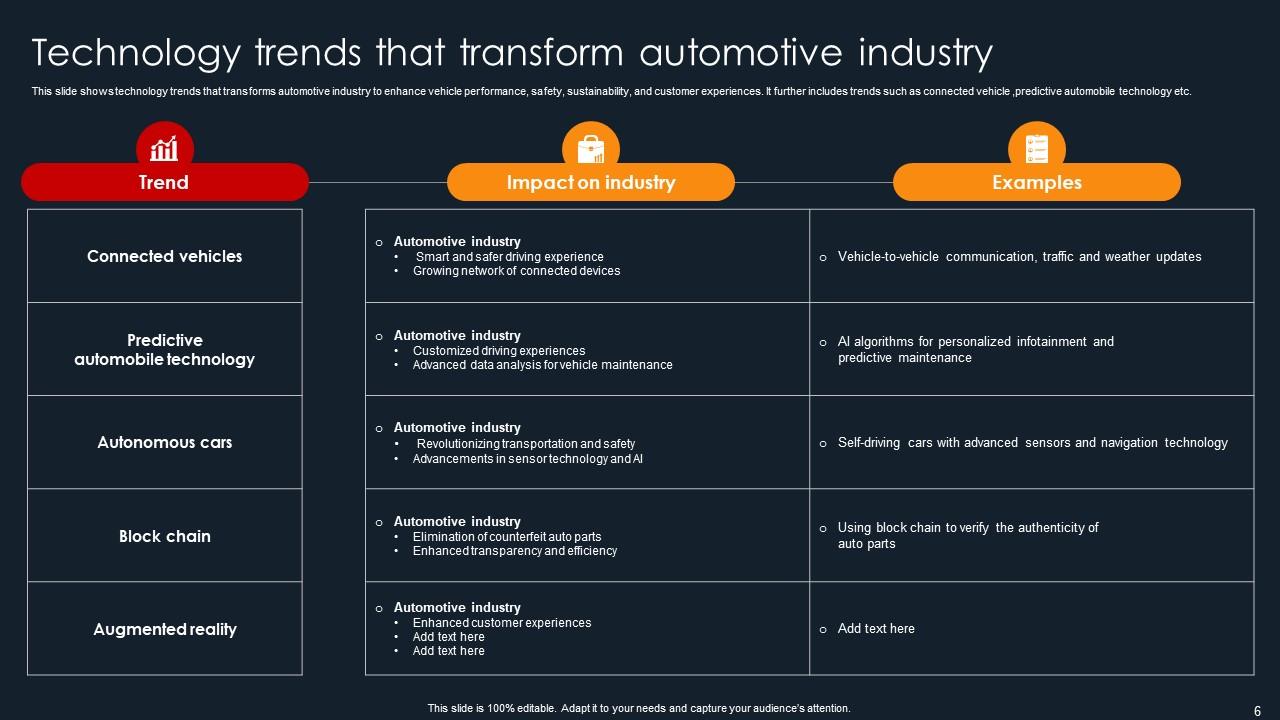
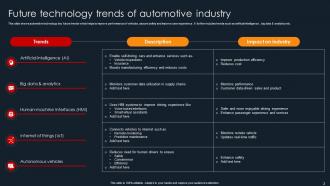
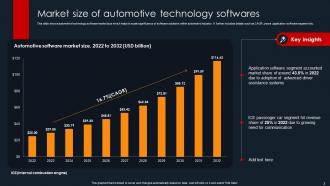
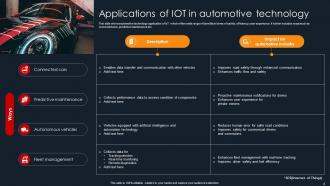
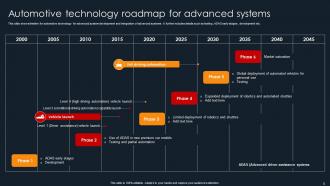
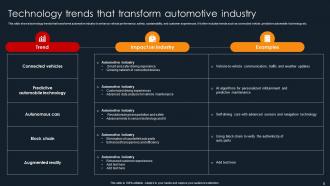
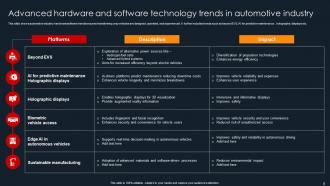
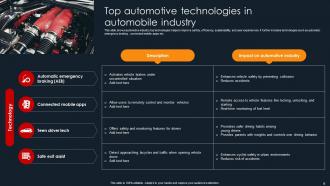
Introducing our comprehensive PowerPoint presentation on Automotive Technology a dynamic resource designed to navigate the ever evolving landscape of automotive innovation. Dive into the latest Technology Trends that are reshaping the industry, from electric vehicles to autonomous driving and connected cars. Discover invaluable insights into the Market Size, offering a glimpse into the thriving automotive sectors economic significance. Uncover the pivotal role of the Internet of Things IoT in revolutionizing automotive systems, from vehicle connectivity and smart transportation to predictive maintenance. Our PPT equips you with the knowledge and statistics to stay ahead in this transformative field. Stay on the cutting edge, understand the Applications of IoT in the automotive world, and harness this presentation to drive success in an industry poised for remarkable change.

People who downloaded this PowerPoint presentation also viewed the following :
Automotive Technology Powerpoint Ppt Template Bundles with all 20 slides:
Use our Automotive Technology Powerpoint Ppt Template Bundles to effectively help you save your valuable time. They are readymade to fit into any presentation structure.
FAQs for Automotive Technology Powerpoint
Current automotive technology trends include electric vehicle advancement, autonomous driving systems, connected car technologies, advanced driver assistance systems, and sustainable manufacturing processes. These innovations streamline operations by reducing emissions, enhancing safety protocols, and improving customer experiences, with many manufacturers finding that strategic integration delivers competitive advantages and positions them effectively in an increasingly digital automotive landscape.
AI and machine learning enhance vehicle safety and efficiency by enabling predictive maintenance, real-time hazard detection, adaptive cruise control, and intelligent traffic management systems. These technologies streamline operations by reducing accident rates, optimizing fuel consumption, and minimizing downtime, with automotive manufacturers increasingly finding that integrated AI delivers significant competitive advantages and enhanced customer experiences.
Electric vehicles serve as catalysts for automotive innovation, driving advancements in battery technology, autonomous systems, charging infrastructure, and smart manufacturing processes. Through integrated connectivity and AI-powered features, EVs enable manufacturers to deliver enhanced user experiences, reduced operational costs, and sustainable transportation solutions, with many automotive companies finding that electric platforms accelerate their digital transformation initiatives.
Autonomous driving advancements are reshaping consumer expectations around vehicle safety, convenience, and ownership models, with many buyers increasingly prioritizing advanced driver assistance features over traditional performance metrics. These technologies influence purchasing decisions by reducing concerns about long commutes and parking challenges, while enabling new mobility services like ride-sharing and subscription models, ultimately transforming automotive consumption patterns.
New automotive technologies, particularly electric and hybrid vehicles, significantly reduce greenhouse gas emissions, air pollution, and fossil fuel dependency while minimizing noise pollution in urban areas. Through enhanced battery efficiency and renewable energy integration, these technologies enable automakers to achieve sustainability targets, reduce operational costs, and deliver cleaner transportation solutions, ultimately positioning organizations for competitive advantage in increasingly environmentally-conscious markets.
Software and digital connectivity have revolutionized the driving experience by enabling real-time navigation, predictive maintenance alerts, seamless entertainment integration, and advanced safety features like collision avoidance. These technologies streamline vehicle operation through voice commands, smartphone connectivity, and cloud-based services, with many automotive manufacturers finding that enhanced digital interfaces ultimately deliver safer, more personalized driving experiences.
Automotive manufacturers face challenges including high development costs, complex regulatory compliance, supply chain integration difficulties, cybersecurity vulnerabilities, and workforce retraining requirements. While these present significant hurdles, many companies are finding that strategic partnerships with tech providers and phased implementation approaches ultimately deliver competitive advantages, enhanced vehicle safety, and improved customer experiences in an increasingly digital automotive landscape.
New automotive technologies revolutionize supply chain management through real-time tracking systems, predictive analytics, IoT sensors, automated inventory management, and blockchain transparency. These innovations enable manufacturers and suppliers to minimize delays, reduce costs, and enhance quality control, while automotive companies increasingly find that integrated digital platforms streamline operations and deliver competitive advantages.
Automotive technology enhances vehicle maintenance through predictive analytics, real-time monitoring systems, IoT sensors, automated diagnostic tools, and cloud-based maintenance platforms. These technologies streamline operations by identifying potential issues before failures occur, reducing downtime significantly, and enabling data-driven maintenance schedules, with many fleet operators finding that predictive maintenance reduces costs while improving vehicle reliability.
5G technology revolutionizes automotive applications through ultra-low latency communication, enhanced vehicle-to-everything connectivity, real-time data processing, advanced driver assistance systems, and seamless over-the-air updates. This enables manufacturers to deliver autonomous driving capabilities, predictive maintenance, immersive infotainment experiences, and connected fleet management, ultimately transforming transportation efficiency and safety standards across the industry.
V2X communication revolutionizes transportation by enabling vehicles to interact with infrastructure, other vehicles, pedestrians, and cloud networks, creating interconnected mobility ecosystems. Through real-time data exchange, automotive manufacturers and smart city planners streamline traffic flow, enhance safety protocols, and reduce emissions, while ultimately delivering autonomous driving capabilities and optimized urban transportation networks.
**INPUT**: What safety measures are being implemented in response to the rise of connected cars? **OUTPUT**: Safety measures for connected cars include advanced encryption protocols, multi-factor authentication systems, intrusion detection networks, regular over-the-air security updates, and isolated critical system architectures. These technologies enhance vehicle security by protecting data transmission, preventing unauthorized access, and maintaining operational integrity, with automotive manufacturers increasingly finding that comprehensive cybersecurity frameworks deliver both consumer confidence and competitive advantage. [Word count: 60 words]
Automotive technologies support smart cities by enabling connected vehicle networks, real-time traffic optimization, automated parking systems, and integrated public transportation solutions. Through IoV connectivity and autonomous systems, cities streamline traffic flow, reduce emissions, and enhance urban mobility, with many metropolitan areas finding that these technologies ultimately deliver improved citizen experiences and operational efficiency.
Consumer preferences significantly drive automotive technology development, influencing everything from electric vehicle adoption, autonomous driving features, connectivity systems, safety innovations, and sustainable manufacturing practices. Automakers increasingly prioritize consumer research and feedback when designing new technologies, with preferences for environmental sustainability, enhanced safety, and seamless digital integration ultimately shaping industry-wide innovation strategies and competitive positioning.
Presentation templates effectively convey complex automotive technology by organizing technical data into visual hierarchies, interactive diagrams, and audience-specific content modules that translate engineering concepts into accessible formats. Through strategic infographics, process flows, and comparative charts, automotive companies streamline communication across stakeholders, from executives to technicians, ultimately enhancing decision-making speed and fostering cross-functional collaboration in product development cycles.
-
Graphics are very appealing to eyes.
-
Superb! The innovative and inspiring template designs provide an edge to the presentation.