

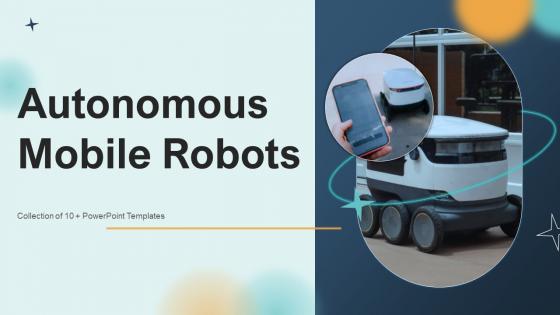
Autonomous Mobile Robots Powerpoint Ppt Template Bundles




Try Before you Buy Download Free Sample Product
 Impress Your
Audience
 100%
Editable
 Save Hours
of Time


Our Autonomous Mobile Robots Powerpoint Ppt Template Bundles are topically designed to provide an attractive backdrop to any subject. Use them to look like a presentation pro.
People who downloaded this PowerPoint presentation also viewed the following :
Content of this Powerpoint Presentation
Slide 1: This slide introduces Autonomous Mobile Robots. State your company name and begin.
Slide 2: This slide presents autonomous mobile robots program architecture to identify, grab, and move objects from one location to another.
Slide 3: This slide shows small mobile robots autonomous movement technologies which enables robot to travel automatically without operators input.
Slide 4: This slide displays autonomous mobile robots global market size to analyze productivity and operations in industries that drives demand for autonomous robots.
Slide 5: This slide shows autonomous mobile robots applications for different industries ensure infrastructure-free solution that can adapt to changing environments.
Slide 6: This slide displays artificial intelligence role in autonomous mobile robots which enables higher reliability for tasks such as detection and identification.
Slide 7: This slide shows autonomous mobile robots future development areas helps in advancement and adoption of technology. It further includes details such as artificial intelligence, navigation etc.
Slide 8: This slide displays autonomous mobile robots best practices to effectively manage deployment of project. It further includes details such as application review, kick off meeting, etc.
Slide 9: This slide shows autonomous mobile robots market size based on different regions which helps to provide valuable insights for various stakeholders including businesses.
Slide 10: This slide presents Autonomous mobile robots icon with Wi-Fi.
Slide 11: This slide displays Autonomous mobile robots icon for remote driving.
Slide 12: This is a Thank You slide with address, contact numbers and email address.
Autonomous Mobile Robots Powerpoint Ppt Template Bundles with all 20 slides:
Use our Autonomous Mobile Robots Powerpoint Ppt Template Bundles to effectively help you save your valuable time. They are readymade to fit into any presentation structure.











FAQs for Autonomous Mobile Robots Powerpoint
So AMRs basically need a bunch of stuff to work together. They use LiDAR, cameras, and ultrasonic sensors to "see" what's around them. Then there's the localization system - usually SLAM-based - so they actually know where they are in space. The navigation software does all the heavy lifting for path planning and dodging obstacles. Obviously you need the physical platform too - motors, wheels, all that. Plus onboard computers processing everything instantly, which honestly seems like magic sometimes. Communication modules handle fleet coordination. When you're shopping around, don't get caught up in individual specs. Focus on how smoothly everything works together instead.
So these robots use LiDAR, cameras, and ultrasonic sensors to build maps while they move around. Pretty neat stuff honestly. They're constantly figuring out where they are and planning routes around obstacles. The AI gets better over time too - learns your space. One thing though - definitely test them in your actual warehouse before buying. I've seen cases where they work great in demos but struggle with weird lighting or tight spaces. Each setup's different, and navigation can be hit or miss depending on your layout. They'll reroute around new stuff automatically, which saves headaches.
So the AI is what actually makes these robots "autonomous" - without it they're just fancy remote control cars. It processes all the sensor data in real-time, figures out the best routes, and handles unexpected stuff like people walking into its path. Pretty much like having a driver that doesn't need coffee breaks or get road rage. The algorithms do everything from basic "don't hit that wall" to recognizing different objects and even learning from mistakes. Honestly, when you're looking at robots, the AI matters way more than how shiny the hardware looks.
Honestly, it's all about the sensors - that's what makes these robots actually functional instead of just expensive paperweights. LiDAR handles the mapping and navigation stuff, cameras do visual recognition, and proximity sensors stop them from crashing into people or equipment (which gets awkward fast). Warehouses use them for item picking and navigating busy aisles. Hospitals need safe medication delivery around patients. Manufacturing floors benefit when robots can detect obstacles and change routes on the fly. The real game-changer is sensor fusion - mixing different types together. That's what separates modern AMRs from those old clunky guided vehicles. Pick robots with sensors that actually match your space, and your ROI will thank you.
So basically, regular robots are stuck in one spot doing the same thing over and over - like those factory arms that weld car parts. Mobile autonomous ones? They're way smarter. Your Roomba's a perfect example - it cruises around, dodges your furniture, figures out where it hasn't cleaned yet. The autonomous ones use sensors and AI to make decisions on the fly instead of just following whatever someone programmed. Regular robots are great for precision stuff, but honestly, the mobile ones are game-changers if you need something that can handle surprises and actually think for itself.
AMRs are game-changers for warehouse operations, honestly. They handle pick-and-pack, move stuff between zones, and take care of inventory tasks. The repetitive work that kills your team's time? Moving pallets, restocking shelves - robots got it covered. Some places use them for cycle counting too, which is pretty smart. Best part is they navigate on their own with sensors and mapping. No need for tracks or anything like that. My buddy's warehouse cut labor costs big time after implementing these. If you want better efficiency without the headaches, definitely look into them.
So these robots have tons of sensors - cameras, LIDAR, all that stuff constantly watching for people. When you get too close, they'll slow down or just stop completely. There's usually an emergency button too, but honestly they're pretty smart about detecting you anyway. They stick to set paths mostly, but will change course if someone's in the way. Oh and make sure your place has clear lanes marked for them - that helps a lot. Everyone should know the basic safety rules when they're around, but they're not as scary as you'd think.
Honestly, perception and path planning will drive you nuts - your robot needs to "see" properly and navigate when everything's unpredictable. Sensor fusion is a pain because cameras, lidar, and IMUs give you noisy data that never matches up. Real-time decisions get messy quick, especially when people do random stuff! Your robot also needs perfect localization at all times. Edge cases and safety protocols are their own nightmare. Oh, and definitely start with simulation first - way easier than breaking actual hardware while you're figuring things out.
First thing - map out what you're doing now and find the stuff that's eating up the most time. Those repetitive tasks are where AMRs actually pay off. I'd start simple, maybe just moving inventory between zones or hauling materials to production lines. The trick is getting your warehouse system to play nice with the robots (which honestly can be trickier than it sounds). But seriously, don't go crazy trying to automate everything at once - that's how you end up with expensive paperweights. Pick one process, nail it down, then move on. You'll actually see where your money's going this way.
Dude, the battery stuff has gotten crazy good lately. Lithium-ion tech is way better now - AMRs can actually work 12+ hour shifts instead of dying after 4-6 hours like before. Battery swapping is probably the coolest part though, robots just dock themselves and swap out dead batteries automatically. No downtime at all. Charging speeds are insane too, honestly still surprises me sometimes. Oh and the smart battery systems? They'll predict when your AMR needs juice and plan routes around it. If you're buying new ones, definitely go for the newer battery tech - the productivity boost is nuts.
So basically these robots are always sucking in data from their cameras, lidar, all that sensor stuff - updating their map of what's around them. Something moves? They spot it instantly and recalculate a new path. The crazy part is how fast this happens - we're talking milliseconds here. Your robot is literally rebuilding its understanding of the world while it's moving around doing tasks. Oh, and if you're building one yourself, make sure your processing can actually keep up with all that sensor data or you'll get lag issues.
Ugh, so many moving parts with this stuff. Privacy's probably your biggest headache - these robots are basically rolling surveillance systems collecting data everywhere they go. Then you've got safety liability issues when they inevitably crash into something or block a fire exit. The job displacement concern is real too, and honestly people have every right to be pissed about that. Don't forget accessibility either - you don't want to accidentally create barriers for folks with disabilities. My advice? Get your data policies sorted first, figure out who's liable when things go sideways, and actually talk to the community before deploying anything.
Honestly, it depends on your industry but most companies look at labor savings and productivity bumps first. Manufacturing cares about throughput and less downtime. Warehouses track picks per hour - that kind of stuff. Healthcare's trickier since they measure time freed up for patient care, which is valuable but hard to put numbers on. You'll want your baseline metrics locked down before you start, then track the same things after. Most see payback in 12-24 months if they're doing it right. Figure out what's costing you the most headaches and attach dollar amounts to those problems.
AMRs are about to get crazy smart with AI that actually learns on the fly instead of just following basic routes. Edge computing makes them way more responsive too. Battery life is finally getting decent - thank god, because that's been the worst part forever. The coolest thing though? Swarm robotics where multiple bots work together like they're reading each other's minds. Human-robot collaboration is becoming less clunky and more natural. Honestly, start thinking about how robots could work *with* your team instead of just replacing people. That's where the real opportunities are hiding.
So basically, regulations are what'll make or break your AMR rollout timeline. Manufacturing facilities? Pretty straightforward since you control the environment. But healthcare and public areas are a total nightmare - safety certs, liability headaches, the works. Each region has its own quirks too. EU's way more strict than the US, plus every industry has weird specific rules. I swear it's like they designed it to be confusing on purpose. My advice? Figure out where you want to deploy first, then find regulatory consultants who actually know that space. Don't try to wing it.
-
I am so thankful for all of the templates I've found on your site. They have saved me hours every week and helped make my presentations come alive. Keep up with these amazing product releases!
-
Loved the collection. Editing the presentation was seamless with their templates.