


Backend Process Work Flow In Ecommerce




Try Before you Buy Download Free Sample Product
 Impress Your
Audience
 100%
Editable
 Save Hours
of Time


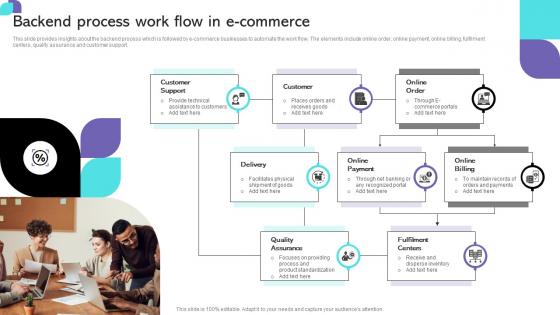
This slide provides insights about the backend process which is followed by ecommerce businesses to automate the work flow. The elements include online order, online payment, online billing, fulfilment centers, quality assurance and customer support.
People who downloaded this PowerPoint presentation also viewed the following :
Backend Process Work Flow In Ecommerce with all 6 slides:
Use our Backend Process Work Flow In Ecommerce to effectively help you save your valuable time. They are readymade to fit into any presentation structure.






FAQs for Backend Process Work
So you'll need user accounts, product catalog, order processing, payment setup, inventory tracking, and shipping stuff. Database design is where everyone screws up though - seriously, get that right first. APIs to connect everything, plus security for customer data and payments. Honestly, the hardest part isn't building each piece, it's making them all work together without breaking. My advice? Map out how data flows between everything before you write a single line of code. Trust me, debugging order failures at 2am because you skipped this step absolutely sucks.
So basically your inventory system talks to your online store through APIs that sync everything in real time. Order comes in? Stock levels update automatically. You can even set it up to ping you when you're running low on stuff. The cool part is it handles all your sales channels at once - website, Amazon, physical store, whatever. Trust me, this multi-channel sync thing is a game changer if you're selling everywhere. Oh, and it reserves items during checkout so you don't accidentally oversell (been there, not fun). Start by figuring out where you're wasting the most time manually updating stuff.
So basically it's your secure middleman that handles all the card processing between your store and banks. Customer hits buy, it encrypts their info, sends it for approval, then tells your system yes or no. Like a bouncer who also handles cash exchanges - which sounds weird but makes sense lol. You integrate through their API to send transaction data and get real-time responses back. Just pick one that supports whatever payment methods you want. Oh and make sure it has good uptime because when it goes down, you're literally losing sales every minute.
Dude, first thing - audit what you're doing now before you buy any fancy software. Seriously saved me so much headache when I did this. Get your inventory system talking to your order management so stuff automatically goes to the closest warehouse. Batch similar orders together when picking - makes everything way faster. Oh, and pre-pack your popular items when it's slow. Total lifesaver during busy seasons. Real-time tracking keeps customers happy too since they're not constantly messaging you about where their order is. The automated routing based on location and stock levels? That's where you'll see the biggest difference.
First things first - encrypt everything. Credit cards, personal info, all of it needs HTTPS protection. Don't even think about storing payment data unless you're PCI compliant (trust me, it's a total pain). Set up access controls so random people can't peek at customer info. Auto-delete old records with retention policies - no point keeping stuff forever. Oh, and log who's accessing what for audits. Basically treat customer data like it could leak any second. I'd start by auditing what you're actually storing because you probably don't need half of it anyway.
So API integration is basically how your eCommerce site talks to all the external stuff it needs - payment processors, shipping companies, inventory systems, email services, whatever. Building all that yourself would be absolutely nuts. You just connect to existing APIs that already handle those specific jobs really well. Your backend can focus on the actual business stuff while letting other services do what they're good at. Way faster to build, less buggy, and you get tons more features. I'd start by figuring out what services you actually need, then go after the integrations that'll save you the most headaches first.
WebSockets are your best bet for real-time updates - they feel like actual magic when everything clicks. For APIs, go with GraphQL since your frontend can grab exactly what it needs without the bloat. Redux or Zustand will keep your state management sane on the frontend side. Message queues help backend changes flow through properly, though honestly that part can get messy fast. Add optimistic updates so users don't feel like they're waiting forever. Oh, and definitely build in some polling as backup - WebSockets love to randomly die on you at the worst moments.
So backend analytics are like having a crystal ball for your customers - you can see what they want before they do. Track their browsing habits, what they bought before, when they ditch their carts. Then you personalize everything: product suggestions, those "hey come back" emails when they're about to leave. Heat maps are clutch for this btw. The data shows you where people get stuck during checkout too, or which product pages need work. I swear, just watching user sessions can boost your sales way more than you'd think. Start there and see what happens.
So OAuth2 or JWT tokens are your best bet for auth, plus you'll want role-based access control. MFA isn't optional anymore - honestly, customers get sketched out without it, and PCI compliance demands it anyway. Set up different permission tiers (customer, admin, super-admin) and stick to least privilege access. Never store passwords in plain text - use bcrypt or Argon2. Don't forget session timeouts and token refresh stuff. I'd start by looking at your current auth setup and finding where things might be getting through that shouldn't be.
So monoliths just scale up - bigger servers for your whole app when things get busy. Microservices are different though, you can scale individual pieces. Like during Black Friday, just boost your payment service while user management stays the same. Microservices seem super fancy but honestly? They're a pain to manage at first. Everything's scattered everywhere. Monoliths are way easier to deploy and debug, but you'll hit limits sooner. If you're starting out or traffic's pretty steady, just go monolithic. Don't overthink it until you actually need the headache.
Start with APM stuff like New Relic or Datadog - they'll catch your API and database issues in real time. For infrastructure, CloudWatch or Prometheus work great for tracking server resources. Honestly, proper logging is where it's at though. ELK stack saved my ass so many times during those middle-of-the-night emergencies. Pingdom's solid for uptime checks from outside your system. Set alerts up early so you're not finding out about problems from angry customers. Oh, and build dashboards for the metrics that actually matter - checkout rates, payment processing times, that kind of stuff.
So basically it connects all your ecommerce stuff - orders, payments, inventory, shipping - straight to your support tools like Zendesk. When customers hit you up, your team sees everything without switching between a million tabs (which honestly drives me crazy). The APIs sync everything in real-time, so agents instantly pull up purchase history, returns, account details. Oh, and set up automated ticket routing by issue type. Saves your team from manually sorting through everything. It's one of those integrations that actually makes sense once you see it working.
Honestly, the worst part is when your inventory goes completely out of sync - like showing 50 items in stock when you actually have zero. Payment gateways will crash at the worst possible moments (Murphy's law, I swear). Order processing gets messy fast, especially when you're juggling multiple sales channels. Returns are a whole nightmare on their own. During busy periods? Everything breaks simultaneously. Stock updates lag behind and customers get pissed. Traffic spikes will expose every weakness in your system. Build solid error handling early and have backup plans ready. Trust me on this one.
So your backend is basically the bridge connecting your store to shipping companies through their APIs. Once a customer orders something, it automatically shoots the details over to UPS, FedEx, whatever you're using. Real-time shipping rates pop up at checkout, tracking numbers get generated - the whole thing runs itself once you've got it dialed in. Your inventory updates automatically too so you won't accidentally sell stuff that's already out the door. Honestly, I'd just pick one major carrier to start with rather than trying to do everything at once. Way less headache that way.
Dude, cloud computing is a total game-changer for eCommerce. Instead of waiting weeks for new servers, you can spin them up in minutes. Traffic spikes on Black Friday? Auto-scaling handles it without you losing sleep. You'll only pay for what you actually use too - no more expensive servers just sitting there doing nothing. Oh, and customers worldwide get faster load times since you can deploy globally without physical hardware everywhere. Honestly, if you're not already using auto-scaling groups, that's where I'd start. Way less headache than the old way of doing things.
-
My presentations were a bit amateur before I found SlideTeam’s designs. I’ve been able to find slides for nearly every topic I’ve had to present. Thanks, Slideteam!
-
Awesome use of colors and designs in product templates.