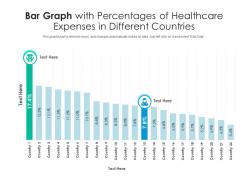
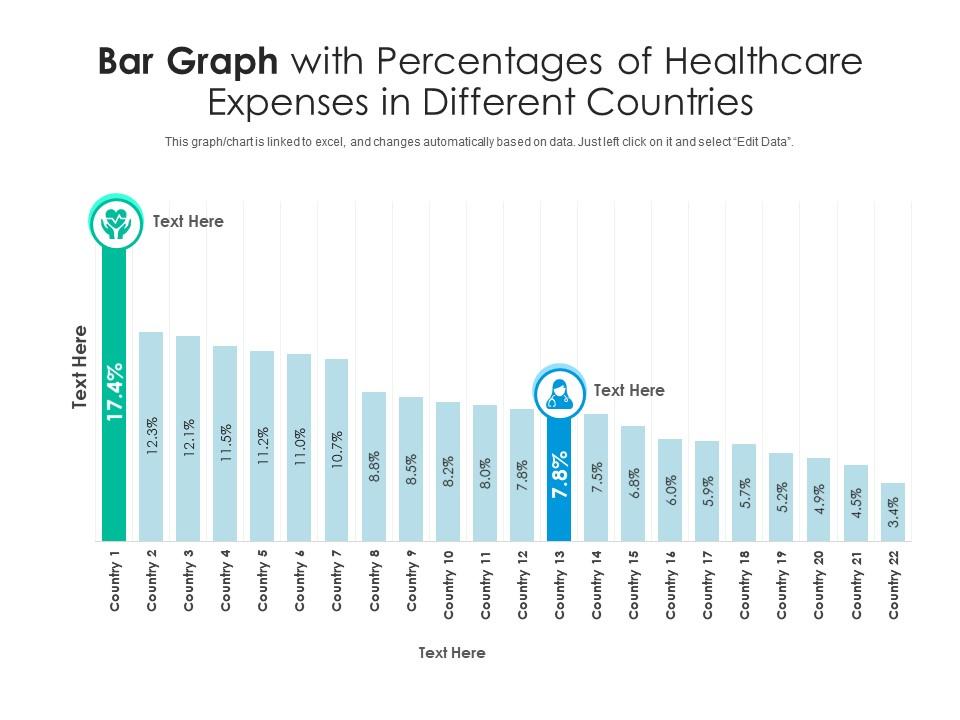
Bar graph with percentages of healthcare expenses in different countries infographic template
Try Before you Buy Download Free Sample Product
Audience
Editable
of Time
Derive factual results using this Bar Graph With Percentages Of Healthcare Expenses In Different Countries Infographic Template. Deploy this PowerPoint template to make and display prospective strategies using impressive graphics that enhance the visual quotient of the presentation. This infographic template also helps in elevating the aesthetic appeal of the presentation, making it useful for every organization. Apart from this, things and projects can be visualized from the onset using this PPT design. As this PowerPoint visual provides an abundance of information in a single layout, it can impress any viewer or higher managerial staff. It also boosts business actions by presenting flawless presentations. The biggest advantage of this slide is that it can be reproduced in various formats, including Google Slides. Therefore, download it now to present a unique presentation every time.
People who downloaded this PowerPoint presentation also viewed the following :
Bar graph with percentages of healthcare expenses in different countries infographic template with all 2 slides:
Use our Bar Graph With Percentages Of Healthcare Expenses In Different Countries Infographic Template to effectively help you save your valuable time. They are readymade to fit into any presentation structure.
FAQs for Bar graph with percentages of healthcare expenses in different
Key components driving rising healthcare expenses include prescription drug costs, hospital services, physician fees, medical technology investments, and administrative overhead. These factors escalate through aging populations requiring more care, advanced treatments with higher costs, and complex insurance systems, with many healthcare organizations finding that operational inefficiencies and regulatory compliance significantly amplify overall expenditure burdens.
Healthcare expenses vary significantly based on age, income, chronic conditions, insurance coverage, and geographic location, with older adults and those with pre-existing conditions typically facing higher costs. Regional differences emerge through varying provider costs, state healthcare policies, and local economic factors, with urban areas often showing higher expenses than rural regions, ultimately creating substantial disparities in healthcare accessibility and financial burden across different population segments.
Insurance plans significantly influence healthcare costs through negotiated provider rates, coverage limitations, deductible structures, and prior authorization requirements. These mechanisms directly impact patient out-of-pocket expenses, provider reimbursements, and treatment accessibility, with many healthcare systems finding that strategic insurance partnerships ultimately streamline cost management while enhancing patient care delivery.
Visual data representations transform complex healthcare expense information by converting abstract financial data into easily digestible charts, graphs, and comparative illustrations that highlight cost breakdowns, insurance coverage gaps, and spending patterns. Through infographics, patients and healthcare administrators can quickly identify areas of excessive spending, compare treatment costs across providers, and make more informed financial decisions, ultimately enabling better healthcare budgeting and cost management strategies.
Common healthcare expenses include insurance premiums, deductibles, copayments, prescription medications, and out-of-network services. These costs significantly impact family budgets by creating both predictable monthly obligations and unexpected medical bills, with many households finding that strategic planning through health savings accounts and preventive care ultimately reduces long-term financial burden.
Prescription medication costs significantly impact healthcare expenses by driving up insurance premiums, increasing out-of-pocket spending, and straining healthcare budgets across institutions. With specialty drugs and chronic disease treatments requiring substantial financial resources, many hospitals, insurance providers, and healthcare systems find that medication expenses represent 15-20% of total healthcare costs, ultimately affecting patient access and treatment decisions.
Preventive care reduces long-term healthcare costs by detecting diseases early, preventing chronic conditions from developing, and minimizing expensive emergency interventions. Through regular screenings, vaccinations, and wellness programs, healthcare systems streamline resource allocation while delivering better patient outcomes, with many hospitals and insurance providers finding that proactive care ultimately enhances operational efficiency and significantly lowers treatment expenses.
Out-of-pocket expenses vary significantly based on provider networks, service types, and insurance plan structures, with specialists typically costing more than primary care physicians, and emergency services carrying higher deductibles than preventive care. These variations enable patients to make strategic healthcare decisions by comparing costs across different providers, ultimately delivering better financial planning and more informed care choices.
Healthcare spending has increased significantly over the past decade, driven by aging populations, chronic disease prevalence, prescription drug costs, and advanced medical technologies. These trends present both challenges and opportunities for healthcare systems, with many organizations finding that strategic investment in preventive care, digital health solutions, and operational efficiency helps manage costs while enhancing patient outcomes and competitive positioning.
Employers can manage healthcare costs through strategic wellness programs, preventive care initiatives, telemedicine services, flexible benefit plans, and data-driven provider partnerships. These approaches streamline expenses by reducing emergency visits, negotiating better rates, and promoting early intervention, while many organizations find that investing in employee health ultimately delivers lower premiums and improved productivity.
Technology presents both cost challenges and savings opportunities in healthcare, with AI diagnostics, telemedicine platforms, and electronic health records streamlining operations while expensive medical devices and software licenses increase upfront investments. Through automated administrative processes and remote monitoring systems, hospitals reduce staffing costs and prevent readmissions, while improved diagnostic accuracy minimizes unnecessary treatments, ultimately delivering operational efficiency and better patient outcomes.
Government policies significantly affect healthcare costs through insurance mandates, drug pricing regulations, provider reimbursement rates, and subsidies that can both increase and decrease consumer expenses. While policies like price transparency requirements and generic drug promotion help reduce costs, regulatory compliance burdens and coverage mandates often drive prices higher, with many healthcare systems finding that navigating this complex regulatory landscape ultimately impacts their operational efficiency and patient pricing.
Neglecting healthcare expenses in personal budgets can lead to significant debt accumulation, depleted emergency funds, compromised retirement savings, and reduced financial flexibility during medical emergencies. This oversight often results in individuals facing bankruptcy from unexpected medical bills, delayed medical care that worsens conditions and costs, and ultimately diminished long-term wealth building capacity and financial security.
Chronic diseases drive approximately 75% of healthcare spending by requiring continuous management, specialized treatments, frequent hospitalizations, and long-term pharmaceutical interventions. These conditions significantly impact resource allocation across hospitals, insurance systems, and pharmaceutical sectors, with many healthcare organizations finding that preventive care strategies and early intervention programs ultimately reduce costs while improving patient outcomes.
Healthcare expense reduction strategies include value-based care models, telemedicine platforms, AI-powered diagnostic tools, preventive care programs, and supply chain optimization technologies. These approaches streamline operations by reducing administrative costs, minimizing unnecessary procedures, and enhancing care coordination, with many hospitals and health systems finding that strategic combinations of these innovations deliver significant cost savings while improving patient outcomes.
-
Enough space for editing and adding your own content.
-
Excellent Designs.