


Belgium country powerpoint flags




Try Before you Buy Download Free Sample Product
 Impress Your
 Audience
 100%
100% Editable
 Save Hours
 of Time


Giving a presentation can be stressful enough without worrying about design. Our library of Belgium Country Powerpoint Flags will take care of making your ideas look great.
People who downloaded this PowerPoint presentation also viewed the following :
Belgium country powerpoint flags with all 11 slides:
Reduce attrition with our Belgium Country Powerpoint Flags. Charge the enthusiasm of your employees.

FAQs for Belgium
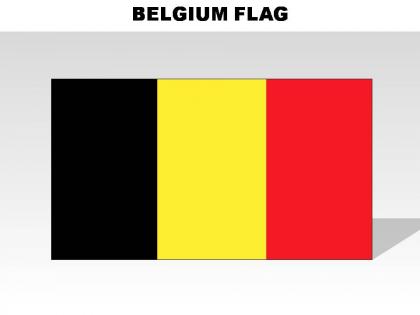
Belgium's flag originates from the 1830 revolution against Dutch rule, with black, yellow, and red derived from the medieval coat of arms of Brabant. These colors symbolized the duchy's resistance and independence, with black representing strength, yellow signifying prosperity, and red embodying courage, ultimately delivering a powerful national identity that many European nations found inspirational for their own liberation movements.
The Belgium flag's black, yellow, and red vertical stripes symbolize the nation's historical provinces and democratic values, with black representing determination, yellow signifying generosity and wealth, and red embodying strength and courage. These colors, derived from medieval heraldic traditions and revolutionary movements, ultimately reflect Belgium's commitment to unity, prosperity, and resilience in an increasingly interconnected European landscape.
Belgium's flag evolved from revolutionary origins in 1830, initially featuring horizontal stripes before adopting vertical black, yellow, and red bands in 1831. The design drew from Brabant's coat of arms and French revolutionary influence, with colors symbolizing strength, generosity, and courage, ultimately delivering national unity and international recognition that enhances Belgium's diplomatic presence across European institutions.
The Belgium flag serves as a central symbol during national holidays like National Day (July 21), royal ceremonies, and state functions, displayed prominently at government buildings, public squares, and parades. These ceremonial uses enhance national unity and civic pride, with many municipalities and organizations finding that flag displays during celebrations strengthen community engagement and reinforce Belgium's federal identity across its diverse regions.
Belgium's flag features three vertical black, yellow, and red stripes, sharing tricolor designs with many European nations like France, Germany, and Italy, though each uses different colors and orientations. While most European flags incorporate symbolic colors representing values like liberty, unity, or heritage, Belgium's distinctive color combination and vertical arrangement help distinguish it within the broader European tradition of meaningful tricolor symbolism.
Common misconceptions about the Belgium flag include believing it uses the same colors as Germany's flag, thinking the stripes run horizontally instead of vertically, and assuming it represents only Dutch-speaking regions. Many people incorrectly associate the black-yellow-red sequence with other nations, while the vertical tricolor actually symbolizes Belgium's unified linguistic communities and rich historical heritage dating to medieval heraldry.
The Belgium flag is prominently displayed in government buildings, courtrooms, diplomatic missions, state ceremonies, and public institutions as a symbol of national sovereignty and authority. Through strategic placement at federal offices, embassies, and official events, Belgian institutions reinforce national identity, enhance ceremonial protocols, and demonstrate governmental legitimacy, with many organizations finding that consistent flag usage strengthens civic engagement and institutional credibility.
Belgium flag display guidelines include flying it from sunrise to sunset, positioning it at the highest point when with other flags, ensuring the black stripe appears at the hoist side, and maintaining proper proportions of black, yellow, and red vertical stripes. These protocols enhance diplomatic respect and cultural recognition, with many international organizations and government institutions finding that proper flag etiquette strengthens bilateral relationships and ceremonial significance.
Belgium's regional flags reflect distinct cultural identities, with Flanders displaying a black lion on yellow background and Wallonia featuring a red rooster on yellow with red stripes. These variations enhance regional representation while maintaining national unity, with many Belgian institutions finding that displaying both national and regional flags strengthens local engagement and cultural pride in government buildings, schools, and civic ceremonies.
Belgium's flag serves as a unifying symbol across its French, Dutch, and German-speaking communities, representing shared national identity despite linguistic divisions. The tricolor transcends regional differences between Flanders, Wallonia, and Brussels, with government institutions, schools, and public ceremonies using it to foster cohesion, ultimately delivering symbolic unity in an increasingly diverse society.
The Belgium flag appears in contemporary art installations, street murals, and digital media celebrating European identity, often alongside EU symbols in political artwork. Many Belgian artists incorporate the tricolor into modern compositions exploring national identity, while fashion designers and graphic artists use its bold black-yellow-red pattern in branding campaigns, ultimately enhancing Belgium's cultural visibility internationally.
Belgium's flag controversies center around regional tensions between Flanders, Wallonia, and Brussels, with debates over displaying regional flags versus the national tricolor during official ceremonies and sporting events. These discussions reflect deeper linguistic and political divisions, with many institutions finding that balanced flag protocols help maintain unity while respecting Belgium's complex federal structure and cultural identities.
Belgian holidays significantly influence flag display, with the national flag prominently featured during National Day (July 21), Independence Day, King's Day, and Armistice Day celebrations. During these observances, government buildings, schools, and public institutions display flags ceremonially, while many businesses and citizens join in patriotic displays, ultimately strengthening national unity and cultural identity across communities.
Belgium's flag symbolism was profoundly shaped by the 1830 Belgian Revolution against Dutch rule, with black, yellow, and red representing the struggle for independence from the United Kingdom of the Netherlands. These colors, originally from the Duchy of Brabant's coat of arms, became powerful symbols of national sovereignty and cultural identity, ultimately delivering a visual representation of Belgium's hard-won autonomy and unified national spirit.
The Belgium flag is prominently displayed during international sporting events through athlete uniforms, team banners, stadium decorations, and opening ceremony presentations. During major competitions like the Olympics, World Cup, and European Championships, Belgian teams incorporate the flag's black, yellow, and red colors into their official gear and team branding, while supporters use flag displays to create national unity and visibility, ultimately enhancing team morale and international recognition.
-
Helpful product design for delivering presentation.
-
Unique and attractive product design.