

Best Practices For Safety In Warehouse Management




Try Before you Buy Download Free Sample Product
 Impress Your
Audience
 100%
Editable
 Save Hours
of Time


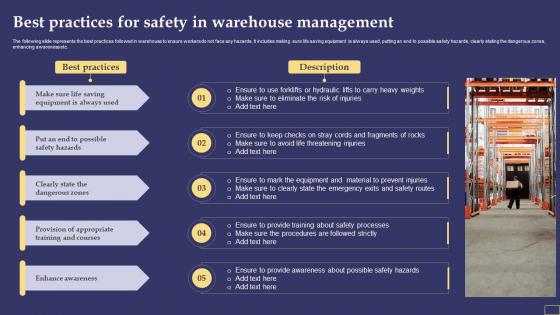
The following slide represents the best practices followed in warehouse to ensure workers do not face any hazards. It includes making sure life saving equipment is always used, putting an end to possible safety hazards, clearly stating the dangerous zones, enhancing awareness etc.
People who downloaded this PowerPoint presentation also viewed the following :
Best Practices For Safety In Warehouse Management with all 9 slides:
Use our Best Practices For Safety In Warehouse Management to effectively help you save your valuable time. They are readymade to fit into any presentation structure.









FAQs for Best Practices For Safety
Dude, forklifts are by far the worst - those things will mess you up bad since they're heavy and weirdly quiet. Watch out for slips on wet floors too, especially near loading docks. Overhead stuff falling is another big one if it's not secured right. Repetitive lifting will wreck your back over time, trust me on that one. Oh and hazardous materials depend on what you're storing obviously. My advice? Do safety walks regularly and drill your people on lifting properly. Way cheaper than worker's comp claims later.
Ditch the PowerPoint slides - nobody learns anything from those anyway. Walk your team through real scenarios using the actual equipment they'll be working with. Short, focused sessions work way better than those all-day training marathons that make everyone zone out. Pair new people with experienced workers who can show them the ropes. Practice makes perfect, not just checking compliance boxes. Oh, and create a space where people aren't afraid to ask "dumb" safety questions - honestly, those are usually the most important ones. Quarterly refreshers keep everything fresh.
Dude, staying organized in the warehouse is honestly a lifesaver. Clear aisles and proper stacking stop most accidents cold. You wouldn't believe how many people I've watched eat it because someone dumped a pallet wherever. Keep walkways marked and don't block emergency exits - seems obvious but you'd be surprised. When everything's in its place, nobody's cutting through sketchy areas or rushing around equipment. Oh, and do a quick safety walk each morning. Takes like two minutes but you'll spot problems before they bite you. Trust me on this one.
Steel toe boots, hard hats, and high-vis gear are your must-haves. Don't skip safety glasses either - I've seen too many people get nailed by random debris. Back support belts help with all that heavy lifting, and cut-resistant gloves are smart when you're dealing with sharp stuff. Honestly, just walk around your warehouse and think about what could mess someone up, then get the right gear for those spots. Oh, and make sure people actually wear it - half the accidents I hear about happen because someone thought they'd be fine without their PPE "just this once."
Dude, you can slash warehouse injuries by like 40% just with basic ergonomic stuff. Train people to bend their knees when lifting - sounds obvious but everyone forgets. Adjust workstation heights so workers aren't hunched over or stretching constantly. Task rotation helps too, prevents people from doing the same motion all day. Honestly, good equipment makes the biggest difference though - conveyor belts, proper forklifts, that kind of thing. I'd walk around and see where people look most uncomfortable first. Those spots are usually your biggest problems waiting to happen.
Dude, always do that pre-shift inspection - brakes, steering, lights, horn. Keep your load low when driving around and don't go over the weight limit. Corners are where people mess up the most, so slow down there. Seatbelt on, obviously. Three points of contact getting in and out. Never let anyone ride the forks - saw a guy almost lose his job over that once. Oh and speed limits aren't just suggestions, even though some people act like they are. Get certified if you haven't yet, then do refreshers yearly to keep everything fresh.
Safety audits are honestly a game-changer for catching problems early. You'll spot stuff like blocked exits or busted equipment before someone gets hurt. Monthly walkthroughs with a basic checklist work great to start. Your team notices when you're actually paying attention to safety too, which makes them care more. It's like that car inspection thing - fix the small stuff before it becomes expensive. Oh, and you'll definitely find gaps in training that need fixing. We started doing these at my last job and caught so many things we would've missed otherwise.
Honestly, good lighting fixes like 90% of trip hazards - people just can't dodge what they can't see. Keep walkways clear (I know, easier said than done with all the boxes everywhere). Bright tape on elevation changes is clutch. Your team probably rushes around corners - mine does the same thing - so maybe remind them to chill out at intersections. Slip-resistant shoes are non-negotiable. Spills need immediate cleanup with those annoying wet floor signs. Oh, and do regular walkthroughs to spot problems before someone eats it.
First thing - do a quick audit of what you've got stored because there's always weird stuff hiding in the back. Separate everything by compatibility groups and get proper ventilation going. Your crew needs the right gear: gloves, goggles, respirators for the nasty chemicals. Check those safety sheets before touching anything questionable. Keep flammables cool - heat makes everything worse, honestly. Train everyone on spill cleanup because it WILL happen eventually. Temperature control is critical. Also maintain an inventory log and post emergency numbers where people can actually see them.
Dude, report that stuff to your supervisor right away and get the paperwork done within 24 hours. I get it - forms suck. But even tiny cuts or close calls need documenting because they track patterns. Be super detailed with witness names, exact spot it happened, time, what caused it. Take photos if you can safely. Don't sugarcoat anything either - your safety team actually uses this data to stop future accidents. Honestly, the more thorough everyone is with reporting, the safer your workplace gets. It's annoying paperwork that actually matters.
Honestly, warehouse management systems are pretty incredible for safety stuff. Real-time visibility means you'll see everything happening on the floor. Equipment maintenance gets tracked automatically so forklifts won't randomly break down on you. Traffic patterns show where collisions might happen, and you get alerts when someone wanders into restricted areas. The workflow optimization is clutch too - your team won't be sprinting around trying to hit deadlines. I'd say the analytics are probably the best part though, spotting accident trends before they become problems. Start with automated safety alerts first, then expand from there.
Honestly, you can't wing emergency stuff - trust me on this. Get evacuation plans posted everywhere and make contact lists that people actually know about. Practice those fire drills and chemical spill procedures, even if they feel annoying. I worked at a place once where half the team didn't even know where the back exits were, which is just nuts. Mark your first aid stations clearly, test that emergency lighting regularly (dead batteries help no one), and have a solid way to reach everyone fast when things go sideways. The whole point is figuring out who does what before chaos hits.
Dude, your frontline workers are going to spot way more safety issues than you ever will from your office. They're the ones dealing with the daily chaos and seeing which safety rules people actually follow vs. which ones get ignored because they're total BS in practice. I'd set up regular check-ins - maybe quick team meetings or even just anonymous suggestion boxes. Near-misses that never get officially reported? They know about those. The thing is, you've got to actually do something when they tell you stuff, otherwise they'll just stop bothering to speak up. Nobody wants to waste their breath if management doesn't care.
Think of signs as your backup safety guy who never takes a break. They're marking hazards, showing PPE requirements, and pointing out exit routes when you can't be watching every corner. People aren't psychic - they need to actually see what's dangerous. Walk through once a month to check if signs are readable and not buried behind boxes or whatever. I've seen too many faded warnings that are basically useless. Good signage prevents accidents, but only if it's placed right and you keep it updated. Short version: visible signs save you headaches later.
Get everyone involved, not just the bosses making all the safety calls. Your crew knows what's actually dangerous out there - they're doing the work every day. Have those toolbox talks but make them interactive, don't just drone on. Pizza during safety meetings? Honestly works every time lol. Walk around regularly so people see you care about this stuff. Call out good safety practices when you spot them. Oh, and create a space where people can report close calls without getting their heads bitten off. That's huge for preventing the real accidents.
-
Very unique, user-friendly presentation interface.
-
“As you have innovative ideas and they are all customizable, this saves a huge chunk of your time to prepare well-read presentations.”