

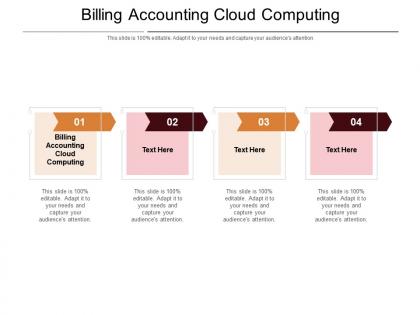
Billing accounting cloud computing ppt powerpoint presentation model inspiration cpb




Try Before you Buy Download Free Sample Product
 Impress Your
 Audience
 100%
100% Editable
 Save Hours
 of Time


Our Billing Accounting Cloud Computing Ppt Powerpoint Presentation Model Inspiration Cpb are explicit and effective. They combine clarity and concise expression.
People who downloaded this PowerPoint presentation also viewed the following :
Billing accounting cloud computing ppt powerpoint presentation model inspiration cpb with all 2 slides:
Give your audience a fulfilling experience. They will find our Billing Accounting Cloud Computing Ppt Powerpoint Presentation Model Inspiration Cpb elevating.
FAQs for Billing accounting cloud computing ppt powerpoint presentation
Honestly, the money savings alone make it worth it - no more paying for servers you're barely using. Cloud billing scales automatically when things get nuts (like month-end when everyone's scrambling). Your team can pull up billing data from wherever, and you don't have to worry about updates or backups anymore. Processing gets way faster with fewer screw-ups too. I'd definitely look at your current billing volume first though - that'll show you exactly where the cloud scaling would actually help vs. just being fancy tech for the sake of it.
Honestly, cloud computing is way more secure for billing than keeping everything in-house. These providers have crazy good encryption and actual security teams - not just one overworked IT person trying to handle everything. Your data gets backed up automatically across multiple data centers, so even if something goes wrong, you're covered. The monitoring is 24/7 too. Software updates happen instantly instead of you forgetting to install them for months (guilty as charged). I was skeptical at first, but the compliance certifications alone are better than anything most companies can manage themselves. Trust me, moving to a solid cloud platform will make your financial data more secure than it's ever been.
Honestly, data security's gonna be your biggest headache. Your finance people will lose their minds over compliance stuff - especially if you're dealing with regulations. Moving all that old billing data? Total pain, and you can't afford to lose anything. Staff training takes forever too. Oh, and good luck finding a cloud provider that actually gets accounting needs - half of them are just generic solutions with fancy marketing. I'd start small though, maybe run a test with some less critical data first. Get IT and finance talking early or you'll be stuck mediating their fights later.
Dude, cloud billing is perfect for small businesses. Way cheaper than old-school accounting software, plus no IT headaches. You can automate invoices and see payments come in real-time - honestly saves so much stress with cash flow. Everything syncs with your bank automatically too. The pricing scales with you, which is clutch when you're growing. I'd try QuickBooks Online or FreshBooks first, they both have free trials. My cousin switched last year and kicks herself for waiting so long. Access your stuff from anywhere too, which is pretty sweet.
Look, automation runs the whole show when it comes to cloud billing. It cranks out invoices automatically, processes those monthly payments, and chases down people who don't pay on time. Real-time revenue tracking happens without you lifting a finger. The best part? Your business can grow like crazy without hiring a bunch of people to manage billing stuff. Everything syncs up with your other systems too - customer info, price updates, payment status, all of it. Honestly, once you set up the rules, the system just does its thing while you focus on making more money. Way better than doing it manually.
Yeah so upfront cloud is way cheaper - no servers to buy or licenses that'll bankrupt you. You just pay monthly instead of those huge one-time costs. The annoying thing is costs can sneak up on you as you grow. Over like 7-10 years, on-premises might be cheaper if you're staying small, but honestly most companies save 20-40% with cloud once you count maintenance and all that IT headache stuff. I'd probably do a 3-year comparison with realistic numbers. That'll give you a better picture than guessing.
Real-time invoicing is clutch, especially if you do recurring billing or work with international clients (multi-currency support saves so much headache). Make sure it integrates well with whatever CRM and payment stuff you're already using. Cloud-based is basically non-negotiable now - your team needs to access this from anywhere. I'd also prioritize good reporting dashboards and tax compliance features since dealing with that manually sucks. Oh, and if you have different pricing tiers or usage-based billing, check that it handles those models. Definitely try the free trial first - some interfaces are surprisingly clunky.
Honestly, cloud invoicing will save you so much time. No more manual data entry - just set up templates once and they auto-generate. Your invoices get sent instantly via email, and you can track who's paid from your phone. Everything syncs between devices too, which is clutch when you're not in the office. I haven't touched a physical invoice in like two years. The automatic backups are a lifesaver - no more panicking about crashed hard drives. Software updates happen automatically too. Just upload your current templates first and you'll see the difference immediately.
Dude, compliance is such a pain but you gotta nail the basics. SOC 2 certification is non-negotiable, plus proper data encryption. Processing payments? Then you'll need PCI DSS too. GDPR kicks in if you have any EU customers – learned that one the hard way. Healthcare companies obviously need HIPAA compliance. The whole landscape shifts constantly, which is honestly exhausting to keep up with. Ask your potential vendors upfront for their certifications and make sure they can give you detailed audit trails. Data location controls matter too. Oh, and don't let them dodge questions about where your data actually lives.
So cloud billing platforms basically do all the heavy lifting for international stuff. Currency conversion happens automatically. Tax compliance too - like you don't have to research VAT rates for every single EU country anymore, which honestly used to be such a pain. They support whatever payment methods people actually use locally, plus integrate with international gateways. Invoices get generated following local regulations without you doing anything. I'd start by checking if your current setup covers the countries you want, then maybe test some transactions in your biggest markets first. Way easier than doing it manually.
Automate everything - seriously, manual billing will drive you insane once you hit any real scale. Get your provisioning and deprovisioning synced up so subscriptions match actual usage. Dunning management is clutch for handling payment failures without losing customers. Real-time dashboards are non-negotiable because tracking multiple services manually is pure hell. Your system needs to handle prorations, upgrades, downgrades - all that mid-cycle chaos. Oh, and reconcile your cloud bills against customer charges religiously. Trust me, those discrepancies always come back to haunt you later.
Dude, real-time reporting is honestly incredible for this stuff. Instead of waiting forever for month-end numbers, you'll see cash flow and spending right as it happens. Budget going crazy? You'll know immediately instead of finding out weeks later when it's too late. Your finance people can spot weird trends instantly and actually do something about it - like adjusting prices or whatever makes sense. The trick is setting up alerts for the stuff that really matters so you're not obsessively checking dashboards all day (been there). Way better than playing catch-up with stale data.
Dude, billing systems are getting crazy smart with AI right now. Your invoices process themselves, cash flow predictions actually work, and anomaly detection spots errors before they mess things up. The real-time stuff is what gets me though - why did we wait so long for instant insights instead of those awful month-end reports? Everything connects through APIs now, plus blockchain's creeping in for audit trails. Honestly, just poke around your current platform's AI features. You'll probably find tools you didn't even know existed that could save you hours of manual work.
Most companies run automated daily backups to different locations, plus they'll mirror your critical billing stuff in real-time. Cloud providers usually give you point-in-time recovery too - super handy if things break. But here's what really matters: actually test your recovery process! I've watched so many teams think their backups work fine until disaster hits and... whoops. Set up version control for billing configs. Keep a separate disaster recovery environment ready. Document everything and train your people on it, because honestly? When billing crashes, you're bleeding money every minute it's down.
Dude, AI is totally changing cloud billing right now. Your invoices get processed automatically, plus you get crazy accurate cost predictions months out. No more manual categorizing expenses or hunting down weird charges - the system catches billing errors before you even see them. I've been using some of these tools and honestly? The forecasting is almost too good, like it knows my spending better than I do. Most cloud providers already have basic automation you can just flip on in settings. Takes maybe 5 minutes to set up and you'll save hours every month. The error reduction alone makes it worth it.
No Reviews