

 0 Comment
 Customer Reviews

Intellectual Property disputes are common, especially in this digital age, when data is freely distributed as if it belongs to everyone.
While legal disputes can happen even between the most prominent companies, it is essential to understand inventions and other creations are protected under copyright and infringement laws laid down by the government.
Let us consider the example of Procter and Gamble (P&G) and Coca-Cola.
Both corporate giants were involved in a legal battle over a patent for many years. P&G claimed Coca-Cola was using the same recipe as their fruit drink, which the other completely denied. Although the dispute was amicably settled as both companies did not withdraw the "drink" in question, it is an eye-opener to all business owners that awareness of various Intellectual Property rights is extremely crucial to ensure creative ownership and to avoid expensive lawsuits.
This article highlights the Top 10 Intellectual Property Rights PPT Templates with Examples and Samples. These attractive pre-designed templates highlight the importance of trademarks, patents, industrial design, laws related to copyrights, and trade secrets.
Download these templates today to effectively communicate with your team and key stakeholders and understand essential reasons for learning more about IP rights that help protect ideas and innovations and gain a suitable edge over competitors!
Click here to learn more about legal due diligence report PPT templates!
Let us explore the Top 10 Intellectual Property PPTs:
Template 1 - Data Ownership with Different Intellectual Property Rights
As more businesses rely on data, it is imperative to have clarity on data ownership. It allows business owners to keep the data safe and follow licensing and security rules for day-to-day data handling. This template displays data ownership details. It highlights the trademarks, trade secrets, and patent information per the various intellectual property rights. Download this slide today to present a detailed outlook on data ownership rights according to government laws.

Template 2 - Intellectual Property Rights Chart with Key Features
Intellectual property rights refer primarily to the legal rights offered to creative people to protect their new ideas. These rights give greater control and exclusivity to their work and specify rules for using it. This chart defines the "Intellectual Property Rights Chart" and tabulates "Key Features" such as "What may be protected," " Protection Provided," "how to obtain protection," "duration," and "expenses." For example, "copyright" symbolizes using literary works, dramatic works, pictures, and buildings. It includes protection from re-usage or copying for a particular period. Download this template today to communicate the critical features of intellectual property rights offered to inventors and other creative individuals!

Template 3 - Digital Rights Management Techniques for Protecting Intellectual Property
Modern governments are forced to formulate digital laws to protect citizens' rights. Digital rights preserve an individual's freedom of speech and privacy. They ensure people have access to create and share digital content safely and without problems. This slide gives four different digital rights management techniques that allow digital creators to protect their content. It specifies "encryption" rights that ensure digital content from unauthorized access. Further, the "watermarking" and "digital signature" techniques are used to avoid illegal distribution and to verify the owner's authenticity. Download this exclusive slide today to clarify the restrictive access to digital content and ensure the protection of intellectual property to their owners.

Template 4 - Types of Intellectual Property Rights to Protect Business
Companies take all precautions to protect their inventions to avoid unnecessary lawsuits. Therefore, intellectual property management is strategically planned and executed. This slide is an exclusive presentation module for your R&D research team on the various intellectual property rights to protect businesses. For example, it outlines the protectable rights under "trademark," "design patents," "utility patents," "copyrights," and "non-disclosure agreements." Download this template to communicate specialized intellectual property rights that help to prepare a strong patent portfolio, giving a competitive edge and providing legal protection.

Template 5 - Intellectual Property Rights and Trademark Laws for Fashion Industry
Fashion designers bring ideas to life through their artistic mindset. Their creations are seen in designer wear and elite accessories. However, they are required to stay updated on the new trends in the fashion industry and must understand Intellectual property rights. This slide focuses on the rights and trademark laws followed in the fashion industry. It highlights protection rights on "copyright," "trademark," design patents, trade dress protection, laws on counterfeiting, licensing, and collaboration. Download this informative slide to present intellectual property protection rights to designers and business owners to ensure exclusive protection of unique design and creativity.

Template 6 - Budget Breakdown for Intellectual Property Rights
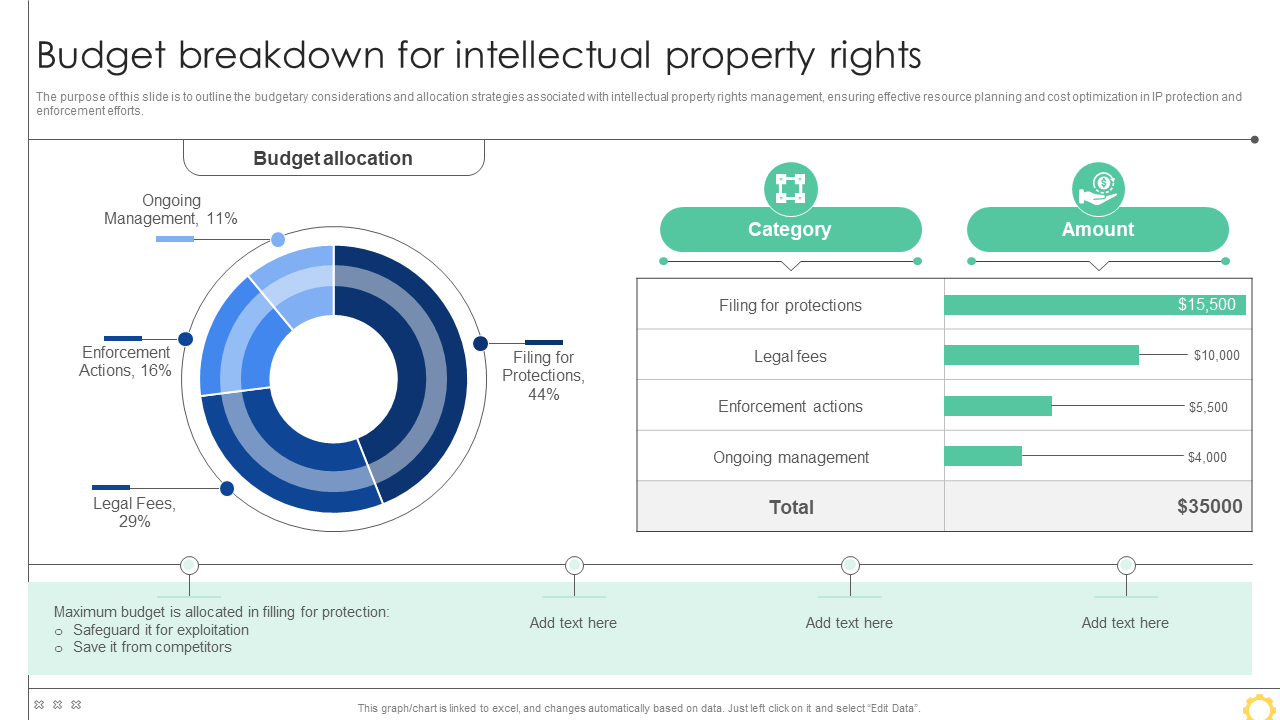
Intellectual property rights protection costs are not much different from product development and other marketing expenses. While there are fees for trademarks, patents, and industrial designs, there are no direct costs for copyrights and trade secrets. This template gives the budget breakdown for intellectual property rights. The process is allocated into various budget allotments such as "ongoing management," "enforcement actions," legal fees," filing for protections," etc. The slide displays the table with categories and the costs for each, such as "filing for protections," "legal fees," "enforcement actions," etc. Download this strategic template to present a well-defined budget breakdown and understand the pricing difference for trademarks, patents, or industrial designs.
Slide 7 - Methods of Commercializing Intellectual Property Rights
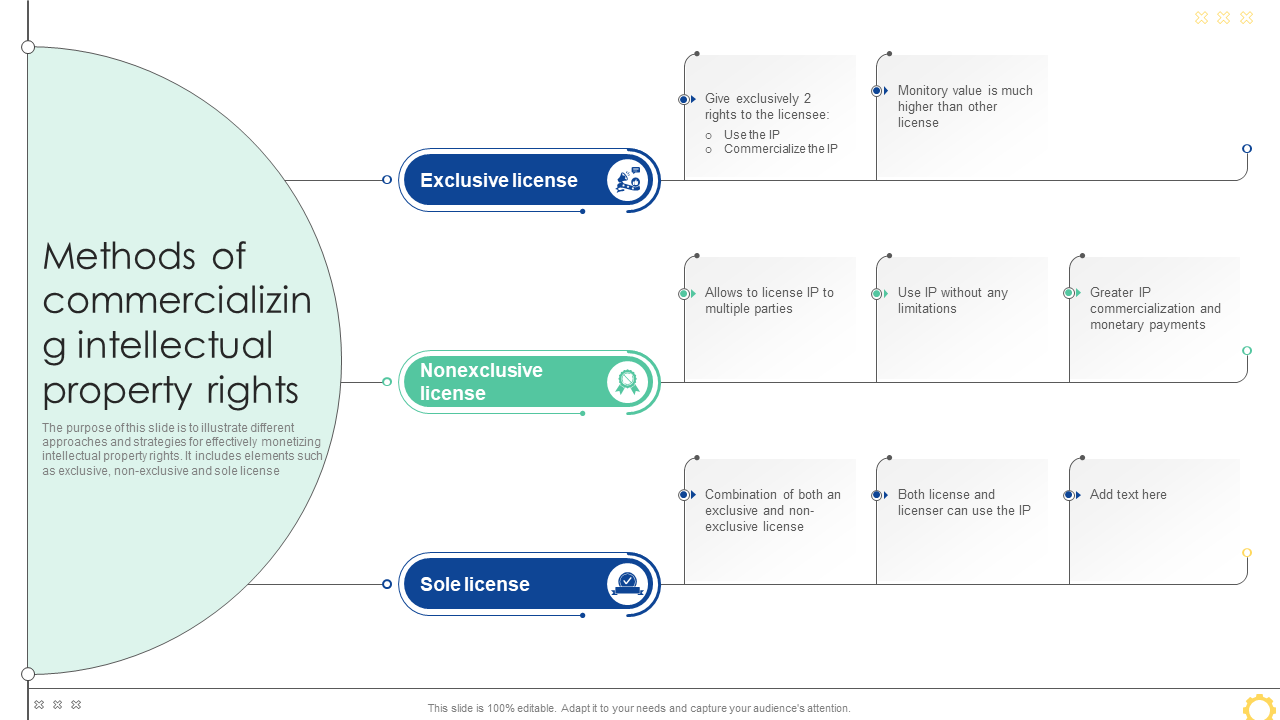
Licensing and commercializing intellectual property are fantastic methods for converting ideas into profit-making services or products. While licensing involves using your inventions in exchange for payment, commercialization refers to making intellectual property marketable. This slide displays the various methods of commercializing intellectual property rights by providing an "exclusive license," "nonexclusive license," or "sole license." Download this slide to present your stakeholders with the critical data on the exclusivity of making your intellectual property commercially viable!
Template 8 - Intellectual Property Right Training Program for Employees
Intellectual property is a valuable asset, so employees must have a basic knowledge of exclusive rights such as innovation rights, IP infringements, etc. This slide is a presentation tool to explain the training program schedule designed for employees to understand the different types of intellectual property rights. It is specifically formulated to include training on "Patents," "Design law," "Trademark law," etc. Download this holistic training module slide that considers comprehensive intellectual property protection awareness, ensures legal protection, and prevents misuse of valuable assets!

Template 9 - Protecting Intellectual Property Rights to Safeguard Startup Idea
A startup's value depends on its unique product ideas, branding, and specific technology. Therefore, startup business owners must ensure the protection of ideas and innovations. This slide is a step-by-step presentation on a startup organization's intellectual property rights. It offers critical points to follow on "trademarks," "copyrights," "patents," "trade secrets," etc. It outlines common mistakes and gives suggestions on how to avoid them. Download this slide today to communicate the legal formalities to stakeholders and team members and ensure their ideas and innovations are well-safeguarded at all costs!

Template 10 - Role of Intellectual Property in Data Rights
Ownership is critical in data management as users need clarity on who owns a particular data
resource and how to use it. It is also essential to understand if users can add data and whether they meet the legal and ethical regulations. This template highlights the intellectual property rights in data management in four distinctive steps. It overviews regulations in "Data Protection," suggests "Monetization Strategies," and provides methods to have a "Competitive Advantage" and the "Legal Resource" that needs to be taken in case of lawsuits. Download this slide today to communicate the advantages of data rights management and appropriate ways to manage and utilize the data in critical projects!

Takeaway
Understanding Intellectual Property Rights is a vital skill companies must adopt in today's data-driven world. Moreover, with the ever-increasing trend of building innovative products and services, these rights safeguard human creations against illegal and unauthorized misuse. Each "intellectual property right," such as copyright, trademark, geographic indication, etc., provides creative ownership protection to literary pieces, innovative technologies, brand identities, and products with specific origins. The Top Ten Intellectual Property Rights PPTs given in this blog are exceptional tools that highlight the exclusive rights their owners enjoy. These pre-designed templates help simplify complex concepts for business owners and empower them to understand invention protection, industrial design, and other legal protection rights to safeguard themselves against IP infringement lawsuits. Download these templates today to communicate versatile ways to retain control over your company's inventions, maintain a competitive edge, and ensure long-term success.
If you are looking for top-notch slide decks to present innovative ways to protect, optimize, and monetize intellectual assets, this blog is for you. Read on to learn about the strategic ways to implement intellectual property management in your organization effectively!