

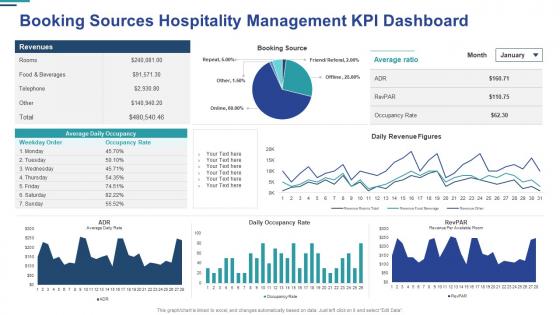
Booking sources hospitality management kpi dashboard




Try Before you Buy Download Free Sample Product
 Impress Your
Audience
 100%
Editable
 Save Hours
of Time


Our Booking Sources Hospitality Management KPI Dashboard are topically designed to provide an attractive backdrop to any subject. Use them to look like a presentation pro.
People who downloaded this PowerPoint presentation also viewed the following :
Booking sources hospitality management kpi dashboard with all 7 slides:
Use our Booking Sources Hospitality Management KPI Dashboard to effectively help you save your valuable time. They are readymade to fit into any presentation structure.






FAQs for Booking sources hospitality
Google Travel, Booking.com, and Expedia still run the show in most places. Airbnb's got alternative stays locked down. For flights, Kayak and Skyscanner work well - though honestly Kayak's layout is kinda annoying lol. More people are booking straight through hotel and airline apps now for the loyalty perks. Oh, and mobile's everything these days. I'd say track how you're doing across different platforms since people book differently depending on age and trip type. Don't rely on just one booking site though.
Look, traditional agencies are definitely slower and cost more, but they've got that personal touch you just can't get online. Online booking is crazy convenient though - compare prices instantly, book whenever you want (hello 2am travel planning sessions), and it's usually cheaper. Problem is you're basically screwed if anything goes sideways. For simple trips? Go digital, save the money. But if you're planning something complicated or you're the type who panics when flights get delayed, having an actual person to call is honestly worth the extra cost. I learned that the hard way once.
Honestly, mobile apps have totally taken over travel booking - it's not even close anymore. People are booking last-minute trips while standing in line at Starbucks (I've definitely done this lol). The apps got really smart too with AI suggestions and instant confirmations. Real-time gate changes, mobile boarding passes, location stuff - it's all there. Desktop feels clunky now. If you're working in travel, your mobile game better be strong because that's where everyone's at.
Okay so three things that'll actually move the needle: get better photos (seriously, those blurry ones from your phone aren't doing you any favors), check what everyone else is charging so you're not way off, and reply to messages fast. Like, within a couple hours if possible - the platforms literally push you down if you're slow. Oh and update your calendar constantly, even though it's annoying. Biggest thing though? Chase those reviews after people check out. I know it feels pushy but honestly more good reviews = you show up higher in searches. That's where the real money is.
Honestly, travelers care about three big things: good prices, reviews they can actually trust, and not wanting to pull their hair out during booking. Hidden fees are the worst - people hate that stuff. Make sure your mobile site doesn't suck because everyone's browsing hotels late at night on their phone. Real user reviews matter way more than fancy marketing copy. Since COVID hit, flexible cancellation became huge too. Oh, and decent customer support when flights get cancelled or whatever. Your search filters need to actually work, and checkout should be dead simple. That's literally where most sites lose people.
Dude, social media has totally flipped the script on how people find and book stuff. Instead of trusting ads, everyone's scrolling through Instagram pics and checking what influencers are posting. I swear I've watched friends literally screenshot random stories and book trips from that alone. One viral TikTok can blow up your bookings overnight - it's crazy. People don't even check your actual website first anymore. They want to see real photos from other customers before spending money. If you're not getting people to post about their experience and staying active online, you're basically leaving money on the table.
Oh definitely stick to the legit booking sites - you know, the usual suspects. Before you put in your card info, just double-check there's that little HTTPS thing in the URL. Those random third-party sites with insane deals? Total scam territory. Credit cards are way better than debit for this stuff since they've got your back if things go sideways. Don't book on public wifi either, that's just asking for trouble. Screenshot everything right after you book - trust me on this one. Honestly though, booking straight through the hotel or airline makes life so much easier when you need to change things later.
Honestly, booking sites are pretty clutch for comparing prices quickly. You can see tons of options without bouncing between different websites all day. The filters are actually useful too - way easier to find what you want. But here's the thing, sometimes there's like 50 results and it gets ridiculous. Plus you won't get loyalty points if that matters to you, and good luck dealing with customer service through a third party if your trip gets messed up. I usually browse on the aggregator sites first, then check the hotel or airline directly to see if they're offering any deals for booking with them instead.
Don't just stick to your website - spread out across booking platforms. Google My Business is a must, obviously. Yelp too. If you're running a restaurant, OpenTable's pretty solid. Salons should definitely check out Booksy. Each one pulls different crowds, so you're not putting all your eggs in one basket. Instagram and Facebook booking features are clutch for younger people - they basically live there anyway. Just keep your prices and availability the same everywhere or you'll confuse people. Start with maybe 2-3 big ones first. Get those working smoothly, then branch out.
So the big thing right now is AI personalization - like, the software actually predicts what you want to book before you do. Voice booking is getting huge too, though I'm still weird about telling Alexa my credit card info. Mobile design isn't optional anymore, obviously. Real-time inventory across different platforms used to be a nightmare but the APIs are finally catching up. Oh, and machine learning is handling way more of the simple reservation stuff now. Companies jumping on this tech early are gonna crush it with customer experience. You should probably figure out what works with your current setup sooner rather than later.
Reviews are basically the new word-of-mouth, you know? People can't actually see the place before booking, so they're glued to those star ratings and recent reviews. I do the same thing - probably spend too much time scrolling through them looking for red flags about cleanliness or whatever. But here's what's interesting: negative reviews can actually help you if you respond well to them. Shows you care. Fresh reviews matter way more than old ones too, so don't stress about that one angry guest from 2019.
Dude, transparent pricing is huge for customer loyalty. People absolutely hate getting blindsided by random fees at checkout - like those sneaky resort fees that pop up out of nowhere. It's honestly such a trust killer. When companies show you the real total upfront (taxes, fees, everything), customers actually come back. I've noticed the booking sites that do this well get way better reviews too. Short version: if you're comparing platforms, go with whoever shows you what you'll actually pay from the start. Nobody has time for pricing games anymore.
Get rate parity software that syncs your prices across all booking sites automatically. Saves you from manually updating everything - trust me, that gets messy fast. Most hotel management systems already have this feature built in now. Set up your rate rules so they flow to all channels consistently. Your revenue team needs to audit regularly though, catch problems before guests do. I'd start by mapping where your pricing gaps happen most. Oh and make sure the restrictions cascade properly too - that's where a lot of places mess up.
Niche booking sources are tricky - great perks but real headaches too. You'll find inventory that big sites don't have, plus better rates since fewer people are competing. The suppliers actually know their niche inside out, which is nice. But their tech can be sketchy since they're smaller operations. Each one needs its own integration setup, which gets annoying fast. Lower booking volumes mean you can't negotiate as hard either. Honestly? I'd probably start with just 2-3 solid ones that you trust rather than going crazy trying to connect everything.
So basically AI learns from all your past searches and bookings, then shows you the good stuff first instead of random garbage. It's gotten weirdly accurate at guessing what you want. Prices adjust automatically based on demand too. Hotels and flights that actually match your vibe and budget pop up without you having to dig through endless pages - which honestly saves so much time. The whole thing just feels way more personalized now. Like, it does the boring work of filtering thousands of options so you can book something you'll actually enjoy instead of scrolling forever.
-
Excellent Designs.
-
Great designs, Easily Editable.