

Build And Maintain Relationship With Stakeholder Management Complete Deck





Try Before you Buy Download Free Sample Product
 Impress Your
 Audience
 100%
100% Editable
 Save Hours
 of Time


The process of forging mutually beneficial partnerships with third-party organizations and individuals that have a stake in the common interest is stakeholder relationships. These relationships develop networks that create reliable, unified voices relevant to your organization about concerns, goods, and services. Grab our competently designed Build and Maintain Relationship with Stakeholder Management. This presentation Recognizes the direct impact of stakeholder management to project status. The aim of stakeholder relations management is to influence stakeholders perceptions, decisions, and actions for mutual benefit. This presentation helps to understand the practical tools and techniques for managing and engaging the stakeholder. This covers various slides such as company introduction and segment details, details related to internal and external shareholders of the company, etc. It also includes the various challenges faced by the company, gap analysis, and solutions. In the end, this presentation also covers the components of stakeholder engagement and management, evaluation of stakeholder success indicators, and weekly reports for the stakeholder management plan. Download this template now.
People who downloaded this PowerPoint presentation also viewed the following :
Content of this Powerpoint Presentation
Slide 1: This slide displays the title Build and Maintain Relationship with Stakeholder Management.
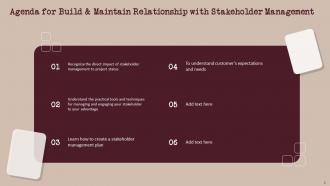
Slide 2: This slide displays the Agenda for Build & Maintain Relationship with Stakeholder Management.
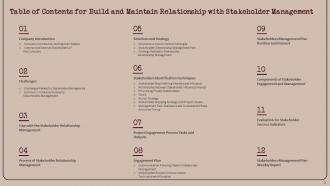
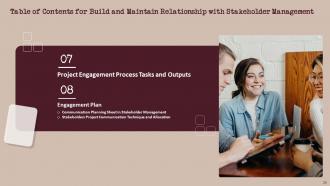
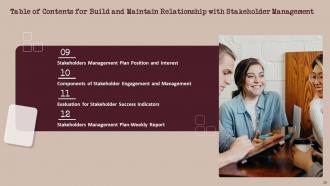
Slide 3: This slide exhibit table of content.
Slide 4: This slide exhibit table of content- Company Introduction.
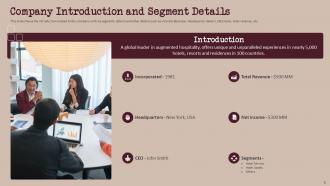
Slide 5: This slide shows the introduction related to the company with its segments details and other details.
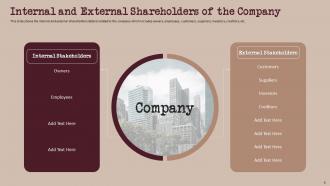
Slide 6: This slide shows the internal and external shareholders details related to the company.
Slide 7: This slide exhibit table of content- Challenges & Gap with the Stakeholder Relationship Management.
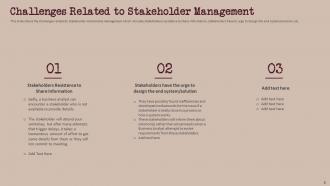
Slide 8: This slide shows the challenges related to stakeholder relationship management.
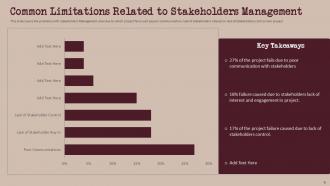
Slide 9: This slide covers the problems with stakeholders Management plan due to which project fails.
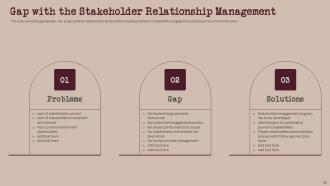
Slide 10: This slide covers the gap between the project and the stakeholders Relationship.
Slide 11: This slide exhibit table of content- Process of Stakeholder Relationship Management & Solutions and strategy.
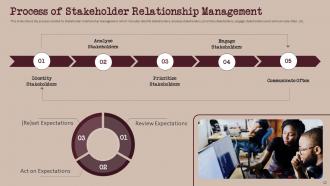
Slide 12: This slide shows the process related to stakeholder relationship management.
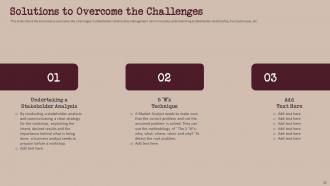
Slide 13: This slide shows the solutions to overcome the challenges in stakeholder relationship management.
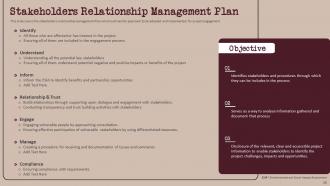
Slide 14: This slide covers the stakeholders relationship management Plan which outlines the approach to be adopted and implemented for project engagement.
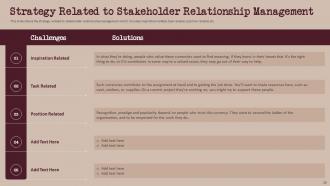
Slide 15: This slide shows the strategy related to stakeholder relationship management which includes inspiration related, task related, position related, etc.
Slide 16: This slide exhibit table of content- Stakeholders Identification techniques.
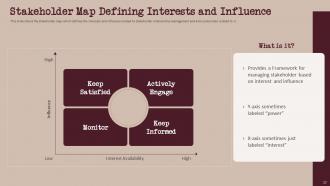
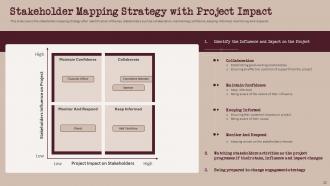
Slide 17: This slide shows the stakeholder map which defines the interests and influence related to stakeholder relationship management and also some notes related to it.
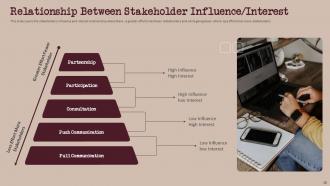
Slide 18: This slide covers the stakeholders influence and interest relationship.
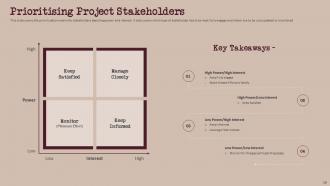
Slide 19: This slide covers the prioritization matrix for stakeholders depicting power and interest.
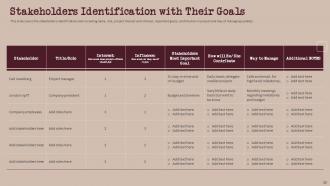
Slide 20: This slide covers the stakeholders identification plan including name, role, project interest and interest, important goals etc.
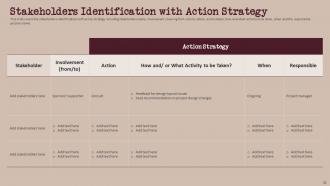
Slide 21: This slide covers the stakeholders identification with action strategy including stakeholders name, involvement covering from who to whom, action taken etc.
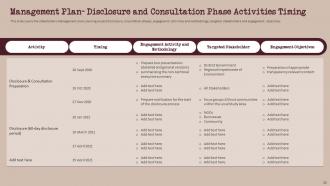
Slide 23: This slide covers the stakeholders Management plan covering project disclosure, consultation phases, engagement activities and methodology etc.
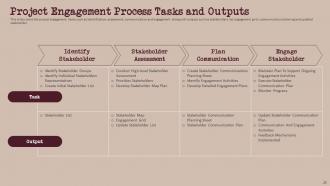
Slide 25: This slide covers the Project Engagement Process Tasks and Outputs.
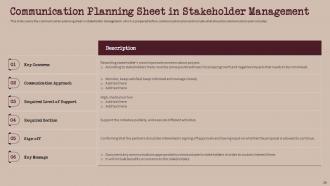
Slide 26: This slide covers the communication planning sheet in stakeholder management which is prepared before communication plan.
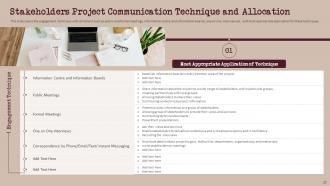
Slide 27: This slide covers the engagement technique with allotment.
Slide 28: This slide depicts title for 4 topics that are to be covered next in the template.
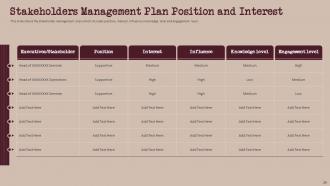
Slide 29: This slide shows the stakeholder management plan which includes position, interest, influence, knowledge level and engagement level.
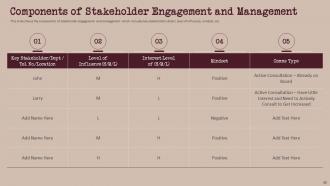
Slide 30: This slide shows the components of stakeholder engagement and management which includes key stakeholders detail, level of influence, mindset, etc.
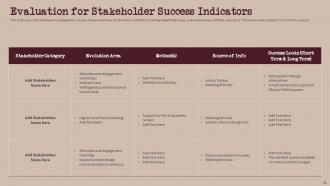
Slide 31: This slide covers the stakeholders engagement success measurement key performance indicators.
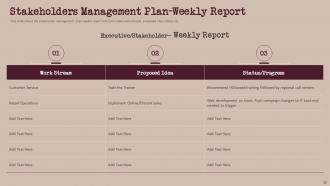
Slide 32: This slide shows the stakeholder management plan weekly report which includes work stream, proposed ides, status, etc.
Slide 33: This slide presents title for additional slides.
Slide 34: This slide presents your company's vision, mission and goals.
Slide 35: This slide depicts 30-60-90 days plan for projects.
Slide 36: This slide shows details of team members like name, designation, etc.
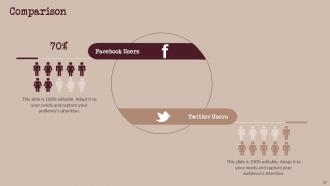
Slide 37: This slide shows Comparison for facebook user & twitter user.
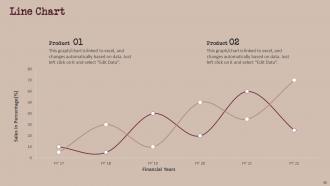
Slide 38: This slide exhibits yearly profits stacked line charts for different products. The charts are linked to Excel.
Slide 39: This slide shows puzzle for displaying elements of company.
Slide 40: This is thank you slide & contains contact details of company like office address, phone no., etc.
Build And Maintain Relationship With Stakeholder Management Complete Deck with all 45 slides:
Use our Build And Maintain Relationship With Stakeholder Management Complete Deck to effectively help you save your valuable time. They are readymade to fit into any presentation structure.






FAQs for Build And Maintain Relationship With Stakeholder
Honestly, it's all about being real while staying smart about it. Map out who actually matters first - stakeholders who'll either help or hurt your project. Figure out what they really want, not what you assume they want. Loop them in early because waiting till the end is project suicide (I've watched so many crash and burn this way). Listen way more than you talk. When people give feedback, show them how it changed things - nobody wants to feel ignored. Oh, and communicate openly throughout the whole process. Timing is everything here. Short version: identify early, understand deeply, involve consistently.
Okay so first thing - grab a whiteboard and brainstorm everyone who touches your work. Employees, customers, suppliers, regulators, community groups. Sometimes even competitors matter (weird but true). Once you've got your list, rank them on two things: how much power they have over your success, and how much your decisions mess with their lives. High power + high impact = your VIPs who need constant attention. The medium ones just need updates here and there. Low priority folks? Just keep them in the loop through newsletters or whatever. Make a little matrix to plot this out - honestly makes the whole thing so much easier to see.
So yeah, communication is basically everything when it comes to stakeholder stuff. You've gotta figure out what each group actually wants to hear - like investors care about totally different things than your local community does. Map out who needs info and when, then pick the best way to reach them. Actually listen to what people tell you instead of just talking at them. Two-way conversations work way better than just sending announcements into the void. Be consistent and honest with everyone. Oh, and don't use the same messaging for everyone - that never works out well.
Set up feedback loops where stakeholder input actually changes your project decisions. Group the feedback by themes - timeline issues, resources, scope stuff like that. Then figure out what's doable vs. what's just wishful thinking. Honestly, I've watched so many projects where feedback just dies in some Excel file nobody checks! Connect each piece of input to specific phases so you can act on it. Write down what you implemented and what you didn't, then circle back to show stakeholders how you used their ideas. They'll trust you more next time.
Honestly, start with stakeholder mapping - figure out who actually matters most. Workshops are clutch for getting everyone on the same page about goals. I'm obsessed with Miro for virtual brainstorming sessions (way better than those painful Zoom whiteboards). Regular check-ins and surveys keep people talking. Co-creation sessions are solid too - let stakeholders help design stuff instead of just complaining about it later. Oh, and focus groups if you've got time. I always do a simple matrix first to prioritize who needs attention, then pick like 2-3 methods that fit how your group actually communicates.
Oh man, this stuff is so crucial but people mess it up constantly. Some cultures are brutally direct while others dance around problems - if you don't get this, you're screwed. Trust-building, meeting styles, decision speed... it all changes depending on who you're dealing with. Hierarchy expectations? Completely different everywhere. I learned this the hard way on a project in Japan vs Germany - night and day approaches needed. Do your research on each group's cultural norms first. Sounds obvious but you'd be shocked how many people wing it and wonder why things go sideways.
Honestly, the worst part is when stakeholders just vanish mid-project - like, where did you go?? Communication breakdowns are brutal too, plus everyone's got conflicting priorities. Here's what works: figure out what everyone actually wants before diving in. Weekly check-ins beat those crazy long monthly updates nobody reads. Make sure you're talking to people who can actually make decisions, not just meeting attendees. Oh, and start building relationships way before you need favors. Reach out early, keep it consistent. Being proactive about the relationship stuff saves you so much headache later.
Honestly, tech makes stakeholder stuff way easier. You can set up automated surveys and real-time feedback tools instead of chasing people down. Slack or Teams work great for keeping conversations going. For visual stuff, try Miro or Figma - stakeholders love being able to actually see and mess around with project ideas. Oh, and social media monitoring is clutch because people will literally complain anywhere these days lol. Digital town halls let you reach way more people too. Main thing though? Pick tools your stakeholders already use. Don't make them download some random app they'll hate.
So basically you want to track both the numbers and the "feel" of things. Participation rates are huge - who's showing up to meetings, responding to surveys, reaching out on their own. I'm obsessed with tracking how fast you solve their problems because that's when people really notice you care. The softer stuff matters just as much though. Are conversations getting better? Do people actually feel heard or are they just going through the motions? Oh and definitely watch if they're changing behavior based on what you're telling them - that's the real test. Start with maybe 3 metrics that actually match your goals instead of drowning in data.
Honestly, just talk to them regularly - like, all the time, not only when shit hits the fan or when everything's perfect. Most companies screw this up by going radio silent during rough patches. Set up those regular check-ins and be real about delays or problems. Show them how you make decisions too, the whole "why we chose this" thing. Multiple ways for people to give feedback helps, but you gotta actually respond or they'll think you're ignoring them. Oh and publish those progress reports consistently - transparency builds way more trust than trying to control the narrative.
Honestly, the big things are just being transparent and actually meaning it when you ask for input. Don't reach out to the same five people who always respond - try to get different voices involved. Be upfront about how you'll use their feedback from the start. Here's what drives me crazy though: when organizations pretend to care about stakeholder input but have already made their decision. Total waste of everyone's time. If you're gonna ask, you better genuinely listen and consider what they're telling you. Always circle back afterward to explain what you decided and why.
Dude, stakeholder engagement is honestly everything for your project. Get them involved early and you'll avoid so many headaches later - they'll actually tell you what matters instead of you guessing. When stakeholders feel heard, they become your biggest cheerleaders. They'll fight for your budget and resources when leadership starts asking questions (which they always do). You'll also get way better insights into what end users actually need. Nothing worse than building something perfect that nobody wants. Map out who your key people are and just... talk to them regularly throughout the whole thing. Seriously makes all the difference.
Start with one-on-ones to figure out what everyone actually wants - half the time it's just people talking past each other. Then get the conflicting parties in a room together. Look for shared goals even when they seem to want opposite things (there's usually something). Focus on why they need certain outcomes, not just what they're demanding. That interest-based approach works way better than position battles. Oh, and definitely write down whatever you agree on - people's memories get selective fast. Stay neutral throughout the whole thing. Don't pick favorites, just help them find something that doesn't make anyone miserable.
When crisis hits, talk to people way more often and be brutally honest about what you actually know vs. what you're still figuring out. Skip the formal BS - send quick emails, record a fast video, hell even text people if that's what works. Your key stakeholders should hear from you first, then worry about everyone else. Don't make stressed people dig around for updates. Be upfront about the uncertainty instead of pretending everything's fine. Ask them what they actually need right now - you might be surprised. Check in regularly even when there's nothing huge to report.
Look, stakeholder engagement is like building up relationship capital - the more you invest, the better it pays off when you need it. Talk to your employees, customers, community folks regularly. Not just when there's drama. Trust me, there will be drama at some point! Companies that actually listen to people bounce back way faster from scandals or PR disasters. Plus you'll attract better talent and get cut some slack when you inevitably screw something up. People start seeing you as the transparent company, not just another money-grabber. Map out who matters most and start checking in with them now.
-
Very well designed and informative templates.
-
SlideTeam is a great place for PPT templates. They have many templates on a single topic. It has made my life a lot easier.