


Building Excellence In Logistics Operations Powerpoint Presentation Slides




Try Before you Buy Download Free Sample Product
 Impress Your
 Audience
 100%
100% Editable
 Save Hours
 of Time


Logistics management aims to meet customer demand by planning supply chain processes that help companies reduce expenses and enhance customer service. The purpose of this deck is to optimize logistics operations. Here is a professionally designed Building Excellence in Logistics Operations template that covers the challenges faced by logistics managers and costs involved in supply chain functions. Also, this deck caters to the organizational structure of the logistics department and critical activities to improve performance and efficiency. Further, this PowerPoint presentation shows vital strategies such as creating vendor compliance policy, handling reverse logistics, processing customer orders, and enhancing customer satisfaction. This slide portrays logistics outbound process, operational activities for inbound logistics, key considerations to improve warehousing operations, flowchart for managing inventory and picking, packing, and shipping process flow. Moreover, this presentation showcases the initiatives to reduce cost, selection of transport management systems, and metrics to track TMS performance. Also, it includes the cost involved in improving logistics services and the impact of logistics management on company performance. At last, this PowerPoint captures the dashboard that will help track supply chain activities and inventory management status. Get access now.
People who downloaded this PowerPoint presentation also viewed the following :
Content of this Powerpoint Presentation
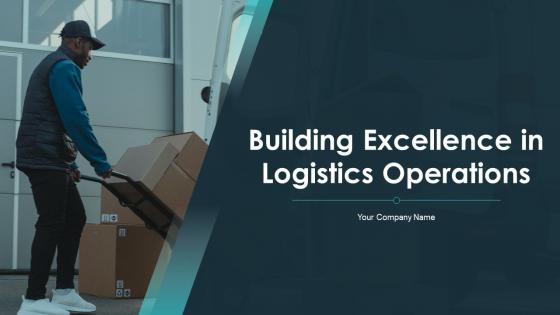
Slide 1: This slide introduces Building Excellence in Logistics Operations. State Your Company Name and begin.
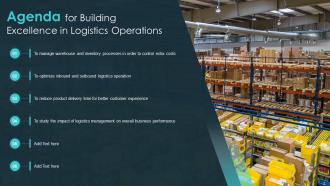
Slide 2: This slide states Agenda of the presentation.
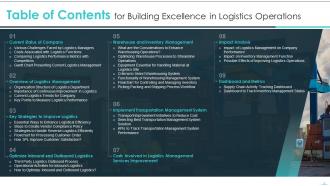
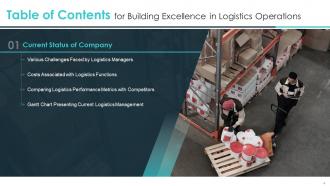
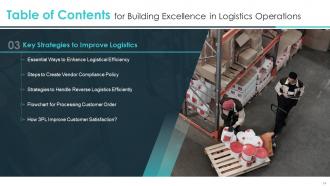
Slide 3: This slide presents Table of Content for the presentation.
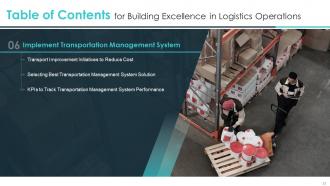
Slide 4: This slide represents title for topics that are to be covered next in the template.
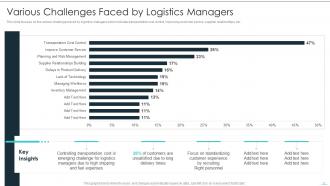
Slide 5: This slide showcases Various Challenges Faced by Logistics Managers.
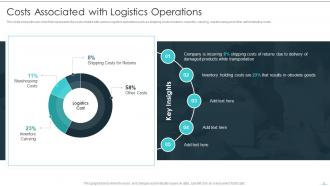
Slide 6: This slide shows Costs Associated with Logistics Operations.
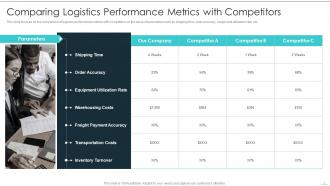
Slide 7: This slide presents Comparing Logistics Performance Metrics with Competitors.
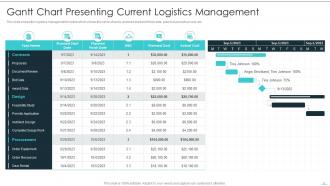
Slide 8: This slide displays Gantt Chart Presenting Current Logistics Management.
Slide 9: This slide represents title for topics that are to be covered next in the template.
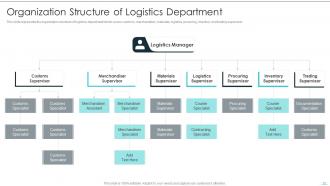
Slide 10: This slide showcases Organization Structure of Logistics Department.
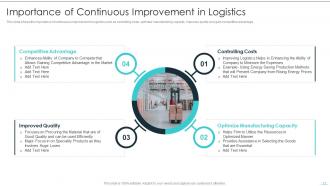
Slide 11: This slide shows the importance of continuous improvement in logistics.
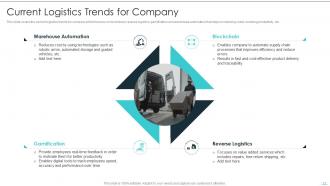
Slide 12: This slide presents current logistics trends for company which focuses on blockchain, reverse logistics, etc.
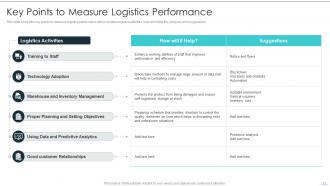
Slide 13: This slide displays the key points to measure logistics performance.
Slide 14: This slide represents title for topics that are to be covered next in the template.
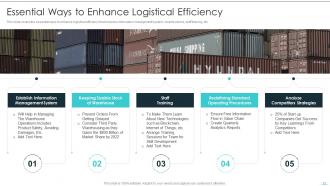
Slide 15: This slide showcases Essential Ways to Enhance Logistical Efficiency.
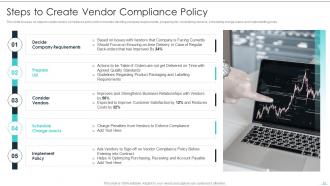
Slide 16: This slide shows steps to create vendor compliance policy which includes deciding company requirements, preparing list, etc.
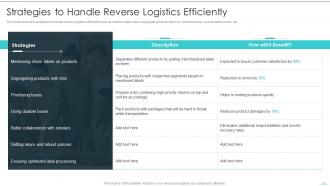
Slide 17: This slide presents the strategies to handle reverse logistics efficiently such as mention return label, segregate products with bins, etc.
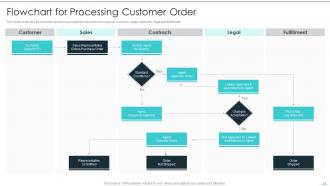
Slide 18: This slide displays flowchart for processing customer order which focuses on customer, sales, contracts, etc.
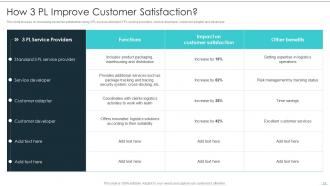
Slide 19: This slide represents increasing customer satisfaction using 3 PL such as standard 3 PL service providers, service developer, etc.
Slide 20: This slide showcases title for topics that are to be covered next in the template.
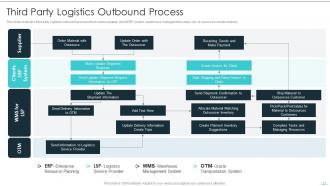
Slide 21: This slide shows Third Party Logistics Outbound Process.
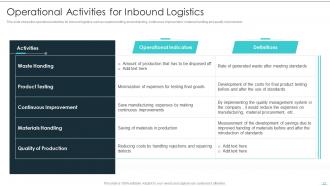
Slide 22: This slide presents the operational activities for inbound logistics such as waste handling, product testing, etc.
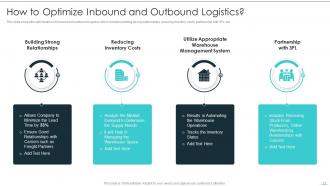
Slide 23: This slide displays the optimization of inbound and outbound logistics.
Slide 24: This slide represents title for topics that are to be covered next in the template.
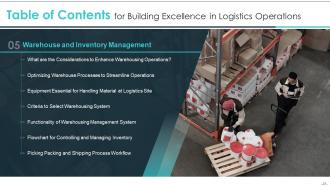
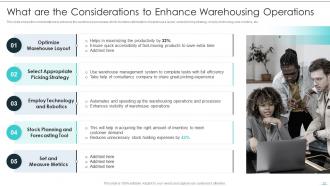
Slide 25: This slide showcases What are the Considerations to Enhance Warehousing Operations.
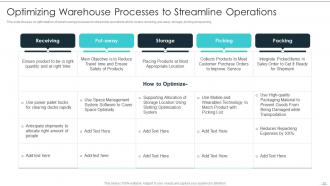
Slide 26: This slide shows Optimizing Warehouse Processes to Streamline Operations.
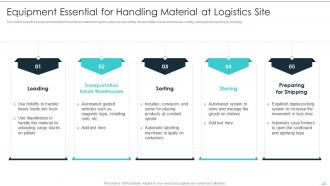
Slide 27: This slide presents the equipment essential for handling material at logistics site.
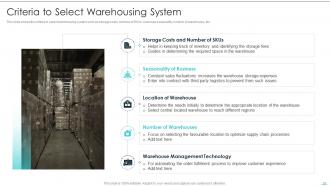
Slide 28: This slide displays the criteria to select warehousing system such as storage costs, number of SKUs, etc.
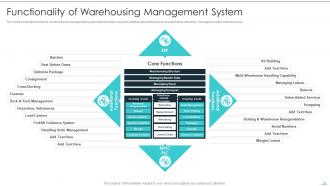
Slide 29: This slide represents the functions of warehouse management system that includes core and additional functions.
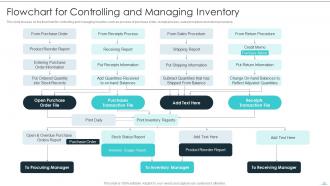
Slide 30: This slide showcases flowchart for controlling and managing inventory.
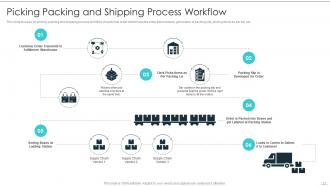
Slide 31: This slide shows Picking Packing and Shipping Process Workflow.
Slide 32: This slide presents title for topics that are to be covered next in the template.
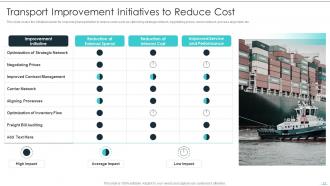
Slide 33: This slide displays initiatives taken for improving transportation to reduce costs.
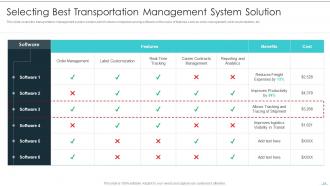
Slide 34: This slide represents Selecting Best Transportation Management System Solution.
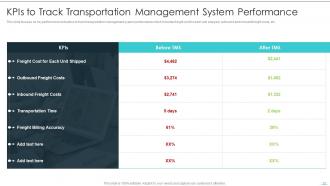
Slide 35: This slide showcases KPIs to Track Transportation Management System Performance.
Slide 36: This slide shows title for topics that are to be covered next in the template.
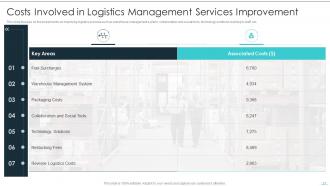
Slide 37: This slide presents Costs Involved in Logistics Management Services Improvement.
Slide 38: This slide displays title for topics that are to be covered next in the template.
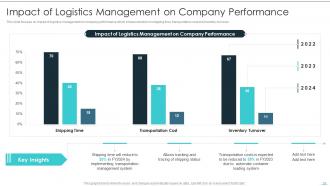
Slide 39: This slide represents Impact of Logistics Management on Company Performance.
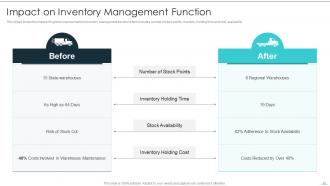
Slide 40: This slides showcases the impact of logistics improvement on inventory management function.
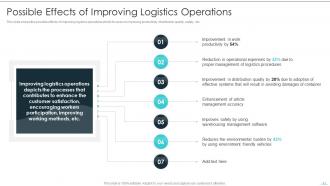
Slide 41: This slide shows the possible effects of improving logistics operations which focuses on improving productivity.
Slide 42: This slide presents title for topics that are to be covered next in the template.
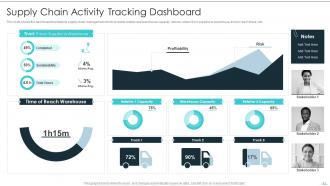
Slide 43: This slide displays the dashboard that depicts supply chain management.
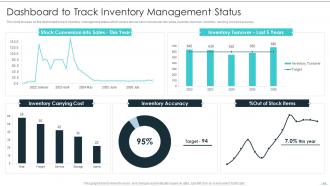
Slide 44: This slide represents Dashboard to Track Inventory Management Status.
Slide 45: This slide showcases Icons for Building Excellence in Logistics Operations.
Slide 46: This slide is titled as Additional Slides for moving forward.
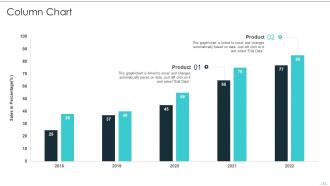
Slide 47: This slide displays Column chart with two products comparison.
Slide 48: This is a Comparison slide to state comparison between commodities, entities etc.
Slide 49: This slide presents Roadmap with additional textboxes.
Slide 50: This is Our Team slide with names and designation.
Slide 51: This slide shows Post It Notes. Post your important notes here.
Slide 52: This slide depicts Venn diagram with text boxes.
Slide 53: This is a Timeline slide. Show data related to time intervals here.
Slide 54: This is Our Goal slide. State your firm's goals here.
Slide 55: This is an Idea Generation slide to state a new idea or highlight information, specifications etc.
Slide 56: This slide contains Puzzle with related icons and text.
Slide 57: This is a Thank You slide with address, contact numbers and email address.
Building Excellence In Logistics Operations Powerpoint Presentation Slides with all 62 slides:
Use our Building Excellence In Logistics Operations Powerpoint Presentation Slides to effectively help you save your valuable time. They are readymade to fit into any presentation structure.









FAQs for Building Excellence In Logistics Operations
Key components of a successful logistics excellence strategy include supply chain visibility, demand forecasting, warehouse optimization, transportation management, and performance analytics. These elements work together by streamlining operations, reducing costs, and enhancing customer satisfaction, with many organizations finding that strategic integration across these areas delivers faster delivery times and significant competitive advantages.
Technological advancements enhance logistics efficiency and accuracy by automating warehouse operations, optimizing route planning, and providing real-time tracking capabilities. Through AI-powered inventory management and IoT sensors, companies streamline supply chain visibility, reduce delivery times, and minimize operational costs, with many retailers and manufacturers finding that these technologies ultimately deliver faster customer fulfillment and competitive advantage.
Supply chain transparency contributes to logistics excellence by enabling real-time visibility, proactive risk management, enhanced supplier relationships, and data-driven decision making. Through advanced tracking technologies and collaborative platforms, organizations streamline operations, reduce delays, and optimize inventory levels, with many logistics companies finding that transparent processes ultimately deliver improved customer satisfaction and competitive advantage.
Data analytics enables logistics optimization by providing real-time visibility into supply chain performance, predicting demand patterns, and identifying operational bottlenecks before they impact delivery schedules. Through advanced analytics platforms, companies streamline route planning, enhance inventory management, and minimize transportation costs, with many logistics providers finding that data-driven insights ultimately deliver faster services and improved customer satisfaction.
Organizations measure logistics performance effectively through key performance indicators including delivery time accuracy, cost per shipment, inventory turnover rates, order fulfillment accuracy, and customer satisfaction scores. These metrics enable companies to identify bottlenecks, optimize resource allocation, and enhance operational efficiency, with many logistics providers finding that comprehensive performance measurement ultimately delivers competitive advantage and improved customer experiences.
**INPUT**: What best practices can be adopted for warehouse management to achieve logistics excellence? **OUTPUT**: Warehouse management best practices include automated inventory tracking, strategic layout optimization, real-time data analytics, cross-docking capabilities, and integrated workforce management systems. These approaches streamline operations by reducing picking times, minimizing storage costs, and enhancing order accuracy, with many logistics companies finding that strategic warehouse optimization ultimately delivers faster fulfillment and significant competitive advantage. [Word count: 58 words]
Customer experience drives logistics strategies by demanding faster deliveries, real-time tracking, flexible return policies, and seamless communication across touchpoints. Organizations increasingly prioritize last-mile optimization, omnichannel integration, and predictive analytics to meet rising expectations, with retailers and e-commerce companies finding that superior logistics directly correlates with customer retention and competitive advantage.
Key challenges in achieving logistics excellence include supply chain visibility limitations, regulatory compliance complexities, transportation cost volatility, inventory optimization difficulties, and cross-border coordination issues. These obstacles impact organizations through delayed deliveries, increased operational costs, and reduced customer satisfaction, with many global manufacturers and retailers finding that strategic technology investments and partnerships ultimately streamline operations while delivering competitive advantage.
Sustainability initiatives integrate into logistics operations through green transportation methods, eco-friendly packaging solutions, route optimization technologies, renewable energy adoption, and waste reduction programs. These approaches streamline operations by minimizing fuel consumption, reducing material costs, and enhancing brand reputation, with many companies finding that sustainable logistics ultimately delivers competitive advantage while meeting increasingly important environmental compliance requirements.
Cross-functional collaboration in logistics excellence ensures seamless coordination between procurement, warehousing, transportation, and customer service teams, enabling unified decision-making and resource optimization. This strategic integration streamlines supply chain operations by eliminating silos, reducing redundancies, and accelerating response times, with many organizations finding that enhanced collaboration ultimately delivers improved customer satisfaction and competitive advantage.
Risk management can be embedded into logistics processes through predictive analytics, real-time monitoring systems, supplier diversification strategies, contingency planning frameworks, and automated alert mechanisms. These integrated approaches enable organizations to identify potential disruptions early, maintain supply chain continuity, and minimize operational costs, with many logistics companies finding that proactive risk embedding delivers enhanced customer satisfaction and competitive advantage.
Emerging trends influencing logistics excellence include autonomous vehicles, predictive analytics, blockchain transparency, sustainable practices, and AI-driven optimization. These technologies streamline operations by reducing delivery times, minimizing costs, and enhancing supply chain visibility, with many companies finding that strategic integration delivers competitive advantage and improved customer experiences.
Inventory management techniques enhance logistics efficiency by optimizing stock levels, reducing carrying costs, and minimizing stockouts through demand forecasting, ABC analysis, and just-in-time systems. These approaches streamline warehouse operations, accelerate order fulfillment, and improve customer satisfaction, with many retailers and manufacturers finding that strategic inventory control ultimately delivers cost savings and competitive advantage.
Effective logistics training programs include supply chain analytics, warehouse management systems, transportation optimization, inventory control techniques, and emerging technologies like IoT and automation. These comprehensive programs enhance operational efficiency through hands-on simulations, cross-functional collaboration, and real-world case studies, with many organizations finding that continuous professional development ultimately delivers faster response times and competitive advantage.
Small businesses can leverage logistics excellence by adopting cloud-based inventory management, partnering with third-party logistics providers, implementing automated order processing, and utilizing data analytics for demand forecasting. These strategic approaches enable smaller companies to offer faster delivery times, reduce operational costs, and enhance customer experiences, while many finding that optimized logistics operations deliver competitive advantages typically reserved for larger enterprises.
-
The quality of the templates is as fine as it could get. It was a purchase well made!
-
Innovative and Colorful designs.