


Business capability model enterprise architecture development capability




Try Before you Buy Download Free Sample Product
 Impress Your
 Audience
 100%
100% Editable
 Save Hours
 of Time


Our Business Capability Model Enterprise Architecture Development Capability are topically designed to provide an attractive backdrop to any subject. Use them to look like a presentation pro.
People who downloaded this PowerPoint presentation also viewed the following :
Business capability model enterprise architecture development capability with all 25 slides:
Use our Business Capability Model Enterprise Architecture Development Capability to effectively help you save your valuable time. They are readymade to fit into any presentation structure.
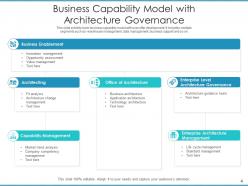
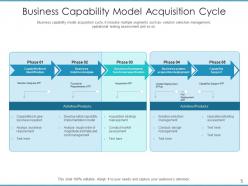
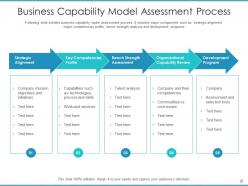
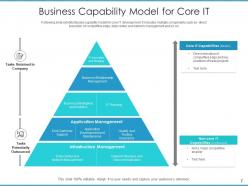
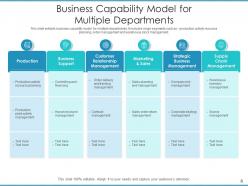
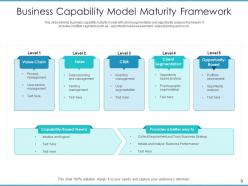
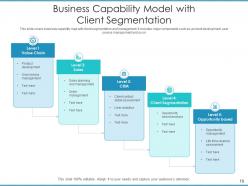
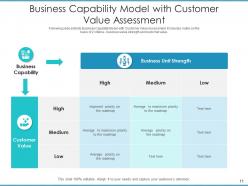
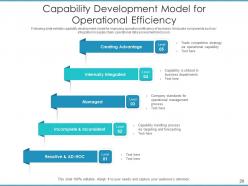
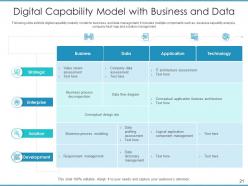
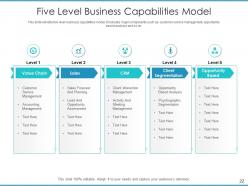
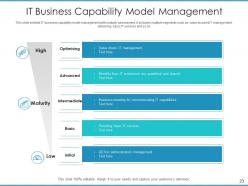

FAQs for Business capability model enterprise
Okay so you've gotta figure out three main things: what your company actually does (capabilities), how you deliver stuff to customers (value streams), and all the processes that make it work. Think about capabilities as the "what" not the "how" - like "manage customer relationships" instead of "run CRM software." Honestly, most people mess this up and get too technical right away. Map how these connect to your big-picture goals and figure out which ones give you an edge over competitors. Start with the customer-facing stuff first, then trace backwards through everything that supports it. That's your foundation right there.
So here's what I'd do - create a simple matrix that shows which capabilities connect to which strategic goals. Sounds nerdy but it actually works. The gaps become super obvious once you see it laid out like that. Focus your capability investments on strategic impact first, not just what seems urgent operationally. Get your strategy folks involved early too, otherwise you'll end up with something that looks great on paper but doesn't move the needle business-wise. Oh, and don't treat this like a one-and-done IT project. Strategies change constantly, so revisit quarterly. Your capability model should be driving real outcomes.
Honestly, these models are game-changers for figuring out what your company can actually pull off. Map your current capabilities against where you want to go strategically - the gaps will smack you in the face immediately. You'll spot dependencies you never saw coming and stop promising stuff you literally can't deliver (been there, it's painful). Plus you can prioritize investments way better when you see which capabilities actually move the needle. I'd start simple though - don't overthink it. Just get your current state down on paper first.
You absolutely need stakeholders involved - learned this the hard way on my last project. Get people from every major business area because they all see different pieces of the puzzle. Business users know what actually happens day-to-day, IT gets the system side, executives have the big picture strategy stuff. Without all those perspectives? Your model might look good on paper but won't match reality. And honestly, there's always a gap between what leadership thinks happens and what really goes on. Start involving them early and don't let them disappear halfway through.
Tech changes can totally flip your Business Capability Model on its head. New stuff like AI might smash together a bunch of manual processes into one "smart operations" thing. Blockchain could create whole new capabilities around verification - though honestly, half the blockchain hype is still BS. Some old capabilities just become useless. You'll want to review this stuff yearly, maybe more if you're in a fast-moving industry. The trick is figuring out what tech actually helps your business versus what just looks cool. Don't chase every shiny object that comes along.
Honestly, I'd start with basic scoring - just rate stuff 1-5 on things like efficiency and tech. Gap analysis is solid too, comparing where you are vs where you want to be. Stakeholder interviews are probably my favorite though, since people will tell you the real problems they're dealing with (surveys kinda suck for that). Industry benchmarks work if you can find good data. Oh, and there's formal models like CMMI if you want to get fancy about it. Focus on your most critical capabilities first - no point trying to assess everything at once.
Honestly, treat it like a living document - not something that sits forgotten in some folder. Update it whenever big stuff happens: mergers, new strategic plans, major tech rollouts, or regulatory changes that mess with your operations. Annual planning cycles are perfect timing too, or when you can't figure out how new projects fit your current capabilities. I've watched way too many of these things just collect digital dust! If yours hasn't been touched in over a year, it's definitely stale. Quarterly check-ins work well to keep things fresh and actually useful.
Go broad first, then break things down until each capability is something you could actually measure or fund. Don't get too granular though - if you're basically listing job descriptions, you've gone too far. Here's my test: could this capability survive if your org chart got completely reshuffled next year? If yes, you're probably on the right track. The sweet spot is stable enough to outlast management changes but specific enough that it actually helps you decide where to invest money or figure out why something's not working. I've seen people get way too detailed and it becomes this unwieldy mess nobody wants to use.
So basically, capability models show *what* your business needs to do - stuff like "Customer Support" or "Product Development." Process maps are totally different - they're the actual step-by-step workflows showing *how* you do those things. I honestly mixed these up for ages! Capabilities don't really change much. They're more big-picture strategic stuff that helps you spot gaps in your business. Processes? Way more detailed and tactical - you'd dig into those when you're trying to fix specific workflows. Oh, and definitely start with capabilities first before getting lost in all the process weeds.
Okay so basically a Business Capability Model shows you where your company actually creates value and what each area needs to work properly. Map your current spending against these capabilities - you'll instantly spot over and under-investments. It's like x-ray vision for budgets, honestly. Those random IT projects? Now they either make sense or they're obviously dumb. You can see gaps where important stuff is getting starved of money, plus all the redundancies where different teams are basically doing the same thing. Next budget cycle, use this to justify investments based on what actually matters strategically instead of whoever yells the loudest.
Honestly, the hardest part is just getting people to agree on what capabilities even are - everyone thinks they're talking about the same thing but they're not. Scope creep will kill you if you're not careful. Pick one small area to test things out first. Get super clear on definitions before you do anything else, otherwise you'll be arguing in circles forever. Don't let IT run the whole show - bring business people in early. I'd focus on some easy wins rather than trying to build the perfect model right away. Oh, and make sure whatever you're doing connects to stuff your executives actually care about, or good luck getting support later.
Track capability maturity scores first - just rate how well each one's performing over time. Simple scale works fine. Then measure actual business outcomes like faster cycle times or better customer satisfaction scores. Quarterly reviews are honestly a pain, but you gotta do them. Also check if leadership actually uses the model when making decisions. If they're ignoring it, something's wrong. Dashboard helps a ton - shows capability health and connects to your strategic goals. Makes spotting trends way easier and helps you prove ROI to the higher-ups.
You definitely need cross-functional teams for this. Having people from IT, operations, finance, and business units all in the room prevents that tunnel vision thing where one department thinks they know everything. Without them, your model might look perfect but totally miss how things actually work day-to-day. They're honestly way better at catching redundancies than individual departments ever are. Set up regular workshops - and I mean actually regular, not just when someone remembers. These teams help spot capability gaps and make sure your definitions aren't just theoretical nonsense. Real feedback beats assumptions every time.
Think of your Business Capability Model as a roadmap for what's next. It shows you the gaps - stuff competitors do that you can't. But honestly, the real gold is finding capabilities you already have but aren't using fully. Those could become game-changing features. Map what customers actually need against what you're already good at. That's where the magic happens. Review this thing every few months and ask yourself: "What problems could we solve that we're not solving yet?" It's like having a cheat sheet for innovation, but you actually have to use it.
There are a bunch of good routes you could go. TOGAF's probably your best bet for something comprehensive - gives you templates and governance stuff for mapping everything out. BiZZdesign's HoriZZon and Software AG's ARIS work well if you've got the budget for enterprise tools. But honestly? You can totally start with Excel or Lucidchart for your basic capability hierarchy. I'd begin with business strategy first, then drill down through your capability levels. Don't make it crazy complicated at first - just pick something and get people on board. Perfect documentation can wait until later.
-
Design layout is very impressive.
-
Easily Understandable slides.
-
Excellent Designs.