

Business Development And Marketing Plan Powerpoint Presentation Slides





Try Before you Buy Download Free Sample Product
 Impress Your
Audience
 100%
Editable
 Save Hours
of Time


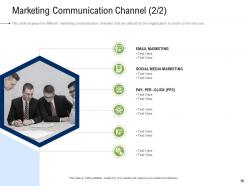
Provide an overview of the company with this Business Development And Marketing Plan PowerPoint Presentation Slides. Showcase the major financial highlights over the year with the help of a graph. This business development action plan PPT layouts aptly display services and product categories that organizations offer to their customers. Multiple core business competencies of the organization can also be listed with these PowerPoint visuals. Showcase the current situation analysis, revenue projections, geographical locations of the company with the help of marketing strategy PPT themes. You can also elucidate different marketing communication channels that the organization utilizes. The content-ready presentation also describes the process timeline for brand launch along with major problem areas. Information on buyer persona, customer journey, value proposition, new market segmentation, and communication channels are also provided in the PPT slide design. It is possible to explain the organization’s positioning strategy compared to competitors by incorporating our readily available business development process PowerPoint slide deck. So grab this amazing presentation now.
People who downloaded this PowerPoint presentation also viewed the following :
Business Development And Marketing Plan Powerpoint Presentation Slides with all 82 slides:
Use our Business Development And Marketing Plan Powerpoint Presentation Slides to effectively help you save your valuable time. They are readymade to fit into any presentation structure.






FAQs for Business Development And Marketing Plan
Key components include market research and analysis, target audience segmentation, competitive positioning strategies, lead generation frameworks, and performance measurement systems. These elements work together by identifying opportunities, defining clear value propositions, and establishing systematic approaches to customer acquisition, with many organizations finding that integrated planning ultimately delivers higher conversion rates, improved resource allocation, and sustained competitive advantage in increasingly dynamic markets.
Businesses identify target markets through demographic analysis, market research, competitive assessment, customer behavior studies, and revenue potential evaluation. These strategic approaches streamline resource allocation by analyzing purchasing patterns, market size, and growth opportunities, with many organizations finding that prioritizing markets based on profitability and accessibility ultimately delivers enhanced customer engagement and competitive advantage.
Market research provides critical insights into customer needs, competitive landscapes, industry trends, and market opportunities that directly inform strategic decision-making within business development plans. Through comprehensive data analysis, companies can identify untapped segments, validate product-market fit, and optimize resource allocation, with many organizations finding that research-driven strategies deliver significantly higher success rates and competitive advantage in increasingly dynamic markets.
Businesses can assess their competitive landscape through market research, competitor analysis, SWOT evaluations, customer feedback analysis, and industry benchmarking studies. These strategic approaches enable organizations to identify market gaps, understand pricing strategies, and recognize emerging trends, with many companies finding that comprehensive competitive intelligence ultimately delivers more targeted marketing campaigns and sustainable competitive advantages.
Businesses should track conversion rates, customer acquisition costs, return on marketing investment, lead quality scores, and customer lifetime value to evaluate marketing success. These metrics enable organizations to optimize campaign performance, allocate resources strategically, and demonstrate tangible ROI, with many companies finding that comprehensive tracking ultimately delivers improved targeting accuracy and enhanced competitive advantage.
Businesses integrate digital marketing by aligning online channels with core objectives, leveraging data analytics for customer insights, and creating seamless omnichannel experiences across touchpoints. Through strategic social media, content marketing, and automation tools, companies streamline customer acquisition, enhance brand visibility, and deliver personalized experiences, ultimately achieving measurable ROI and competitive advantage.
Customer relationship strategies include personalized communication, regular value-added touchpoints, proactive problem-solving, loyalty programs, and strategic account management. These approaches enhance retention by understanding client needs, delivering consistent experiences, and anticipating future requirements, with many organizations finding that strong relationships ultimately drive repeat business, referrals, and sustainable revenue growth.
Businesses leverage social media through targeted content creation, audience engagement, influencer partnerships, paid advertising campaigns, and data-driven analytics to optimize reach. Platforms like LinkedIn, Instagram, and Facebook enable companies to build brand awareness, generate leads, and drive customer acquisition, with many organizations finding that strategic social media presence significantly reduces marketing costs while enhancing customer relationships.
Creating compelling value propositions involves clearly defining your unique benefits, addressing specific customer pain points, quantifying measurable outcomes, and differentiating from competitors through concrete advantages. These elements work together by focusing on customer-centric language, emphasizing tangible results like cost savings or efficiency gains, and positioning your solution as strategically essential, with many organizations finding that specific, outcome-focused propositions significantly enhance customer engagement and conversion rates.
Storytelling enhances marketing strategy by creating emotional connections with audiences, building brand authenticity, and making complex messages memorable through relatable narratives. Companies across retail, healthcare, and financial services use customer success stories, founder journeys, and problem-solution narratives to differentiate themselves, ultimately driving engagement, trust, and conversions in increasingly competitive markets.
B2B marketing focuses on relationship-building, longer sales cycles, rational decision-making, and targeting multiple stakeholders within organizations, while B2C marketing emphasizes emotional appeals, shorter purchase decisions, and direct consumer engagement. These approaches deliver distinct outcomes, with B2B strategies enhancing trust and partnerships through consultative selling, and B2C methods streamlining customer acquisition through brand awareness and immediate conversion tactics.
Businesses use data analytics to drive marketing decisions by analyzing customer behavior patterns, measuring campaign performance metrics, identifying market trends, and optimizing resource allocation across channels. Through predictive analytics and real-time dashboards, companies can personalize customer experiences, improve targeting accuracy, and maximize ROI, with many organizations finding that data-driven strategies deliver significantly higher conversion rates and competitive advantage.
Branding serves as a strategic foundation for business development by establishing market differentiation, building customer trust, and creating emotional connections that drive loyalty and premium pricing. Through consistent brand messaging and visual identity, companies enhance recognition, attract investors, and facilitate expansion into new markets, with strong brands like Apple and Nike demonstrating how strategic branding ultimately delivers sustained competitive advantage and accelerated growth.
Small businesses compete with larger companies by leveraging digital marketing, targeting niche audiences, building authentic customer relationships, and maximizing local SEO strategies. These approaches enable smaller organizations to deliver personalized experiences, respond quickly to market changes, and create genuine community connections, with many finding that agility and authenticity often outperform large-scale generic campaigns in driving customer loyalty.
Emerging business development and marketing trends include AI-powered personalization, account-based marketing, social commerce integration, sustainability-focused branding, and data-driven customer journey optimization. These approaches streamline targeting, enhance customer experiences, and accelerate conversion rates, with companies across retail, financial services, and technology sectors finding that strategic adoption delivers improved ROI and competitive differentiation.
-
Unique and attractive product design.
-
Excellent design and quick turnaround.
-
Good research work and creative work done on every template.
-
Attractive design and informative presentation.
-
Top Quality presentations that are easily editable.
-
Great product with effective design. Helped a lot in our corporate presentations. Easy to edit and stunning visuals.
-
Great quality slides in rapid time.