

Business development strategy for startups powerpoint presentation slides




Try Before you Buy Download Free Sample Product
 Impress Your
 Audience
 100%
100% Editable
 Save Hours
 of Time


The absence of a strategic development plan in motion in any startup leads the entrepreneurs not to achieve the required results. Here is a professionally designed template on Business Development Strategy for Startups that will help you find out the problems related to many startups nowadays and help wash out those problems with the solutions provided. The company needs to analyze the current major issues and opportunities related to the startup company, which promotes overall growth. The module helps to establish a startup strategy launching plan for immediate action on the companys upcoming performance. Apart from this, the template includes various slides related to the company information, such as the companys executive summary, objectives, mission, vision, keys to success, senior management details, sales forecast, monthly company sales, yearly sales, etc. Further, it includes the marketing and pricing strategy for the startup company for overall growth. It also consists of the business model and competitive landscape. Additionally, the deck comprises projected information such as profit and loss statements, gross margins, forecasted cash flow, balance sheet, etc. In the end, this presentation shows the risk factors related to the startup company with their mitigation strategies. Get access now.
People who downloaded this PowerPoint presentation also viewed the following :
Content of this Powerpoint Presentation
Slide 1: This slide introduces Business Development Strategy for Startup. State Your Company Name and begin.
Slide 2: This slide shows Agenda for Business Development Strategy for Startup.
Slide 3: This slide presents Table of Content for the presentation.
Slide 4: This slide shows Table of Content highlighting Challenges and Solutions Related to the Startup Company.
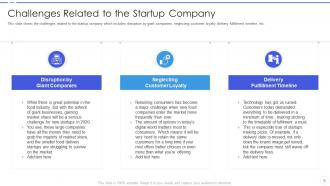
Slide 5: This slide displays the challenges related to the startup company which includes disruption by giant companies, neglecting customer loyalty, etc.
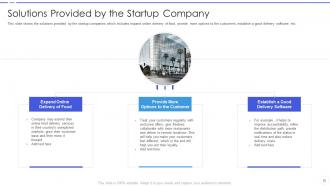
Slide 6: This slide represents the solutions provided by the startup companies which includes expand online delivery of food, provide more options to the customers, etc.
Slide 7: This slide shows Table of Content for the presentation.
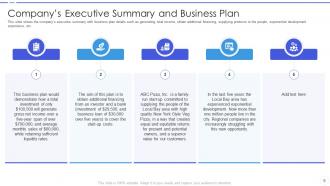
Slide 8: This slide presents the company’s executive summary with business plan details.
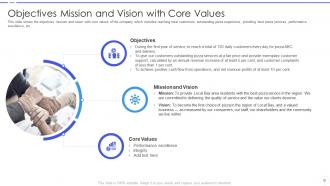
Slide 9: This slide shows the objectives mission and vision with core values of the company.
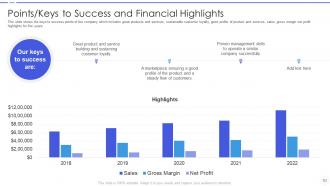
Slide 10: This slide displays Points/Keys to Success and Financial Highlights.
Slide 11: This slide represents the key milestones and achievements of the startup company which includes milestones, start date, etc.
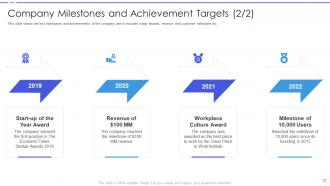
Slide 12: This slide shows the key milestones and achievements of the company which includes major awards, revenue and customer milestone etc.
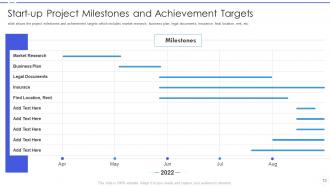
Slide 13: This slide presents Start-up Project Milestones and Achievement Targets.
Slide 14: This slide shows Key Management and Professional Team of Startup Company.
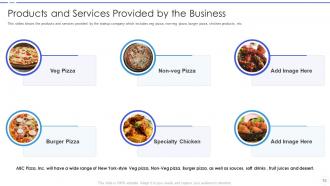
Slide 15: This slide displays Products and Services Provided by the Business.
Slide 16: This slide represents the startup company funding requirement which includes expenses to fund, assets to funs, etc.
Slide 17: This slide shows Startup Company’s Sales Forecast for Five Years.
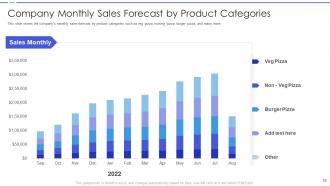
Slide 18: This slide presents Company Monthly Sales Forecast by Product Categories.
Slide 19: This slide shows Company Yearly Sales Forecast by Product Categories.
Slide 20: This slide displays Table of Content for the presentation.
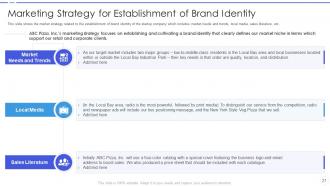
Slide 21: This slide represents Marketing Strategy for Establishment of Brand Identity.
Slide 22: This slide shows Pricing Strategy for the Customers of Startup Company.
Slide 23: This slide presents Location and Facilities Provided by the Startup Company.
Slide 24: This slide shows Table of Content for the presentation.
Slide 25: This slide displays the business model for the overall growth of the company which includes key partners, key activities, etc.
Slide 26: This slide represents Competitive Landscape with Product Feature Details.
Slide 27: This slide shows the market segmentation/analysis related to customers which includes prediction of retails customer sales, corporate clients, etc.
Slide 28: This slide presents the personnel/employee plan details with their payroll and timings.
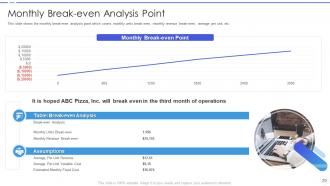
Slide 29: This slide shows the monthly break-even analysis point which covers monthly units break even, monthly revenue break-even, etc.
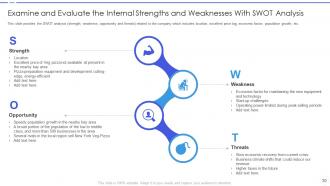
Slide 30: This slide displays Examine and Evaluate the Internal Strengths and Weaknesses With SWOT Analysis.
Slide 31: This slide represents Table of Content for the presentation.
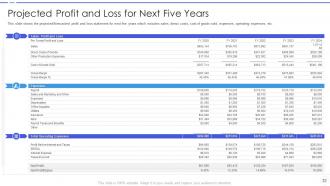
Slide 32: This slide shows Projected Profit and Loss for Next Five Years.
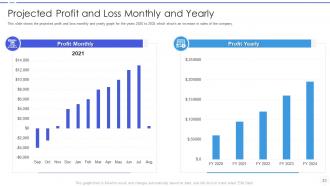
Slide 33: This slide presents Projected Profit and Loss Monthly and Yearly.
Slide 34: This slide shows the projected gross margin monthly and yearly for the next five years.
Slide 35: This slide displays Projected Cash Flow for Next Five Years.
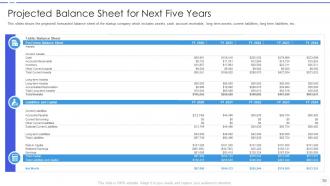
Slide 36: This slides represents the projected/ forecasted balance sheet of the startup company which includes assets, cash, account receivable, etc.
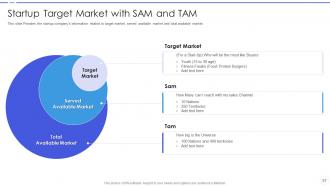
Slide 37: This slide Provides the startup company’s information related to target market, served available market and total available market.
Slide 38: This slide presents Startup Company Next Level of Innovation and Research.
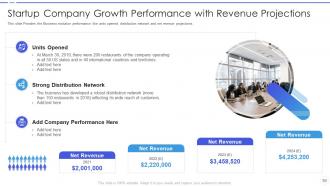
Slide 39: This slide shows Startup Company Growth Performance with Revenue Projections.
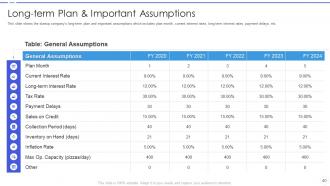
Slide 40: This slide displays the startup company’s long-term plan and important assumptions.
Slide 41: This slide represents Table of Content for the presentation.
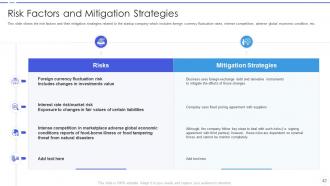
Slide 42: This slide shows the risk factors and their mitigation strategies related to the startup company.
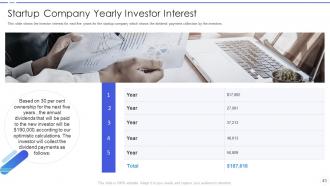
Slide 43: This slide presents the investor interest for next five years for the startup company which shows the dividend payment collection by the investors.
Slide 44: This slide shows Table of Content for the presentation.
Slide 45: This slide displays Exit Strategy for the Startup Company Investors.
Slide 46: This slide represents Business Development Strategy for Startup Icons.
Slide 47: This slide is titled as Additional Slides for moving forward.
Slide 48: This is About Us slide to show company specifications etc.
Slide 49: This slide shows Column Chart with two products comparison.
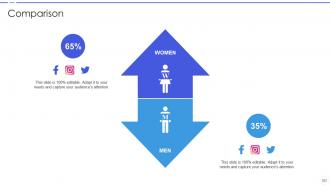
Slide 50: This is a Comparison slide to state comparison between commodities, entities etc.
Slide 51: This is an Idea Generation slide to state a new idea or highlight information, specifications etc.
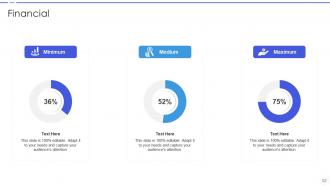
Slide 52: This is a Financial slide. Show your finance related stuff here.
Slide 53: This slide presents Puzzle with related icons and text.
Slide 54: This is a Thank You slide with address, contact numbers and email address.
Business development strategy for startups powerpoint presentation slides with all 54 slides:
Use our Business Development Strategy For Startups Powerpoint Presentation Slides to effectively help you save your valuable time. They are readymade to fit into any presentation structure.





















FAQs for Business development strategy for startups
Key components include market research and validation, strategic partnerships, customer acquisition channels, revenue model optimization, and competitive positioning analysis. These elements work together by identifying target markets, building valuable alliances, and creating scalable growth pathways, with many startups finding that strategic partnerships and data-driven customer acquisition ultimately deliver sustainable competitive advantage.
Startups can effectively identify ideal customer segments through market research, customer interviews, competitor analysis, demographic data evaluation, and behavioral pattern assessment. These methods enable founders to understand pain points, purchasing behaviors, and market gaps, with many successful startups finding that focusing on specific niches first, rather than broad markets, ultimately delivers faster product-market fit and sustainable growth.
Market research provides startups with critical insights into customer needs, competitive landscapes, pricing strategies, market size, and growth opportunities that directly inform strategic decisions. Through comprehensive market analysis, startups can identify underserved segments, validate product-market fit, and refine their value propositions, while minimizing risks and optimizing resource allocation for sustainable growth.
Startups can leverage partnerships by accessing complementary resources, expanding market reach, sharing development costs, and gaining credibility through established brands. Strategic alliances with technology providers, distribution partners, or industry leaders enable startups to scale faster, reduce customer acquisition costs, and enter new markets, with many finding that collaborative approaches deliver competitive advantages they couldn't achieve independently.
Startups can create strong value propositions through comprehensive market research, clear problem identification, competitive differentiation analysis, customer pain point mapping, and benefit quantification. These tactics enable founders to articulate unique solutions that resonate with target audiences, with many successful startups finding that data-driven positioning and customer validation ultimately deliver higher conversion rates and sustainable competitive advantage.
Startups should measure business development effectiveness through key metrics including revenue growth, customer acquisition cost, partnership conversion rates, sales cycle length, and market penetration rates. These metrics enable founders to track progress by identifying high-performing channels, optimizing resource allocation, and accelerating scaling efforts, with many successful startups finding that consistent measurement ultimately delivers sustainable growth and competitive advantage.
Common pitfalls include overestimating market demand, underestimating competition, lacking clear target customer definition, insufficient financial planning, and neglecting scalability considerations. These strategic missteps often lead startups to burn through resources quickly, miss market opportunities, and struggle with sustainable growth, with many successful companies finding that early strategic clarity and realistic market assessment ultimately deliver competitive advantage and operational efficiency.
Technology and digital tools enhance startup business development by automating lead generation, streamlining customer relationship management, and enabling data-driven decision making through analytics platforms. These solutions help startups scale efficiently with limited resources, while CRM systems, marketing automation, and social media management tools deliver faster customer acquisition, improved conversion rates, and ultimately competitive advantage in increasingly digital markets.
Startups can build customer relationships through personalized communication, regular feedback collection, loyalty programs, social media engagement, and exceptional customer service. These approaches enhance trust by addressing individual needs, responding quickly to concerns, and creating community connections, with many startups finding that consistent, authentic interactions ultimately deliver higher retention rates and valuable word-of-mouth referrals.
Networking is crucial for startup business development, serving as a primary avenue for securing partnerships, investment opportunities, customer acquisition, and mentorship access. Through strategic relationship building, startups accelerate market entry, validate product concepts, and gain competitive intelligence, with many early-stage companies finding that strong networks ultimately deliver faster growth and reduced operational costs.
Sales funnels systematically guide potential customers through structured stages from initial awareness to final purchase, enabling startups to track conversion rates, identify bottlenecks, and optimize resource allocation. This strategic framework helps early-stage companies streamline their sales processes, measure marketing effectiveness, and scale customer acquisition, with many startups finding that well-designed funnels significantly improve conversion rates and revenue predictability.
Startups can effectively allocate resources by prioritizing high-impact activities like targeted customer acquisition, strategic partnerships, and core product development while maintaining lean operational costs. Through careful budget planning and performance tracking, many startups find that focusing on 2-3 key channels initially, rather than spreading efforts broadly, delivers better ROI and sustainable growth without overextending limited resources.
Startups can adapt their business development strategies through agile planning cycles, continuous market research, flexible partnership frameworks, rapid prototype testing, and data-driven pivot capabilities. These approaches enable organizations to respond quickly to market shifts, customer feedback, and competitive pressures, with many successful startups finding that maintaining strategic flexibility while focusing on core value propositions ultimately delivers sustainable growth and competitive advantage.
Startups can leverage data analytics to optimize customer acquisition costs, identify high-value market segments, track product-market fit metrics, and forecast revenue patterns through predictive modeling. By analyzing user behavior data, conversion rates, and market trends, emerging companies streamline resource allocation, enhance targeting strategies, and accelerate growth cycles, ultimately delivering competitive advantages in increasingly data-driven markets.
Company culture significantly impacts business development effectiveness by influencing team collaboration, decision-making speed, customer relationship building, and strategic execution consistency. A strong, aligned culture enables startups to present unified value propositions, adapt quickly to market feedback, and build authentic partnerships, with many high-growth startups finding that cultural coherence accelerates sales cycles and enhances investor confidence.
-
Perfect template with attractive color combination.