

Business Management Consultancy Company Profile Powerpoint Presentation Slides





Try Before you Buy Download Free Sample Product
 Impress Your
Audience
 100%
Editable
 Save Hours
of Time


Business Management Consultancy Company Profile is a professional description that aims to inform clients about service offerings, structure, resources, financial performance, etc. This profile showcases the executive summary and company introduction, which includes our core values, headquarters, number of employees, specialties, acquisitions, company type, etc. It also covers the mission, vision, shareholding structure, employee count, and consulting services offered by our company. Further, this PPT represents the business model, company history and milestones, global presence, management team, organizational structure, industries served, and strategic acquisitions. Moreover, it represents our customers and their reviews. Also, it covers management consulting procedures, research approach strategic alliance partners, and financials highlights such as revenue, net profits, operating income, EBITDA margin, revenue split by business areas, key financial ratios, R and D expenses, etc. Additionally, it captures comparisons with competitors based on financials. At last, the module focuses on business marketing strategies, SWOT analysis, CSR breakdown, and initiatives and case study approach. Get access to this powerful template now.
People who downloaded this PowerPoint presentation also viewed the following :
Content of this Powerpoint Presentation
Slide 1: This slide displays the title Business Management Consultancy Company Profile.
Slide 2: This slide exhibit table of content.
Slide 3: This slide shows the executive summary.
Slide 4: This slide represents the details of consulting company.
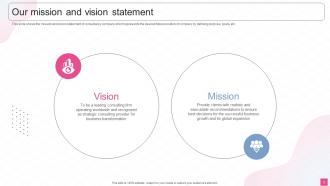
Slide 5: This slide shows the mission and vision statement of consultancy company.
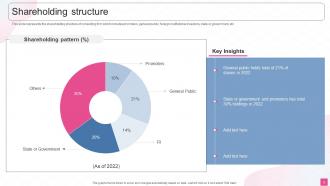
Slide 6: This slide represents the shareholding structure of consulting firm.
Slide 7: This slide represents the employee count for last five years from 2018 to 2022.
Slide 8: This slide shows the consulting services offered by our company.
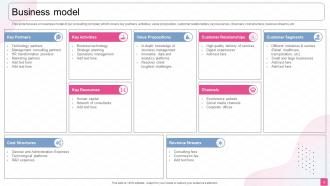
Slide 9: This slide focuses on business model of our consulting company.
Slide 10: This slide shows the company history which represents milestones achieved.
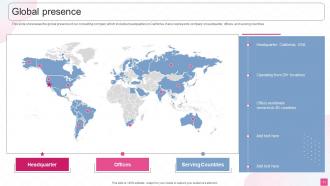
Slide 11: This slide showcases the global presence of our consulting company which includes headquarters in California.
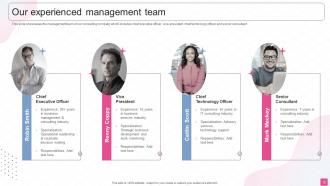
Slide 12: This slide showcases the management team of our consulting company.
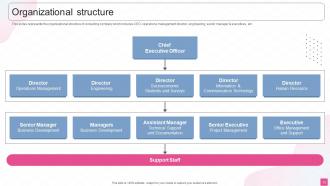
Slide 13: . This slides represents the organizational structure of consulting company.
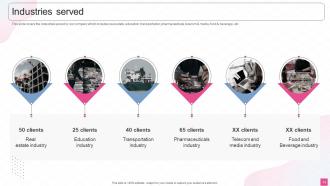
Slide 14: This slide covers the industries served by our company.
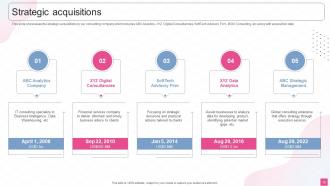
Slide 15: This slide showcases the strategic acquisitions by our consulting company.
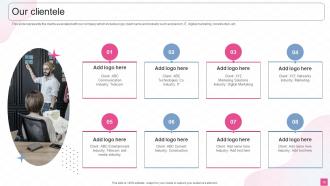
Slide 16: This slide represents the clients associated with our company.
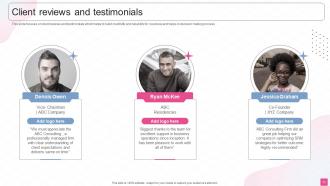
Slide 17: This slide focuses on client reviews and testimonials which helps to build credibility and reliability for business and helps in decision making process.
Slide 18: This slide covers the management consulting process to ensure client project completion in systematic manner.
Slide 19: This slide covers the approach to deliver research solutions.
Slide 20: This slide represents the global alliance partnerships of our consulting company.
Slide 21: This slide showcases revenue and net profits of our consulting company for last five years from 2018 to 2022 which shows increasing trend year after year.
Slide 22: This slide shows the operating income of our consulting company for last five years from 2018 to 2022.
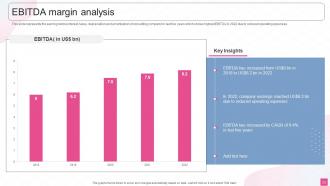
Slide 23: This slide represents the EBITDA of consulting company for last five years which shows highest EBITDA in 2022 due to reduced operating expenses.
Slide 24: This slide showcases the revenue breakdown by geography such as Asia, North America, Australia, etc.
Slide 25: This slide shows the key financial ratios of our consulting company.
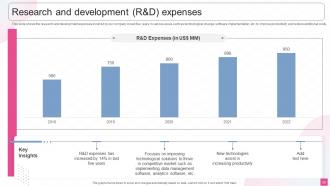
Slide 26: This slide shows the research and development expenses incurred by our company in last five years.
Slide 27: This slide shows the comparison with competitors on the basis of financials.
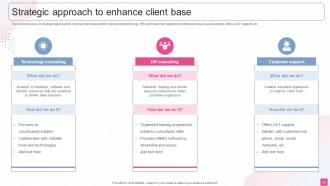
Slide 28: This slide focuses on strategic approach to improve client base.
Slide 29: This slide focuses on marketing strategies used by our consulting company which includes direct mailing, cold calling, social media ads, event hosting, etc
Slide 30: This slide focuses on strengths, weakness, opportunities and threats to evaluate competitive position of consultancy company.
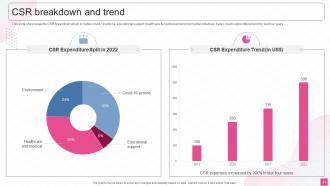
Slide 31: This slide showcases the CSR breakdown which includes Covid-19 actions, educational support, healthcare & medical and environmental initiatives.
Slide 32: This slide showcases the CSR initiatives by our company.
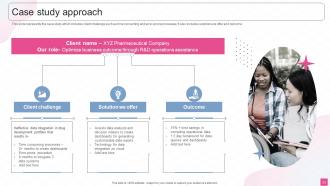
Slide 33: This slide represents the case study which includes client challenge such as time consuming and error-prone processes.
Slide 34: This is the icons slide.
Slide 35: This slide presents title for additional slides.
Slide 36: This slide presents title for About us.
Slide 37: This slide presents your company's vision, mission and goals.
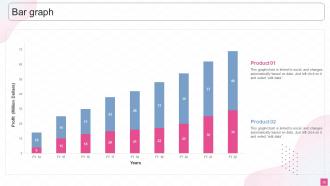
Slide 38: This slide displays yearly bar graph for different products.
Slide 39: This slide depicts 30-60-90 days plan for projects.
Slide 40: This slide displays Venn.
Slide 41: This slide presents title for Our goal.
Slide 42: This slide shows puzzle for displaying elements of company.
Slide 43: This slide exhibits yearly timeline of company.
Slide 44: This slide showcase Magnifying glass.
Slide 45: This slide depicts posts for past experiences of clients.
Slide 46: This is thank you slide & contains contact details of company like office address, phone no., etc.
Business Management Consultancy Company Profile Powerpoint Presentation Slides with all 51 slides:
Use our Business Management Consultancy Company Profile Powerpoint Presentation Slides to effectively help you save your valuable time. They are readymade to fit into any presentation structure.























FAQs for Business Management Consultancy Company Profile
Look, it really comes down to three things: actually understanding what's wrong, staying organized, and not ghosting your client. Start by digging into their real problems - sometimes what they think is broken isn't the actual issue. Then just be systematic about how you analyze stuff and build solutions. Honestly, being organized is like 80% of the job lol. But here's the thing - don't disappear for weeks then show up with some giant report. That's how you piss people off. Keep them in the loop as you go, and always connect your recommendations back to what they actually care about business-wise.
Set your KPIs before they even start - that's huge. Track the hard stuff like revenue and cost savings, but don't forget softer metrics like how your team feels about changes. Way too many companies skip this part and regret it later. Get baseline data first so you can actually compare. I'd do check-ins every month or two to see if things are moving in the right direction. Oh, and put the success criteria right in your contract - makes those review meetings way more productive when everyone knows what they're shooting for.
Dude, you literally can't do consulting anymore without solid data skills. Gone are the days when you could just wing it with gut instincts - clients expect real evidence now. What you're doing is using analytics to spot patterns they miss, figure out what's actually broken, and prove your solutions work. Plus it makes those budget conversations way easier when you can show concrete ROI instead of just promising results. The tricky part? You've got to get good at turning spreadsheets into stories that executives actually understand. Otherwise you'll just confuse everyone with charts and lose them completely.
Skip the buzzword garbage - "strategy" and "optimization" mean nothing. Lead with hard numbers instead. Like "cut their costs 23% in 6 months" rather than vague promises about results. Most consulting pitches sound exactly the same, honestly. That's why specific outcomes matter so much. Talk about their actual problems first, not your fancy credentials. Show you get their industry pain points with real case studies. Oh, and flip your proposal structure - start with their problem statement, then your solution. Shows you're listening, not just pitching another cookie-cutter deck.
Honestly, the worst mistake is hiring consultants without knowing what you actually want them to do. Vague goals = expensive mess. Don't just pick whoever's cheapest or has the fanciest reputation either. Most companies forget to loop in their own teams early on, which just creates drama later when people feel left out. Also - and this should be obvious but apparently isn't - run from anyone promising quick fixes. Complex problems don't have magic solutions. Oh, and nail down exactly what you're getting before signing anything. Set clear success metrics upfront or you'll be arguing about results later.
Dude, you've gotta live in their world first before suggesting anything. Watch how they actually talk to each other and make decisions - forget the org chart nonsense. Ask about their values, what changes worked before (and what bombed). Some consultants totally skip this step then act shocked when nobody listens to them! Figure out if they're fast-paced or slow, formal or chill, big risk-takers or super cautious. Then match their vibe when you pitch ideas. Trust me, solutions that feel weird to their culture will get ignored every time.
Pick one thing and become THE person for it - like digital transformation for manufacturers or whatever your sweet spot is. Most consultants sound exactly the same, which is crazy to me. Create content consistently in your niche. Speaking at events helps too. Your team's backgrounds matter way more than you think. Case studies become everything. Don't try being all things to all people - that's where consultancies go to die. Own your lane completely. Build a reputation for solving one specific problem really well, and clients will start seeking you out instead.
Oh man, tech is a game-changer for consulting! I use data analytics tools to crunch numbers way faster, and project management platforms make client collaboration so much smoother. AI helps with initial research too - saves hours honestly. Automation handles all the boring repetitive stuff while I focus on actual strategy. Video calls obviously, plus cloud dashboards that show clients real-time progress (they love seeing those updates). Here's the thing though - don't just add tools for the sake of it. Figure out what's eating up most of your time first, then find something that actually fixes that specific problem. Trust me on this one.
Honestly, get leadership on board first or you're screwed from the start. Figure out who this change affects and what pushback you'll get - people absolutely hate being blindsided. Your communication plan needs to nail the "why" part because that's where most initiatives die. Bring your key players into the planning early. I'd probably start with some easy wins to show progress while you're working toward the bigger stuff. Oh, and set up ways to get feedback throughout - things will go sideways and you'll need to pivot. Do a stakeholder analysis this week if you haven't already.
Watch out for conflicts of interest, confidentiality breaches, and sugar-coating your findings. If you've got financial ties to competitors or suppliers, spill it upfront - that shit always comes out eventually and it's messy. Lock down client data like Fort Knox. Never share insights between competing clients, even by accident. Here's the thing though - you've gotta be brutally honest in your recommendations. Even when leadership wants to hear rainbows and unicorns. Don't oversell what you can actually deliver just to land the gig. Oh, and document your ethical calls as you go. You'll thank yourself later if someone questions your decisions.
Honestly, go for firms that actually know your industry inside and out. Generic success stories are useless - you need case studies that match your exact situation. One thing that bit me before: those big-name partners? They're probably not touching your project. Find out who's really doing the work and check their backgrounds. Get references you can actually talk to (not just testimonials on their website). The chemistry test matters way more than you'd expect since you'll be stuck with these people for months. Oh, and definitely understand their process upfront - no surprises later. If you can swing it, start small before diving into anything huge.
So digital transformation is huge right now - literally everyone wants AI but half don't even know what they're asking for lol. ESG stuff is blowing up too with all the new regs. Oh and clients are getting way pickier about specialization. They don't want generalists anymore, they want someone who's tackled their exact mess before. Honestly the "jack of all trades" consultant is kind of dying out. My take? Don't spread yourself thin trying to do everything. Pick maybe two areas max and become the go-to person for those. Way better than being mediocre at ten different things.
Figure out who all your stakeholders are first - like, actually map them out. Talk to each person one-on-one before doing any big group meetings (trust me, jumping straight into group sessions is chaos). Different people care about different things, so you gotta understand what drives each of them. Don't just check in at milestones either - keep touching base throughout. Show them how you used their feedback in your final recommendations. That's honestly the part most people skip. Set up a simple plan for who gets updates when and actually stick to it. Makes everyone feel like they're actually part of the process.
Yeah, globalization totally changed the consulting game. You're dealing with clients in like 6 different time zones now - honestly exhausting but the money's there. What worked in Silicon Valley? Probably gonna bomb in Southeast Asia. Cookie-cutter Western approaches are basically dead. Instead you need stuff that works locally but still meets global standards. Cultural differences in business are huge too, plus all the regulatory headaches vary by region. Oh and the digital collaboration tools - invest in good ones that actually function internationally, trust me on this. Building cultural competency isn't optional anymore.
Honestly, don't wait until the end to ask for feedback - that's when it's too late to fix anything. Build in quick check-ins throughout your projects. Those pulse surveys after deliverables? Super helpful. And yeah, the awkward conversations about what's not working are actually the most valuable ones. Your team should feel comfortable giving you feedback too, not just clients. Here's the thing though - collecting feedback is pointless if you're not gonna act on it. Pick something small this week, ask what people think, make one real change, then see if it actually helped. Start there.
-
Excellent template with unique design.
-
SlideTeam’s pool of 2Million+ PPTs has really benefited my team, everyone from the IT department to HR. We are lucky to have crossed ways with them.