


Business objectives and future position statements ppt presentation slides complete deck




Try Before you Buy Download Free Sample Product
 Impress Your
 Audience
 100%
100% Editable
 Save Hours
 of Time


Our Business Objectives And Future Position Statements PPT Presentation Slides Complete Deck are topically designed to provide an attractive backdrop to any subject. Use them to look like a presentation pro.
People who downloaded this PowerPoint presentation also viewed the following :
Content of this Powerpoint Presentation
Slide 1: This slide introduces Business Objectives And Future Position Statements PPT Presentation Slides. State Your Company Name and begin.
Slide 2: This is an Agenda slide. State your agendas here.
Slide 3: This is The Vision slide with related imagery and text.
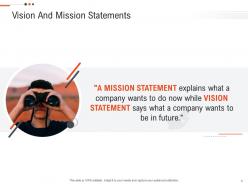
Slide 4: This slide explains what a company wants to do now.
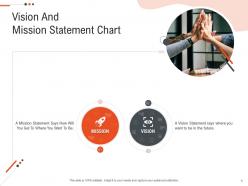
Slide 5: This slide shows Vision And Mission Statement Chart.
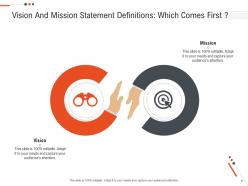
Slide 6: This slide presents Vision And Mission Statement Definitions: Which Comes First.
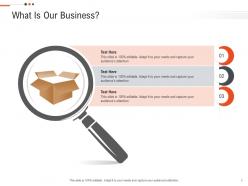
Slide 7: This slide explains What Is Our Business?
Slide 8: This slide displays What Do You Want To Become.
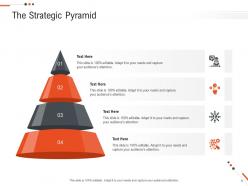
Slide 9: This slide represents The Strategic Pyramid.
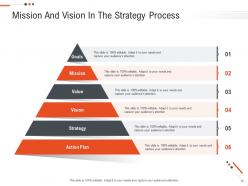
Slide 10: This slide shows Mission And Vision In The Strategy Process.
Slide 11: This slide presents Developing a Strategic Vision, Mission and Values.
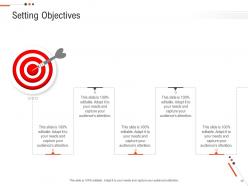
Slide 12: This slide shows Setting Objectives with related imagery.
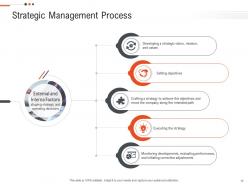
Slide 13: This slide displays Strategic Management Process describing- External and Interna Factors, shaping strategic and operating decisions, Setting objectives, etc.
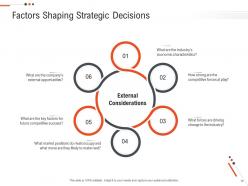
Slide 14: This slide represents Factors Shaping Strategic Decisions describing- What are the industry’s economic characteristics, What forces are driving change in the industry, etc.
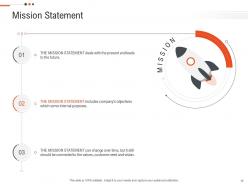
Slide 15: This slide shows Mission Statement with related imagery.
Slide 16: This slide presents Key Questions For Developing A Mission Statement.
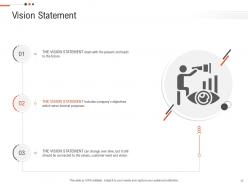
Slide 17: This slide shows Vision Statement with related icons and text.
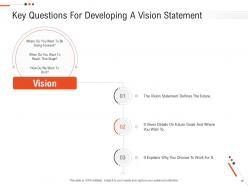
Slide 18: This slide displays Key Questions For Developing A Vision Statement.
Slide 19: This slide represents Strategic Vision with text boxes.
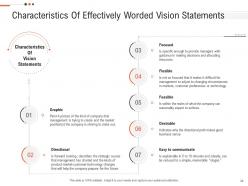
Slide 20: This slide shows Characteristics Of Effectively Worded Vision Statements.
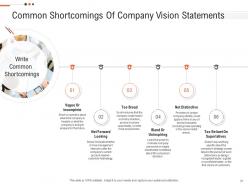
Slide 21: This slide presents Vague Or Incomplete describing- Not Forward Looking, Bland Or Uninspiring, Common Shortcomings Of Company Vision Statements, etc.
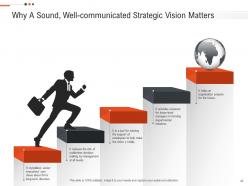
Slide 22: This slide shows Why A Sound, Well-communicated Strategic Vision Matters.
Slide 23: This slide displays Core Concept with related imagery.
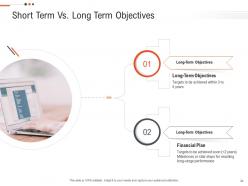
Slide 24: This slide represents Short Term Vs. Long Term Objectives.
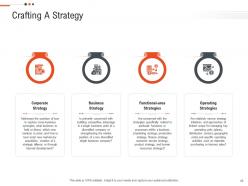
Slide 25: This slide shows Crafting A Strategy describing- Corporate Strategy, Business Strategy, Operating Strategies, etc.
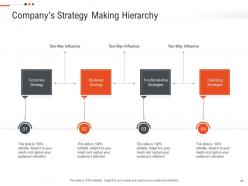
Slide 26: This slide presents Company's Strategy Making Hierarchy.
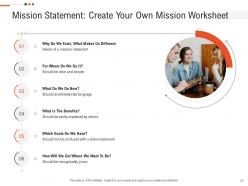
Slide 27: This slide shows Mission Statement: Create Your Own Mission Worksheet.
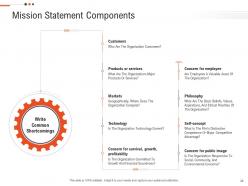
Slide 28: This slide displays Mission Statement Components.
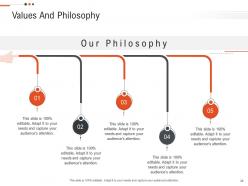
Slide 29: This slide represents Values And Philosophy with related icons and text.
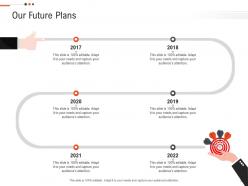
Slide 30: This slide shows Our Future Plans with additional textboxes.
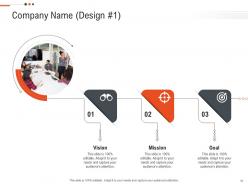
Slide 31: This slide presents Company Name Design number 1 with related imagery.
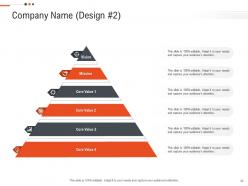
Slide 32: This is another slide showing Company Name Design number 2.
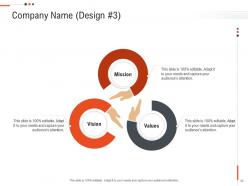
Slide 33: This is another slide showing Company Name Design number 3.
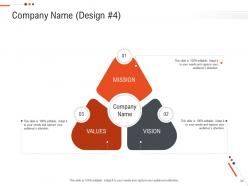
Slide 34: This is another slide showing Company Name Design number 4.
Slide 35: This is another slide showing Company Name Design number 5.
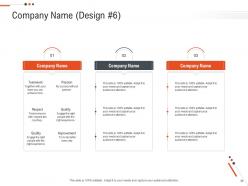
Slide 36: This is another slide showing Company Name Design number 6.
Slide 37: This is another slide showing Company Name Design number 7.
Slide 38: This is another slide showing Company Name Design number 8.
Slide 39: This is another slide showing Company Name Design number 9.
Slide 40: This slide shows Icons for Business Objectives And Future Position Statements PPT Presentation Slides
Slide 41: This slide is titled as Additional Slides for moving forward.
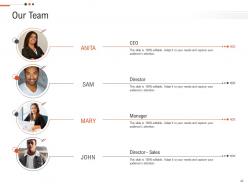
Slide 42: This is Our Team slide with names and designation.
Slide 43: This is Our Goal slide. State your firm's goals here.
Slide 44: This is a Quotes slide to convey message, beliefs etc.
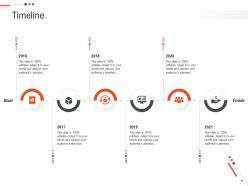
Slide 45: This is a Timeline slide. Show data related to time intervals here.
Slide 46: This slide presents Post It Notes. Post your important notes here.
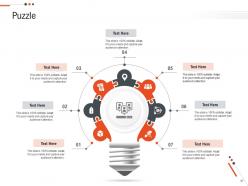
Slide 47: This slide shows Puzzle with related icons and text.
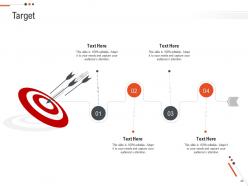
Slide 48: This is Our Target slide. State your targets here.
Slide 49: This slide represents Circular with additional textboxes.
Slide 50: This slide shows Venn diagram with text boxes.
Slide 51: This slide presents Mind Map with related imagery.
Slide 52: This is an Idea Generation slide to state a new idea or highlight information, specifications etc.
Slide 53: This slide displays Magnifying Glass to highlight information, specifications etc
Slide 54: This is a Thank You slide with address, contact numbers and email address.
Business objectives and future position statements ppt presentation slides complete deck with all 54 slides:
Use our Business Objectives And Future Position Statements PPT Presentation Slides Complete Deck to effectively help you save your valuable time. They are readymade to fit into any presentation structure.


FAQs for Business objectives and future position statements ppt presentation
Effective business strategies include clear vision and mission statements, comprehensive market analysis, competitive positioning, resource allocation plans, and measurable performance objectives. These components work together by aligning organizational goals with market opportunities, optimizing operational efficiency, and establishing sustainable competitive advantages, with many successful companies finding that integrated strategic frameworks ultimately deliver stronger market performance and long-term growth.
Businesses can align strategy with market trends by conducting regular market research, analyzing consumer data, monitoring competitor activities, and maintaining flexible operational frameworks. Through predictive analytics and customer feedback systems, organizations in retail, financial services, and healthcare streamline decision-making processes, adapt product offerings, and enhance customer experiences, ultimately delivering competitive advantage in increasingly dynamic markets.
Competitive analysis identifies market gaps, competitor strengths and weaknesses, pricing strategies, customer preferences, and emerging industry trends that directly inform strategic positioning. Through systematic evaluation of rivals' approaches, businesses can differentiate their offerings, anticipate market shifts, and develop targeted strategies, ultimately gaining competitive advantage while avoiding costly missteps in increasingly dynamic markets.
Small businesses can develop unique value propositions by identifying underserved customer segments, leveraging their agility for personalized services, focusing on local community connections, and combining existing solutions in innovative ways. Through strategic positioning and authentic brand storytelling, many small enterprises differentiate themselves by delivering specialized expertise, faster response times, and tailored experiences that larger competitors cannot match, ultimately creating sustainable competitive advantages.
Companies should track financial metrics like revenue growth and profit margins, operational metrics such as market share and customer acquisition costs, and strategic indicators including employee engagement and innovation pipeline effectiveness. These comprehensive measurements enable organizations to assess performance across multiple dimensions, with many finding that balanced scorecards combining financial, customer, internal process, and learning metrics ultimately deliver clearer insights into strategic progress and competitive positioning.
Digital transformation initiatives fundamentally reshape traditional business strategies by accelerating decision-making through data analytics, automating routine processes, and enabling real-time customer engagement across multiple channels. These technologies streamline operations, enhance customer experiences, and create new revenue streams, with many organizations finding that successful digital integration delivers significant competitive advantages and operational efficiency in an increasingly connected marketplace.
Innovation drives strategic growth through new product development, market expansion, operational efficiency improvements, customer experience enhancement, and competitive differentiation strategies. By leveraging emerging technologies and creative approaches, organizations streamline processes, reduce costs, and capture new revenue streams, with many companies finding that systematic innovation ultimately delivers sustained competitive advantage in increasingly dynamic markets.
Businesses can effectively communicate strategy to stakeholders through clear messaging frameworks, regular structured updates, visual presentations, interactive sessions, and tailored communication channels for different audiences. Through comprehensive strategy documents and consistent progress reporting, organizations enhance transparency, build stakeholder confidence, and ensure strategic alignment, with many finding that regular communication ultimately strengthens buy-in and accelerates implementation success.
Common business strategy pitfalls include insufficient market research, unrealistic goal setting, poor resource allocation, neglecting competitive analysis, and lack of stakeholder alignment. These missteps often lead organizations to pursue unfeasible objectives or overlook critical market dynamics, with many companies finding that comprehensive planning and regular strategy reviews ultimately deliver better execution and sustainable competitive advantage.
Companies ensure business strategy adaptability through continuous market monitoring, scenario planning, flexible resource allocation, regular strategy reviews, and fostering an agile organizational culture. These approaches enable organizations to pivot quickly when market conditions shift, with many forward-thinking companies finding that embedding adaptability into their strategic framework ultimately delivers sustained competitive advantage and resilience.
Global business strategy presents both standardization benefits and local adaptation challenges, requiring companies to balance operational efficiency with cultural responsiveness, regulatory compliance, and market-specific preferences. While organizations achieve cost reductions and brand consistency through standardized approaches, they must simultaneously customize products, services, and marketing strategies for local markets, with many multinational companies finding that strategic localization ultimately delivers competitive advantage and sustainable growth.
Businesses can leverage technology to enhance competitive advantage through automation, data analytics, cloud computing, artificial intelligence, and digital transformation initiatives. These technologies streamline operations by reducing costs, accelerating decision-making, and improving customer experiences, with many organizations finding that strategic technology adoption ultimately delivers operational efficiency and sustainable market differentiation.
Companies can foster strategic thinking through regular scenario planning workshops, cross-functional collaboration initiatives, strategic mentorship programs, and embedding long-term perspective metrics into performance evaluations. These approaches enable organizations to develop forward-thinking capabilities by encouraging diverse viewpoints, enhancing analytical skills, and rewarding strategic decision-making, ultimately delivering competitive advantage and organizational resilience.
Organizations balance short-term and long-term objectives by implementing strategic roadmaps, establishing clear performance metrics, and maintaining flexible resource allocation frameworks that support immediate operational needs while advancing strategic priorities. Through balanced scorecards and quarterly reviews, companies in sectors like technology and healthcare successfully deliver consistent results, enhance stakeholder confidence, and ultimately maintain competitive positioning in increasingly dynamic markets.
Stakeholder engagement provides critical insights into market needs, operational constraints, and competitive positioning that inform strategic decisions. Through structured consultation with customers, employees, investors, and partners, organizations identify strategic opportunities, mitigate implementation risks, and build consensus around key initiatives, ultimately delivering more viable strategies and stronger organizational alignment.
-
Innovative and Colorful designs.
-
Topic best represented with attractive design.
-
Awesome use of colors and designs in product templates.
-
Excellent work done on template design and graphics.
-
Easily Editable.
-
Excellent design and quick turnaround.
-
Graphics are very appealing to eyes.
-
Great product with effective design. Helped a lot in our corporate presentations. Easy to edit and stunning visuals.
-
Easily Understandable slides.