

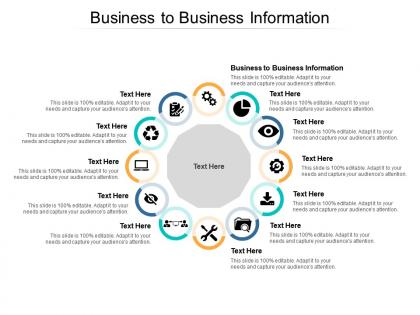
Business to business information ppt powerpoint presentation slides examples cpb




Try Before you Buy Download Free Sample Product
 Impress Your
 Audience
 100%
100% Editable
 Save Hours
 of Time


Our Business To Business Information Ppt Powerpoint Presentation Slides Examples Cpb are topically designed to provide an attractive backdrop to any subject. Use them to look like a presentation pro.
People who downloaded this PowerPoint presentation also viewed the following :
Business to business information ppt powerpoint presentation slides examples cpb with all 2 slides:
Use our Business To Business Information Ppt Powerpoint Presentation Slides Examples Cpb to effectively help you save your valuable time. They are readymade to fit into any presentation structure.
FAQs for Business to business information ppt powerpoint presentation
B2B is way more complex - you've got like 5 different people making decisions, each wanting different data. They need ROI projections, tech specs, all that boring stuff because honestly, nobody wants to be the person who picked the wrong vendor. B2C buyers? Totally different game. They buy on emotion and impulse, so focus on how your product makes them feel. The timeline's crazy different too - B2C happens in minutes, B2B drags on for months. You'll need email sequences that actually add value during that long wait. First step though? Figure out everyone who's involved in their buying process.
Look, most companies don't realize they're drowning in crappy data. Start with analytics to spot duplicate records and see which sources actually convert. Your database probably has tons of gaps - missing emails, old job titles, that stuff. Set up dashboards that automatically flag these issues (saves you from manually hunting through spreadsheets forever). Predictive scoring helps you focus on leads that'll actually close. Customer behavior patterns show you what's working too. Pick one messy data source first, clean it up, then move to the next. Don't try to fix everything at once - you'll burn out.
Dude, tech basically handles all the boring manual crap that used to slow down B2B sharing. EDI systems and APIs let your platforms talk directly to partners - no more crazy email chains or typos from manual entry. Once it's set up right, it's pretty sweet honestly. Real-time syncing tracks orders, inventory, payments instantly across your whole supply chain. Just make sure whatever tools you pick actually play nice with your current systems. Otherwise you'll hate yourself later. Oh and cloud platforms are clutch for this stuff too.
Start with encrypting your client data - that's gonna give you the most protection right off the bat. Multi-factor authentication is a must for everyone logging in. Don't let people access stuff they don't need to see either. Here's what most places screw up though - they skip the regular security checks. Do vulnerability scans every few months, seriously. And yeah, have backups ready plus some kind of plan for when things go sideways (because they will). Oh, and encrypt everything - both stored data and anything moving around your network.
So basically these regulations are like speed bumps for your data sharing - GDPR, SOX compliance, all that stuff. They control what you can collect and who gets access to it. Honestly? It's a massive headache because everything needs approval and audit trails. Your data flow slows to a crawl sometimes. But I guess it stops companies from going completely rogue with people's info. My advice - bake the compliance stuff right into your workflows from day one. Way easier than trying to jam it in afterwards when you're already knee-deep in processes.
For messaging, Slack or Teams work great. Then grab a project tracker like Asana or ClickUp so you're not constantly asking "wait, who's doing what again?" Zoom handles video calls obviously. Honestly though, doesn't matter which specific apps you pick - just make sure everyone actually uses the same ones. We tried juggling like 6 different platforms once and it was a nightmare. You'll need shared storage too - Google Drive or SharePoint for docs and contracts. Stick to maybe 3-4 tools total, otherwise you'll waste half your day just logging into different things.
Track your downloads, email opens, webinar signups - that stuff shows people actually care about your content. But honestly? The real gold is connecting those dots to actual sales. Which white paper led to that demo request? What case study helped close the deal? Your sales team will literally love you when you can tell them exactly what content moved the needle. Set up UTM codes on everything so you can trace someone's whole journey from first click to signed contract. Takes a bit of setup but it's worth it.
Ugh, the worst part is dealing with all these data sources that basically hate each other. Different formats, weird naming systems - nothing matches up. You'll waste forever just cleaning stuff before you can actually do anything useful with it. Data quality is all over the place too. Some sources have duplicates everywhere, others are missing half the info you need. Real-time syncing? Good luck with that mess. Honestly, I'd map out what you're working with first - like actually document all the weird quirks each source has. Then grab some decent ETL tools to do the grunt work.
Dude, transparency is everything in B2B partnerships. Like, literally the make-or-break factor. Be upfront about your processes, your limitations, what you can actually deliver - all of it. I've watched partnerships implode because someone was being shady about their capabilities or hiding crucial details. Nobody wants surprises down the line, trust me. The more honest you are from day one about timelines and expectations, the smoother everything runs later. Sure, it feels vulnerable sharing the messy stuff, but partners need to know what they're really signing up for. Start there and you'll save yourself so many headaches.
Honestly, the scalability alone makes it worth it - your team can access everything instantly from anywhere. No more dealing with those expensive servers that break down at the worst times. The security thing surprised me too, but these cloud companies literally have teams working on it around the clock. Way better than what most of us could handle in-house. You get automatic backups without thinking about it, and you're only paying for what you actually use. I'd figure out what's driving you crazy about your current setup first, then see how cloud features could fix those specific headaches.
Look, when you actually customize stuff for clients, they stop feeling like just another number on your spreadsheet. Reference their specific industry headaches or that project from last year - suddenly you're the person who actually pays attention. Think of it like remembering your friend's drama and checking in later, but for business stuff (which sounds way less fun when I put it that way). Generic newsletters are basically spam at this point. Track what each client obsesses over. Lead with that every single time you talk to them. Trust builds so much faster this way.
Look, content marketing is huge for B2B - it's how you actually get valuable stuff in front of people. Think whitepapers, case studies, webinars that solve real problems your prospects have. Most buyers research everything before talking to anyone in sales now (honestly, can you blame them?). Your content has to be findable when they're hunting for answers. Blog posts, educational resources - whatever builds trust and shows you know what you're talking about. I always tell people: help first, sell later. That approach just works better.
Ok so here's what I'd do - pick like 3-5 metrics that actually move the needle on revenue or keeping customers happy. Everything else? Ignore it for now. Seriously, I spent way too much time last year drowning in useless reports. Get some automated dashboards set up so the important stuff just shows up without you hunting through Excel hell. Alerts are clutch for when things go sideways. The biggest thing though? Train your team to ask "so what?" when they see data. Numbers without action are just pretty charts that waste everyone's time.
Honestly, the whole AI/ML thing is pretty wild for B2B data right now. You're getting way smarter automation and predictive stuff that actually helps. APIs are finally making systems talk to each other without the usual headache. Blockchain's handling the security side better, and cloud platforms let you share data globally in seconds. Oh, and NLP means your team can pull insights without being data wizards - which is huge. I'd start by looking at your current setup and figuring out where automation would save you the most headaches. Trust me, it's worth the audit.
Set up regular data audits - sounds boring but it actually works. Customer info needs updating quarterly, market stuff maybe monthly (depends on your field though). Most companies totally suck at this and just ignore everything until it breaks. Pick specific people to own different data sets and literally put it on their calendars. Otherwise it won't happen, trust me. Automate whatever you can with CRM tools and validation stuff. I'd start small - grab your three most important data types first and build schedules around those. You'll see the difference pretty quick.
-
Awesome presentation, really professional and easy to edit.
-
Very unique and reliable designs.